What happened
Authors amended their suit on Nov 23, 2026, alleging NVIDIA used aria2c and put.io to download books from shadow libraries and seeded them, and shared a 250 million-page PDF project with partners including Adobe.
Why it matters
The claims widen the 2024 case beyond training data to distribution, potentially pulling Adobe and other partners into scrutiny, though the court has not accepted the allegations as fact.
What to watch
NVIDIA's response to the amended complaint is due in December 2026.
WHO IT HITSThe amended claims directly involve NVIDIA's business partners, including Adobe, which may face questions about their role in handling PDF data. Legal and compliance teams at firms partnering on AI data pipelines will likely be watching how the court treats the seeding allegations.
Summaries like this, every morning.
The case dates to March 2024, when several book authors filed a class action accusing NVIDIA of training its AI on a dataset called Book3 that included pirated books from the site Bibliotik. NVIDIA argued that books are merely probabilistic correlations for an AI model and that its use was fair use. The court allowed some claims to proceed while granting part of NVIDIA's motion to dismiss others; claims tied to the BitTorrent file-sharing protocol survived.
Judge John Tigar of the Northern District of California permitted the authors to amend their complaint on Nov 23, 2026, based on documents NVIDIA produced between April and July 2026, and the amended complaint was filed the following day. The authors say they learned about the seeding conduct by examining BitTorrent-related code NVIDIA disclosed in June 2026.
According to the complaint, NVIDIA took steps to limit seeding — uploading parts of files to other users during download — but could not fully prevent it. The authors also state that some downloaded books included their own works, though the filing describes this as a belief based on information rather than a confirmed fact. At the time of writing, the amendment adds new allegations but the court has not found them to be true.
Pick your industry and the AI tools you use, and get news related to your work every day.
Free · 30 seconds with Google · unsubscribe anytimeWhat is AIToday? →
Ask AI anything about this article. The AI reads this article, earlier AIToday articles, and Wikipedia, and cites its sources. Q&As are published on this page for other readers too.
THA president Asako Nishiyama will join the first session of 未来共創CROSS on December 1, 2026, at NCB Hall in Fuk…

The Digital Agency said a public call for Japanese-made large language models for ガバメントAI 源内 in 令和9年度(2027年度)…

Meta Platforms and Alphabet look like discounted buys, with Meta trading at 20x forward earnings and Alphabet…

CME FedWatch shows a 100% chance of a rate hike on Dec
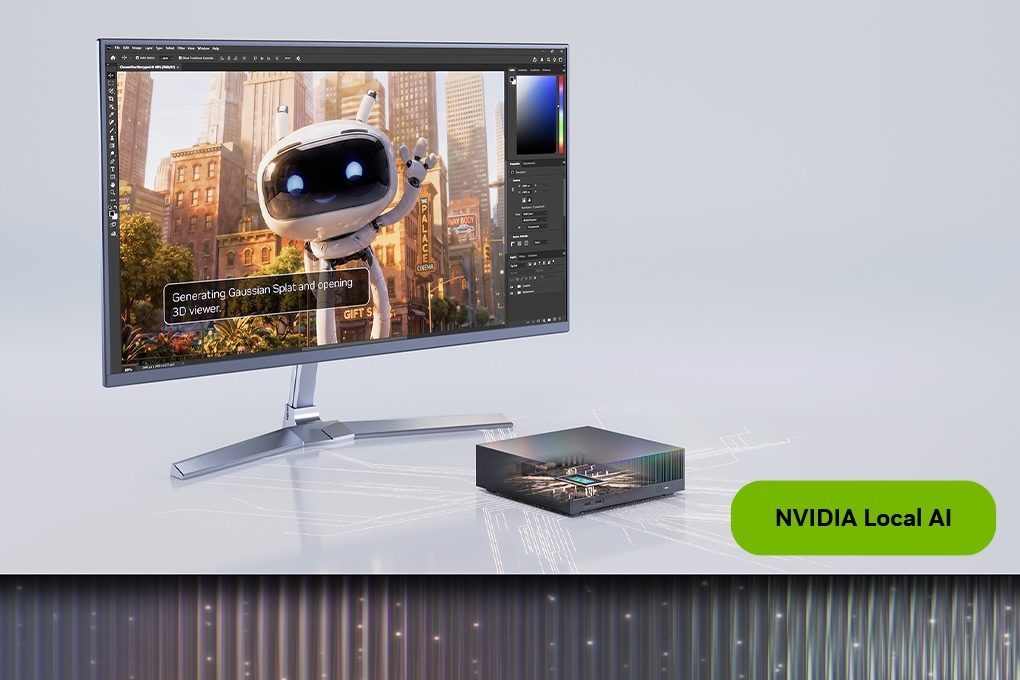
NVIDIA said on November 27 that its RTX Spark compact desktop is on sale from ASUS, Dell and MSI, with a 20-co…
Foreign investors net-sold NT$1.09 trillion (about $33.1 billion) of Taiwanese shares in November, beating Oct…