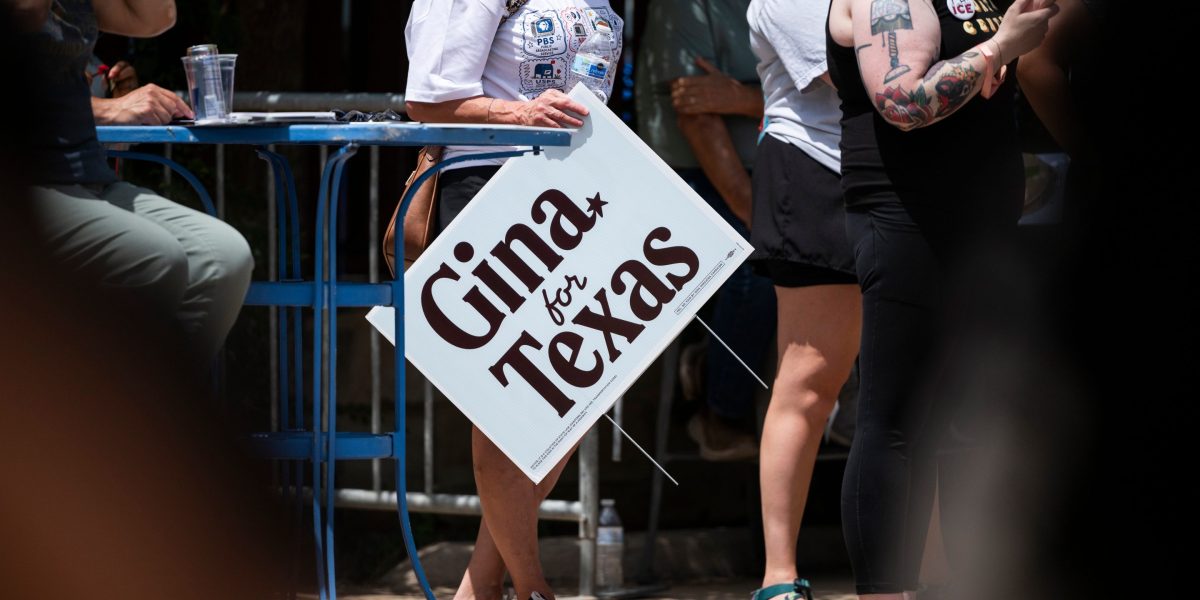
Democratic candidates in Texas and other states are now campaigning against AI data centers in rural areas, capitalizing on anger over water depletion, pollution, and loss of farmland. Republican Gov. Greg Abbott initially pushed data center projects but recently promised regulations and a tax break removal, signaling the issue may cost him support among rural voters who traditionally favor Republicans. The backlash is even appearing in statewide races across Arizona, Ohio, Pennsylvania, and New York.
Summaries like this, in your inbox every morning.
Sign up free →What happened
Democratic candidates in Texas and other states are seizing on backlash to massive AI data centers as a campaign issue. Texas Gov. Greg Abbott, a Republican, initially championed data center projects—including Google's $40 billion(約6.4兆円) investment announced in November—but in recent weeks ordered regulators to prevent higher electricity bills and promised legislation next year to regulate data centers and remove a billion-dollar-plus-per-year tax break.
Why it matters
Data centers threaten rural life, farmland, water supplies, and quality of life in traditionally Republican strongholds, dividing conservative voters from their own party. Texas is poised to overtake northern Virginia as the largest global data center market by 2030, making the state a flashpoint. The backlash is also shaping statewide races in Arizona, Ohio, New York, and Pennsylvania, giving Democrats an unexpected opening in a state Republicans have dominated for three decades.
What to watch
Whether enough rural Texas voters defect from Abbott over data centers to make a difference in November. Protest groups in towns like Lubbock are led by Republicans who say they may not vote for Abbott, though some have not committed to supporting Democratic nominee Gina Hinojosa either. Texas counties lack zoning authority, the local land planning tool communities across the country are using to fight data centers.
When Gina Hinojosa, the Democratic nominee for Texas governor, launched her campaign last year, data centers were barely mentioned. With three months until November's election, the issue has become central to her challenge against Republican Gov. Greg Abbott. At a Democratic event in Amarillo with about 160 attendees, Hinojosa laid out the grievance bluntly: "They are owned by the richest men in the world. We're all footing the bill. There are no rules. It is the wild west of data centers."
The backlash to massive, energy-hungry server warehouses is reshaping races across the country—from Arizona to Ohio to New York—but nowhere is the divide sharper than in Texas. The state is poised to overtake northern Virginia as the largest global data center market by 2030, according to commercial real estate firm JLL. In rural west Texas and the panhandle, gargantuan data centers are under construction, including one near Amarillo described as the world's largest. Google is building four data centers in northwest Texas and recently held moderated conversations with officials and business leaders in Lubbock and Amarillo. In November, Abbott praised Google's $40 billion(約6.4兆円) investment announcement, declaring that "Texas is the epicenter of AI development."
But the projects have ignited anger across small cities, tiny towns, and sprawling ranches. People object to the secrecy surrounding the projects and the prospect of air, noise, water, and light pollution. They fear electric bills will rise, wells will run dry, and open space, farmland, and forest will vanish. Construction and an influx of workers are already causing havoc for some ranchers and towns—driving up rents, snapping up farmland, illuminating night skies, clogging roads, and turning parts of rural Texas into industrial zones. Of particular concern is water consumption; ranchers point to "water wars" between San Antonio and rural landowners years ago as a warning that data centers could be prioritized over agriculture during shortages.
The opposition cuts across party lines. Democrats are prominent critics, but so are Republicans, including Texas Agriculture Commissioner Sid Miller. Giles Dalby, a cattle rancher and Republican county commissioner in west Texas who raises Angus and Brangus cattle on ranchland in his family for 125 years, said the prospect of water depletion "is on everybody's mind." Clayton Tucker, a rancher and Democratic nominee for state agriculture commissioner, observed that data centers dominate his campaign events regardless of audience: "This is the most cross-partisan issue I've ever seen in my life."
Abbott recognizes the political danger. In recent weeks, he ordered regulators to ensure Texans were not paying higher electricity bills because of data centers and promised to push a legislative agenda next year that includes taking away the state's billion-dollar-plus-per-year tax break and preventing data centers from being built in "rural Texas neighborhoods." However, critics, including Hinojosa, dismissed this language as meaningless "doublespeak." A critical structural barrier is that Texas counties lack zoning authority—the local land planning tool that communities across the country are increasingly using to fight data centers. Hinojosa said she would block a permit for a data center if it wasn't a good deal for Texans or if residents hadn't gotten a say in the matter.
Republican opponents of data centers are uncertain whether their concerns will translate into votes against Abbott. Stephen Sanders and Hallie Bertrand, who founded a protest group in Lubbock, said they might not vote for Abbott but were unsure whether they would vote for Hinojosa. Bertrand expressed doubt that the issue would reach all voters, noting some "will just hit that button, Republican all the way down," but she saw the backlash as "a step towards something that we have not seen in Texas in a long time, with people on the right switching to the left."
Data centers have emerged as a defining campaign issue in Texas and across the country, but the backlash is most acute in Texas because the state has the conditions—abundant land, energy, and a friendly regulatory environment—that make it attractive to tech giants. Texas is poised to overtake northern Virginia as the largest global data center market by 2030, according to JLL. The scale of investment is substantial: Google alone announced a $40 billion(約6.4兆円) commitment in November, signaling confidence in the state's infrastructure and political climate.
What was not anticipated by Republican leadership is how data centers would divide their base. While President Trump has made data centers a top priority and Google frames its investments as advancing American innovation and cybersecurity, rural Texans face tangible threats to their way of life. Water scarcity is not abstract—ranchers point to the "water wars" between San Antonio and ranchers years ago as a precedent for how data centers could be prioritized over agriculture in times of shortage. The lack of zoning authority in Texas counties removes a crucial tool that communities in other states are using to push back. Abbott's recent pivot—promising regulations and the removal of tax breaks—suggests he recognizes the political risk, but critics, including Democratic nominee Gina Hinojosa, view these moves as "doublespeak" lacking urgency.
The cross-partisan nature of the opposition is notable. Republican county commissioners, ranchers, and even the state's agriculture commissioner Sid Miller are among the critics, and some Republican activists say quietly that many more Republicans are upset but fear publicly opposing their governor. This opens a possibility, however slim, that Hinojosa's long-shot challenge could gain traction in rural areas that have traditionally anchored Republican dominance.
AI-summarized, only the topics you pick — one digest a day via Email, Slack, or Discord.
Free · takes 30 seconds · unsubscribe anytime
No comments yet. Be the first to share your thoughts!
Log in to join the discussion

Get curated AI news from 200+ sources delivered daily to your inbox. Free to use.
Get Started FreeFree · takes 30 seconds · unsubscribe anytime
