What happened
Meta CEO Mark Zuckerberg said during the company's second-quarter earnings call that Meta will continue building its own frontier AI models rather than depending on third-party open-source alternatives, citing that today's open-source models lag behind the industry's most advanced systems.
Why it matters
Zuckerberg stated that relying on other companies' AI technology carries strategic risk and that Meta believes it can build better models internally — a significant stance because Meta has historically supported open-source AI development. The company signaled a shift toward in-house capability as a long-term priority, even as it maintains open-source work.
What to watch
Meta expects to release open-source models again in the future and has not abandoned that approach; however, the company raised its full-year capital expenditure guidance to $130 billion–$145 billion (up from $125 billion–$145 billion), signaling major investment in proprietary model development. Meta's second-quarter revenue was $60.80 billion, topping estimates, but adjusted earnings of $6.18 per share fell short of expectations of $7.13 per share.
Summaries like this, in your inbox every morning.
Zuckerberg's statement represents a recalibration of Meta's AI strategy, not an outright rejection of open-source models. While Meta has signed industry letters backing open models as drivers of innovation and cybersecurity — a position the CEO reiterated — the company's near-term focus is on proprietary frontier models. This stance mirrors Nvidia CEO Jensen Huang's broader industry view that the world needs "both frontier closed models and frontier open models." The tension is real: Meta wants the innovation and sovereignty benefits of open-source work but believes that for competitive and strategic reasons, it cannot afford to rely solely on alternatives built by others.
The company's raised capital expenditure guidance to $130 billion–$145 billion underscores this commitment. That spending increase comes against a backdrop of earnings that beat revenue expectations ($60.80 billion versus $59.50 billion estimate) but missed on profitability (adjusted earnings of $6.18 per share versus $7.13 expected). For investors and competitors, the message is clear: Meta is willing to prioritize AI capability investment over near-term margin expansion.
Pick your industry and the AI tools you use, and get news related to your work every day.
Free · 30 seconds with Google · unsubscribe anytimeWhat is AIToday? →
Ask AI anything about this article. The AI reads this article, earlier AIToday articles, and Wikipedia, and cites its sources. Q&As are published on this page for other readers too.
Cammarata reinterprets InceptionV1's cat-car neuron as a V-shape detector, not two unrelated concepts

Google Deepmind's Gemini 4 Argon scored 97.5 percent on ARC-AGI-3 at a cost of $4,800, second only to GPT-6 As…
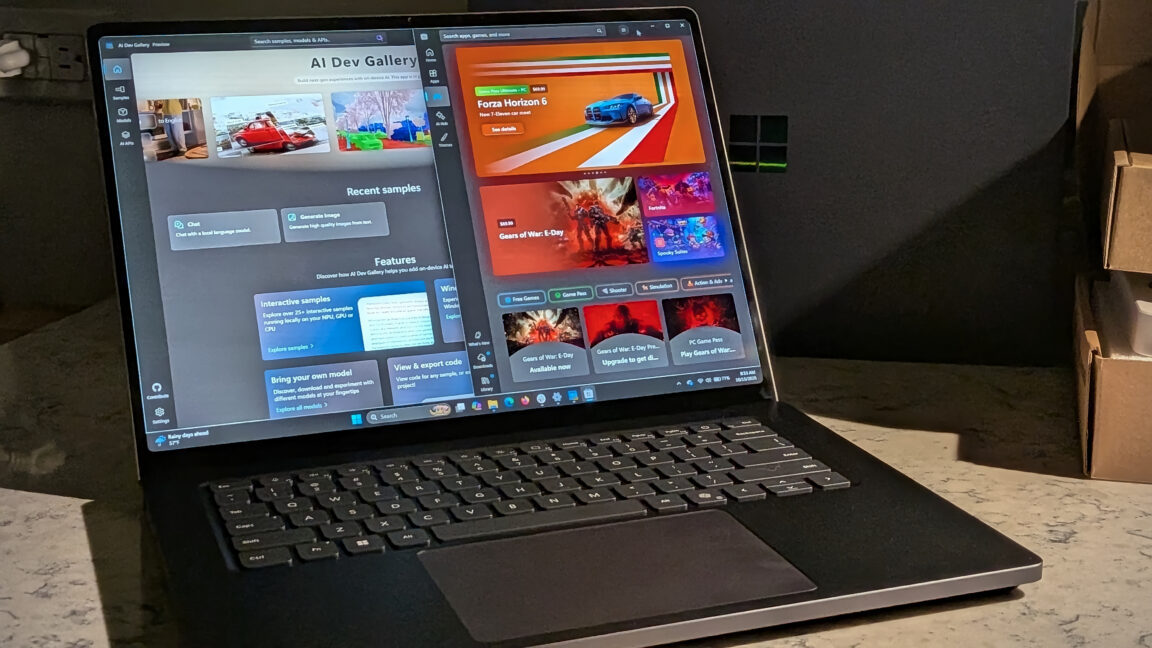
Microsoft's Surface Laptop Ultra, using Nvidia's RTX Spark platform, starts at $2,599 (up to $5,899)
Meta's new commercial terms, effective October 30th, appear to let it crawl and train AI on content from websi…
Vercel data published Thursday shows TypeSafe AI's Jev, a lightweight decision model for choosing among predet…

Reflection AI introduced Beam, an open-weight model for agentic coding and long-horizon tasks, with 501 billio…