What happened
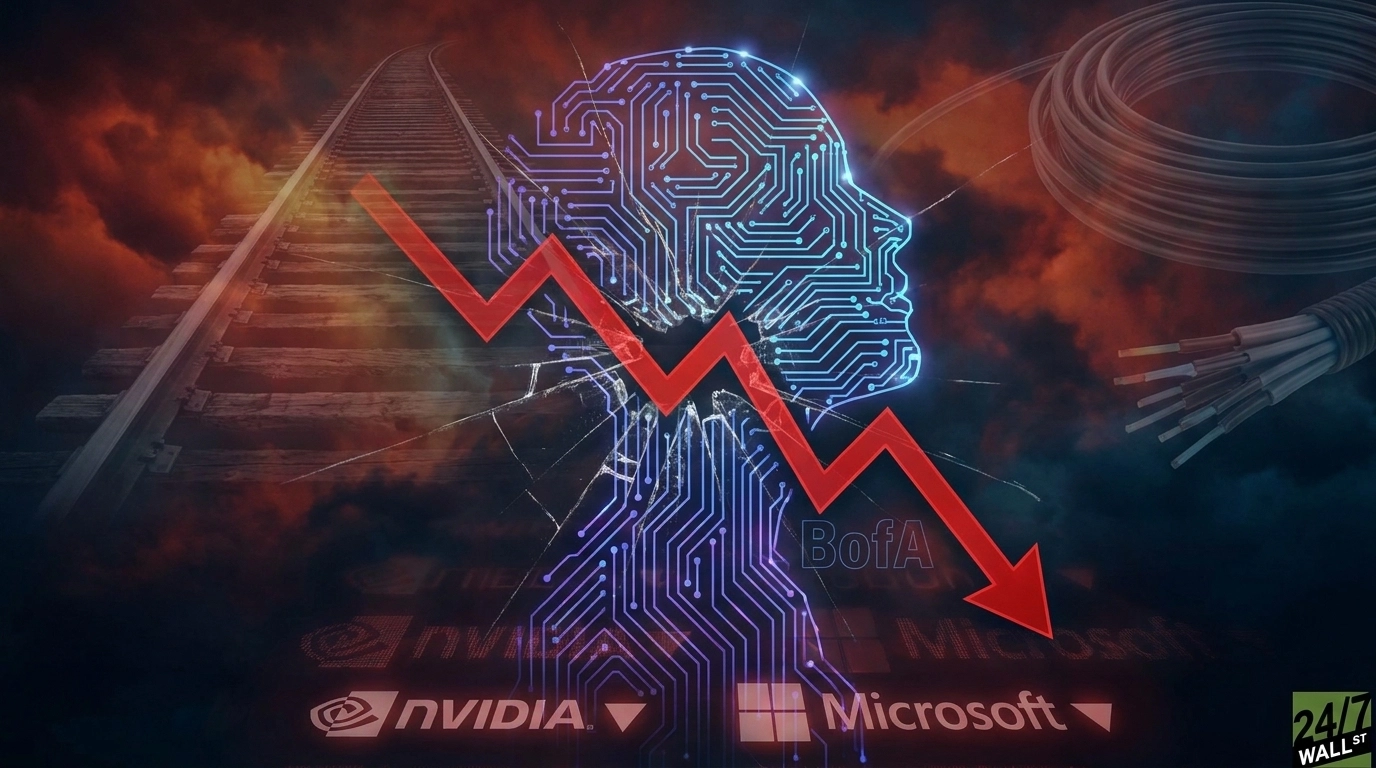
A spike in CoreWeave's bond yields revived worries about debt-heavy AI customers and dragged semiconductor shares lower, with Nvidia — both an investor in CoreWeave and its chip supplier — slipping with the group.
Why it matters
The selloff raised a sharp question — whether Nvidia's growth is only as sturdy as the balance sheets of the companies buying its chips — though the body notes the answer depends less on one cloud provider than on who else is paying.
Summaries like this, in your inbox every morning.
The week's selloff began not at a chipmaker but at CoreWeave, a cloud provider that rents out AI computing power. A spike in its bond yields revived worries about debt-heavy AI customers and pulled semiconductor shares lower, with Nvidia caught up in the move as both an investor in CoreWeave and its chip supplier.
The episode puts a spotlight on a question the body poses directly: whether Nvidia's growth is only as sturdy as the balance sheets of the companies buying its chips. Nvidia sells complete data center systems to cloud giants, AI labs, and specialists like CoreWeave, and data centers now bring in the vast majority of its revenue. The body notes that the answer depends less on one cloud provider than on who else is paying, and points to a customer list that argues against a single point of failure: the new Vera Rubin platform is in full production at partners including Microsoft Azure, Google Cloud, and Oracle, not just CoreWeave.
Nvidia's own financial position stands in contrast to the concerns about its customers. Over the past 12 months it earned $192.88 billion in net income and kept about 65% of its sales as operating profit, a margin the body attributes to pricing power. Revenue grew about 66.9% a year over the past five years, and in its fiscal second quarter of 2027 revenue reached $96.2 billion, up 106% from a year earlier. Management guided third-quarter revenue to $108.0 billion, plus or minus 2%, without counting on any data center compute sales in China. Nvidia is also lining up outside money: financing platforms with firms including Apollo, BlackRock, and KKR aim to mobilize more than $500 billion in third-party capital, subject to final agreements. Whether that broader base is enough to insulate the stock from episodes like this one is likely to remain a focus for investors.
Pick your industry and the AI tools you use, and get news related to your work every day.
Free · 30 seconds with Google · unsubscribe anytimeWhat is AIToday? →
Ask AI anything about this article. The AI reads this article, earlier AIToday articles, and Wikipedia, and cites its sources. Q&As are published on this page for other readers too.
Jim Cramer set a $250 share price target for Palantir, saying "Palantir is going to 250" and calling it "an am…

In 15 in-depth interviews with existing ServiceNow customers, 14 said AI Control Tower's runtime enforcement w…

Anthropic CEO Dario Amodei said he spends a third, maybe 40%, of his time making sure the company's culture is…

Users of Meta's Muse, xAI's Grok, OpenAI's Dots and Instinct report blocks on top sites

Meta removed language from its commercial terms that experts said allowed scraping news sites to train its AI…

Bank of America strategist Sebastian Raedler said 12-month forward hyperscaler capex expectations rose from $3…