What happened
Feng Ji, founder of the $4bn hedge fund Baiont Quant, is developing an operating system for AI agents through his startup Cosmic Dawn, targeting a kernel release by the end of 2026.
Why it matters
The system is pitched as infrastructure that controls agent file access, memory and permissions, and is meant to be deployed inside Baiont Quant's research and trading operations, potentially giving a quant fund a proprietary layer for running many agents at once.
WHO IT HITSQuant and investment research teams running many AI agents at once could gain a purpose-built control layer for permissions and memory, though Cosmic Dawn has not published code or benchmarks, making the practical benefit hard to assess.
Summaries like this, every morning.
Feng Ji's push into operating-system software comes from an investment firm that already runs AI across its core work. Baiont Quant uses AI for data mining, investment strategy development and trade execution. Its roughly 70 employees are mostly from scientific or engineering backgrounds, and none of the approximately 50 people in its investment and research division came from traditional finance. That setup points to a fund treating AI infrastructure as an in-house capability rather than an outside purchase.
The Cosmic Dawn seed round was secured before the startup's team had been assembled, according to Feng, and a second fundraising round is planned for the first quarter of 2027. The system is designed to coordinate large numbers of AI agents with safeguards against their exceeding authorised functions, a governance problem that grows as more agents run at once.
Other Chinese technology companies are taking related approaches. StepFun introduced its Step AOS operating system in July, adapting the Android kernel to support AI agents rather than building a new underlying system. Tian Feng, dean of Beijing's Thinking, Fast and Slow Institute and former founding dean of Alibaba Cloud's research institute, said dedicated operating systems could help with agent permissions, resource allocation and memory, but cautioned that Cosmic Dawn has not published code or performance benchmarks, making its distinctiveness difficult to judge.
Pick your industry and the AI tools you use, and get news related to your work every day.
Free · 30 seconds with Google · unsubscribe anytimeWhat is AIToday? →
Ask AI anything about this article. The AI reads this article, earlier AIToday articles, and Wikipedia, and cites its sources. Q&As are published on this page for other readers too.
Microsoft announced Agent 365, a shared control plane for AI agents spanning Microsoft and non-Microsoft platf…

Visa Crypto Labs head Cuy Sheffield unveiled a new Visa Command Line Interface that verifies an agent using a…

Charles Schwab introduced Charley, a conversational AI assistant built on third-party large language models pl…
On the fifth installment of the talk livestream "Ichimon Itto" with actor Shinnosuke Mitsushima, Ichiro Suzuki…

A new online course, AI業務アプリ作成入門講座, is offered for participants in Tokyo and teaches creating work apps by tel…

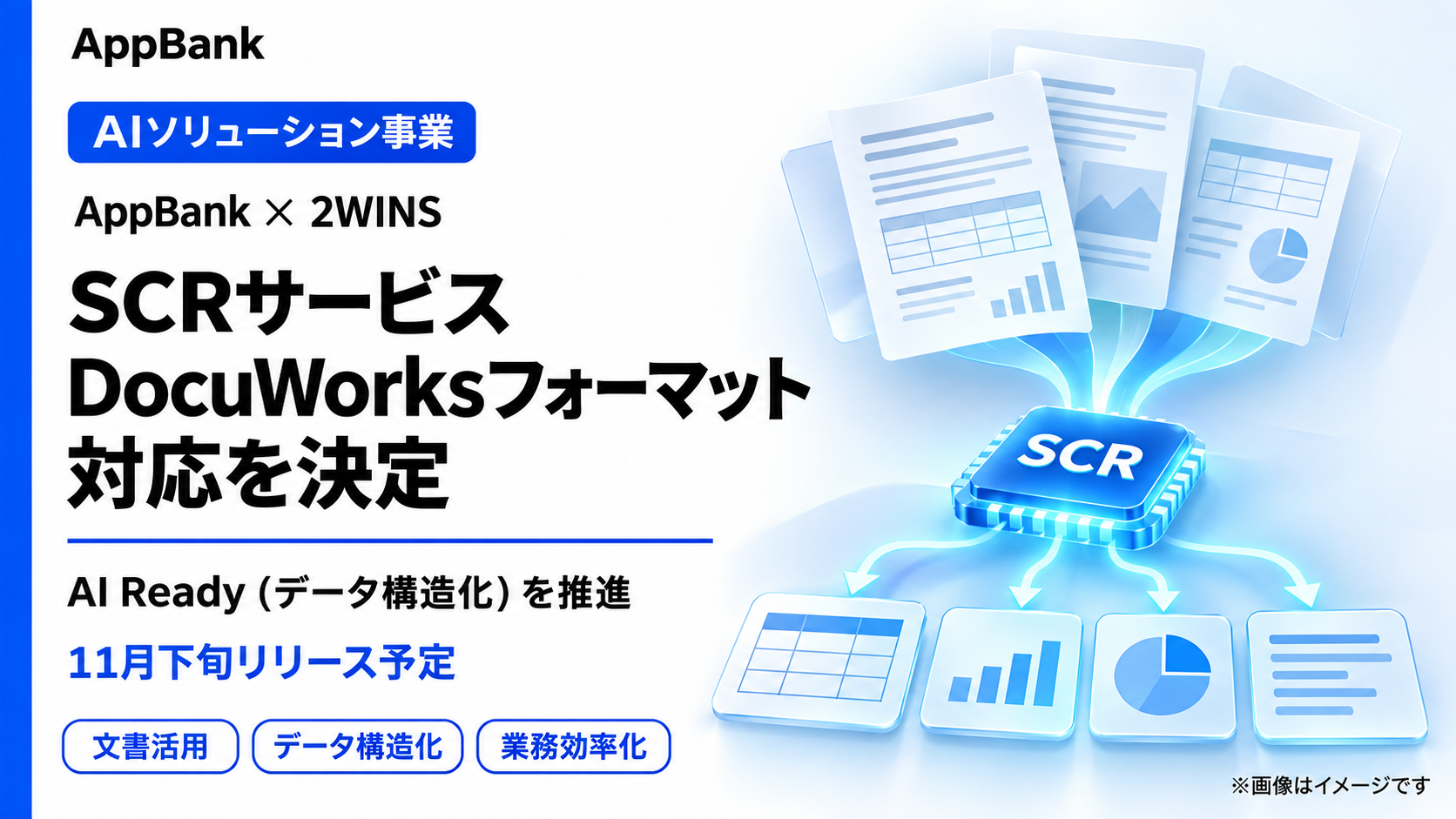
AppBank and 2WINS said their SCR (Semantic Character Recognition) service will support Fujifilm Business Innov…