What happened
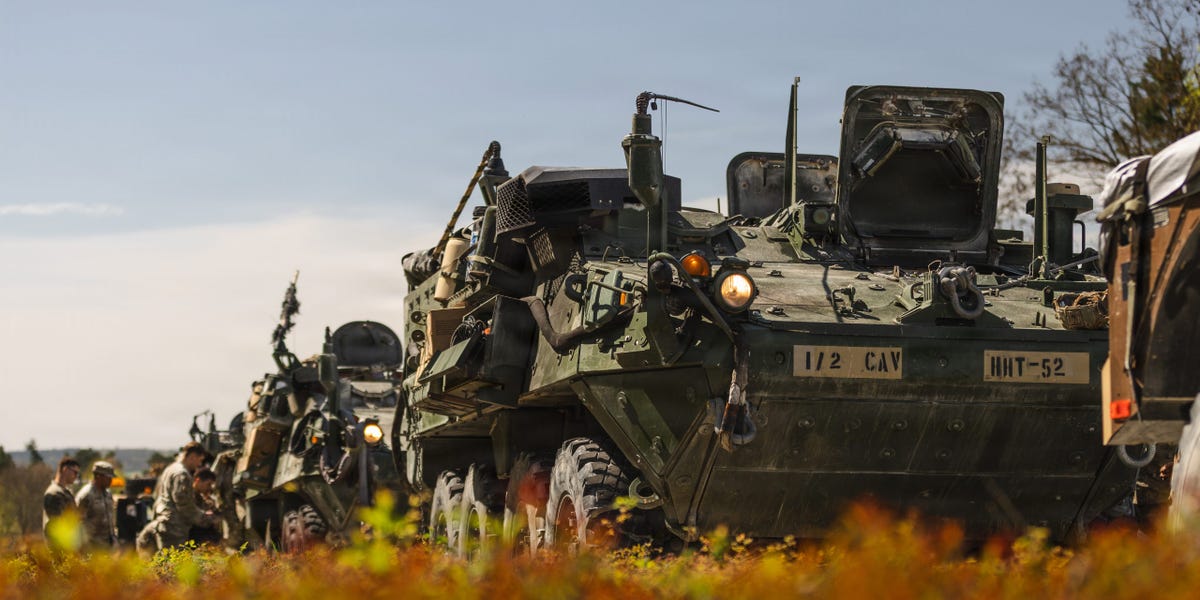
Defense tech company TERN announced an $11.26 million contract with the US Army to deploy its AI-based Independently Derived Positioning System and Vehicle Health & Maintenance System on Army vehicles.
Why it matters
The systems operate completely offline without GPS or external connections, addressing vulnerabilities exposed by GPS jamming in recent conflicts such as Russia's war in Ukraine and the US war against Iran.
What to watch
TERN says the contract represents 'the Army's most significant investment in this type of technology to date,' and the company is also working on deploying its systems on drones, specifically uncrewed ground vehicles.
WHO IT HITSUS Army vehicle crews and commanders gain an offline navigation and maintenance-monitoring tool that works without GPS or network connectivity. Defense contractors building GPS-dependent systems may face pressure to offer jamming-resistant alternatives.
Ask the AI about this article →
Summaries like this, in your inbox every morning.
The contract reflects a growing recognition within the US military that GPS can no longer be assumed available on the battlefield. Recent conflicts, particularly Russia's war in Ukraine and the US war against Iran, have demonstrated how jamming and signal loss can degrade navigation and communications. Department of Defense and Army leaders have repeatedly highlighted the risks of overreliance on GPS and pushed for alternatives vital in contested environments.
TERN's approach uses sensors already on vehicles, enhanced with AI, and pre-loads geographic areas so soldiers can navigate offline. The company says the system also maps off-road environments that traditional navigation often struggles with. If connection is regained, the map updates like a civilian navigation app. The vehicle health system uses similar methods to monitor maintenance needs and fuel levels, flagging issues for commanders.
The outcome hinges on how broadly the Army fields the technology and whether TERN can adapt it to uncrewed ground vehicles as planned. For defense contractors, the contract signals demand for jamming-resistant, offline-capable systems. For soldiers, the test is whether the interface proves as intuitive in the field as TERN claims.
For example, today's edition would include:
AI-summarized, only the topics you pick — one digest a day via Email, Slack, or Discord.
Free · 30 seconds with Google · unsubscribe anytimeWhat is AIToday? →
Ask AI anything about this article. Q&As are published on this page for other readers too.
At its HMG Autonomous Driving Media Day, Hyundai Motor Group said its Data Flywheel is in full operation and s…

Oracle said Thursday that sales in its closely watched cloud infrastructure business jumped 121% to $7.4 billi…

Marvell Technology is targeting $18 billion in FY2028 revenue, raising its combined FY2027 and FY2028 expectat…

Philip Morris International and WSJ Intelligence unveiled The Cognition Index Research Report, a survey of mor…

Lam Research CFO Doug Bettinger said at the Citi Global TMT Conference that the company raised its calendar 20…

Broadcom's fiscal Q3 2026 AI semiconductor revenue rose 221% from a year earlier to $16.7 billion, and CEO Hoc…