What happened
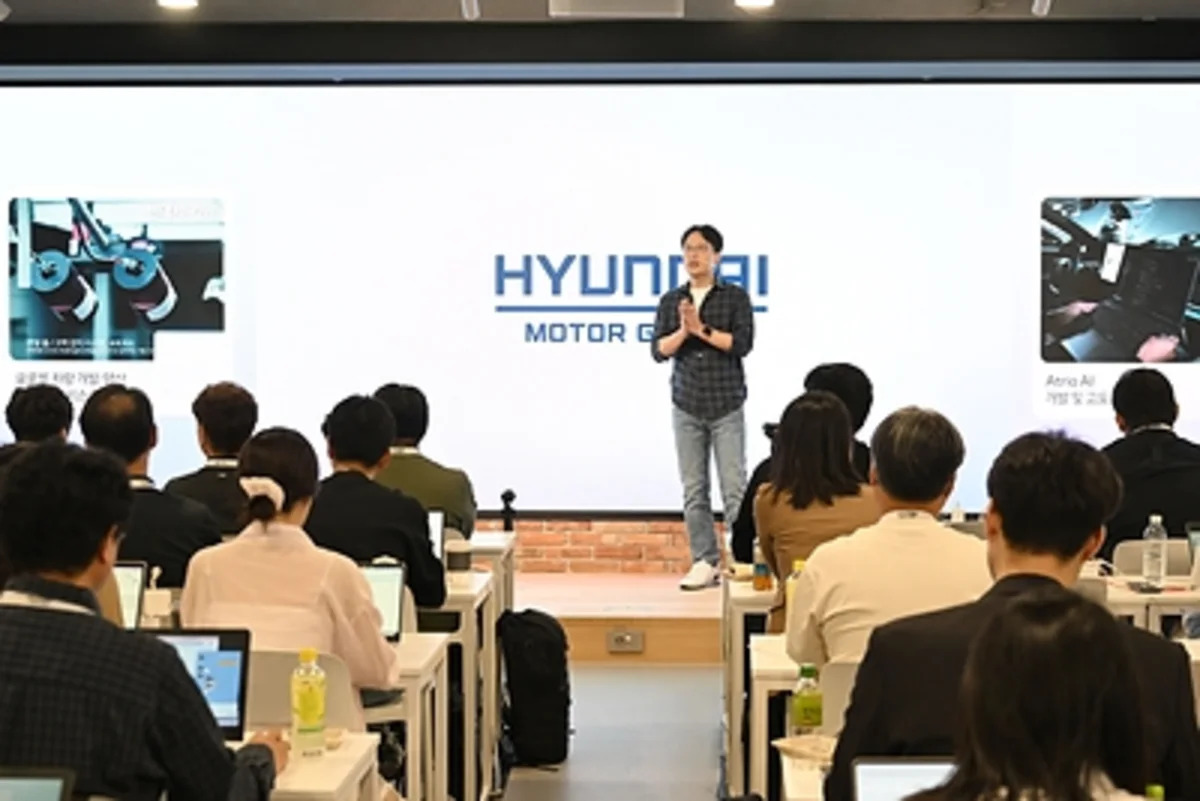
At its HMG Autonomous Driving Media Day, Hyundai Motor Group said its Data Flywheel is in full operation and set targets for NVIDIA-based Level 2+ production in H1 2028.
Why it matters
The group is pursuing a dual-track strategy, advancing NVIDIA-based Level 2+ and Level 2++ vehicles while also developing proprietary Atria AI for Level 2++ vehicles in H2 2029.
What to watch
A real-world Level 4 pilot is set to launch in Gwangju by year-end with Korea's Ministry of Land, Infrastructure and Transport; 42dot's VLA model validation and on-road testing run through early next year.
WHO IT HITSThis affects Hyundai, Kia, 42dot, and Motional engineering and product teams working on autonomous driving, as well as NVIDIA as a technology partner. It signals a long-term production plan for these groups.
Ask the AI about this article →
Summaries like this, in your inbox every morning.
Hyundai Motor Group's announcement comes as it seeks a competitive advantage in autonomous driving through accelerated learning and technology development. The group is leveraging its annual sales of 7 million vehicles and a Data Union framework to expand its data ecosystem, while implementing a data-centric development framework based on hard example mining, continuous training, and SER. This approach aims to continuously advance AI capabilities by creating a virtuous cycle of data collection, training, validation, and deployment.
The strategy is dual-track: accelerate Level 2+ production through collaboration with NVIDIA while also internalizing key autonomous driving technologies through proprietary Atria AI. Progressive sensor standardization across Hyundai Motor, Kia, 42dot, and Motional is intended to bring together autonomous driving capabilities across the Group. Additionally, 42dot shared its Vision-Language-Action (VLA)-based autonomous driving technology, which integrates visual information and language-based reasoning to guide driving decisions. VLA research focuses on addressing edge cases, with parallel development of end-to-end autonomy and VLA models to enhance technical stability and scalability.
The outcome hinges on execution across these tracks. The NVIDIA-based Level 2+ production in H1 2028 and Level 2++ in H2 2028, followed by Atria AI-powered Level 2++ vehicles in H2 2029, represent ambitious targets. The real-world Level 4 pilot in Gwangju by year-end, in partnership with Korea's Ministry of Land, Infrastructure and Transport, is likely intended to secure large-scale validation data. For Hyundai, Kia, 42dot, and Motional, success depends on integrating these technologies and validating them on public roads. The VLA model validation and on-road testing scheduled to run through early next year will be a key milestone to watch.
For example, today's edition would include:
AI-summarized, only the topics you pick — one digest a day via Email, Slack, or Discord.
Free · 30 seconds with Google · unsubscribe anytimeWhat is AIToday? →
Ask AI anything about this article. Q&As are published on this page for other readers too.
Defense tech company TERN announced an $11.26 million contract with the US Army to deploy its AI-based Indepen…
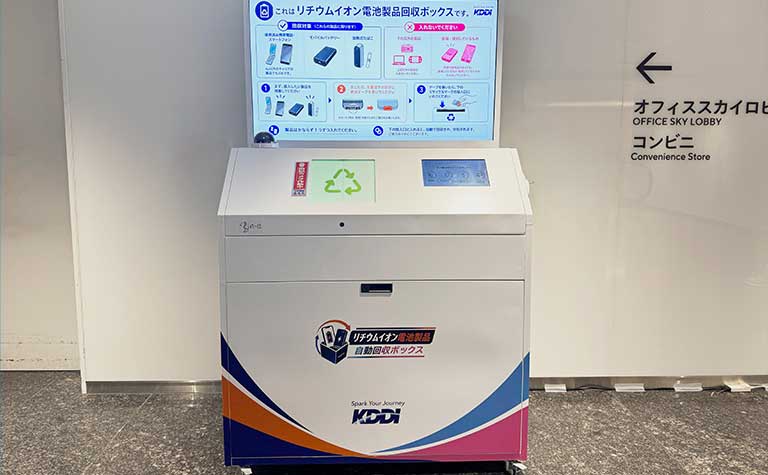
Forcetec said its Bin-e AI sorting recycling box was adopted for KDDI's lithium-ion battery collection effort…
The article argues that the debate never needs to reach total human extinction

On StationeryBench, OpenAI's GPT-6 Astra fully completed 7 of 100 dual-arm robot tasks versus zero for Ai2's M…

UltraSense says its sub-surface ultrasound tactile platform can sense through a protective outer layer, resolv…

Mecka AI, which collects human motion data to train robots, is nearing a round led by Sequoia Capital at a val…


