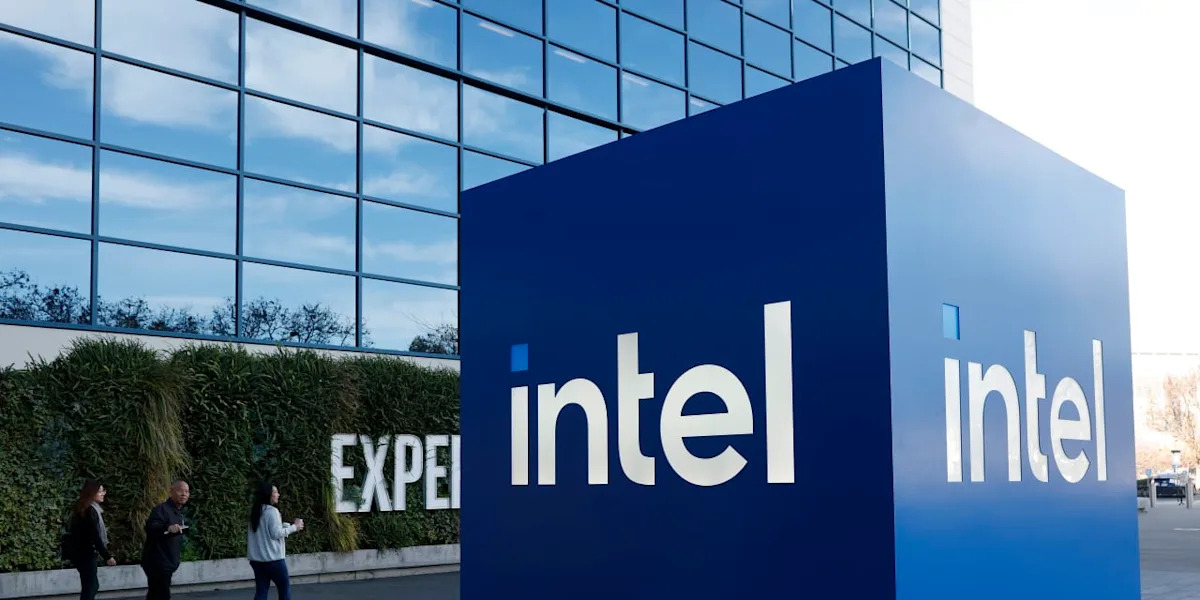
Intel delivered stronger-than-expected second-quarter earnings and revenue on Thursday, but announced a significant increase in its 2026 capital spending plans to more than $20 billion(約3.2兆円) to keep pace with AI demand—a move that spooked investors enough to outweigh the positive earnings surprise and drag the stock down on Friday.
Summaries like this, in your inbox every morning.
Sign up free →What happened
Intel reported second-quarter per-share earnings nearly double analyst forecasts and revenue ahead of estimates on Thursday. The company raised its 2026 capital expenditure estimates to more than $20 billion(約3.2兆円), up from around $18 billion(約2.9兆円), to meet rising product demand.
Why it matters
The earnings beat would normally lift a stock, but Intel's raised capex forecast appears to have triggered investor concern about the scale of spending required to compete in AI infrastructure—a cost that may pressure profitability even as revenue grows.
What to watch
The market's reaction on Friday will signal whether investors view the capex increase as a necessary investment or an unsustainable burden. The 2026 guidance of more than $20 billion(約3.2兆円) is a concrete marker of Intel's AI-driven spending trajectory.
Intel reported strong second-quarter financial results late Thursday that surprised analysts on both earnings per share and revenue. Per-share earnings came in at nearly double the level forecasts had anticipated, and revenue exceeded estimates as well. On the earnings call, management used the strong results as justification for expanding the company's capital expenditure plans. Intel raised its 2026 capital expenditure guidance to more than $20 billion(約3.2兆円), a significant increase from the prior estimate of around $18 billion(約2.9兆円). According to management, this increase is driven by the company's efforts to meet the rising demand for its products in what is clearly a competitive AI infrastructure environment. Despite the strength of the underlying financial performance, the stock fell on Friday, suggesting that investors' concern about the magnitude of future spending commitments outweighed satisfaction with the quarterly beat. The $20 billion(約3.2兆円)-plus capex target for 2026 represents Intel's public commitment to the capital intensity required to remain competitive as AI demand reshapes the semiconductor industry.
Intel's Thursday earnings announcement presented a paradox: the company delivered financial results that far exceeded Wall Street's expectations on both the bottom line (per-share earnings nearly doubled the forecast) and the top line (revenue beat estimates). Normally, such an outcome would propel a stock higher. However, the company's disclosure that it is raising capital spending plans for 2026 to more than $20 billion(約3.2兆円)—a jump of roughly $2 billion(約3200億円) from the prior $18 billion(約2.9兆円) target—appears to have overshadowed the earnings beat. Management framed this increase as necessary to meet rising demand for Intel's products, positioning it as a growth investment. Yet the market's Friday reaction suggests investors may be reconsidering the sustainability or wisdom of such large-scale infrastructure outlays, even as revenue grows. The tension reflects a broader investor anxiety in the AI era: the question of whether enormous capex commitments can ultimately translate to profits, or whether they signal a race to the bottom in capital intensity.
AI-summarized, only the topics you pick — one digest a day via Email, Slack, or Discord.
Free · takes 30 seconds · unsubscribe anytime
No comments yet. Be the first to share your thoughts!
Log in to join the discussion

Get curated AI news from 200+ sources delivered daily to your inbox. Free to use.
Get Started FreeFree · takes 30 seconds · unsubscribe anytime
