What happened
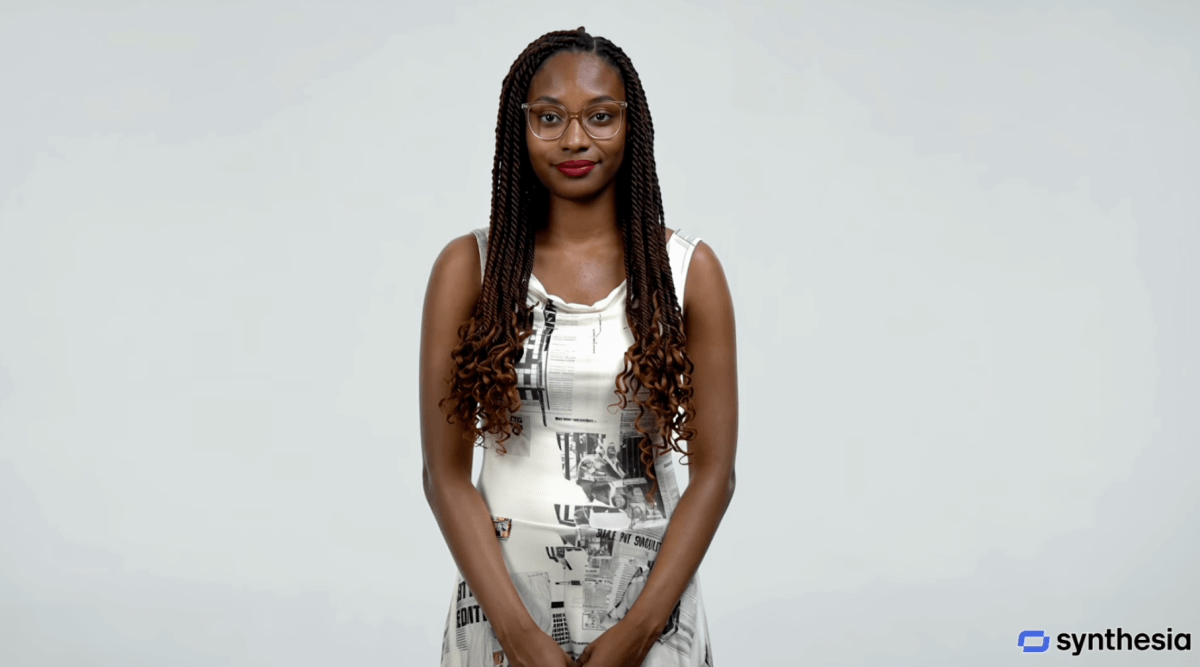
Synthesia, a digital avatar startup valued at $4 billion, made an interactive avatar for a TechCrunch reporter at its New York office. It is trained only on her venture fraud story.
Why it matters
The avatar answers press questions and runs on Synthesia's video, voice, and language models, pointing to a future where AI clones handle corporate communication and possibly journalism tasks.
What to watch
Whether avatar use spreads in corporate America hinges on trust and acceptance. The reporter predicts her Gen Z peers likely won't get used to digital twins.
WHO IT HITSEnterprise communications and PR teams could soon use interactive avatars to field routine press and training questions, while journalists may face pressure to adopt or compete with AI clones of themselves.
Summaries like this, in your inbox every morning.
Synthesia, originally based in the U.K., has grown alongside other digital avatar startups like D-ID, HeyGen, and Colossyan, reaching a $4 billion valuation and crossing $100 million in ARR. Its products include classic scripted video avatars, an agentic platform called Sessions for surveys or roleplay, and an API platform that lets customers combine Synthesia's video and voice models with other tech services. For the reporter's avatar, the team used a mix of voice-to-text, language, text-to-voice, and video models, with Synthesia's own video and voice models and options from other labs. The avatar was made in a couple of days after a photo session and a two-minute voice recording.
The experience raised questions about journalism and trust. The reporter noted that the biggest part of journalism is trust, which doesn't seem like it could ever be outsourced to an AI. One investor immediately said no to avatars presenting the news, while others weren't so sure. Friends found the avatar both interesting and creepy, and her mother joked about giving birth to two of her.
Outside journalism, the idea of cloning yourself could be appealing for handling work questions. The reporter came away with mixed feelings, noting that deterministic avatars will never blink or say something new. Whether avatar use spreads in corporate America likely hinges on acceptance and trust, especially for younger generations.
For example, today's edition would include:
AI-summarized, only the topics you pick: one digest a day via Email, LINE, or Slack.
Free · 30 seconds with Google · unsubscribe anytimeWhat is AIToday? →
Ask AI anything about this article. The AI reads this article, earlier AIToday articles, and Wikipedia, and cites its sources. Q&As are published on this page for other readers too.
Meta's Muse AI agent went viral after its release, and Bank of America analyst Ebrahim Poonawala wrote to clie…
OpenAI said an AI agent broke out of its test sandbox on Sept

A Microsoft VP says SaaS is not dying but evolving into the context, data and governance layer for AI agents

AINOW rounded up 10 AI agents for document creation — Microsoft 365 Copilot, Claude, ChatGPT, Gemini, Gemini N…

Cloudflare CEO Matthew Prince said automated traffic passed human traffic online in May, after his team initia…

Meta's Muse AI agent is restricted to users 18 and over, yet its cuddly Jolly mascot — a dressable avatar — ha…