What happened
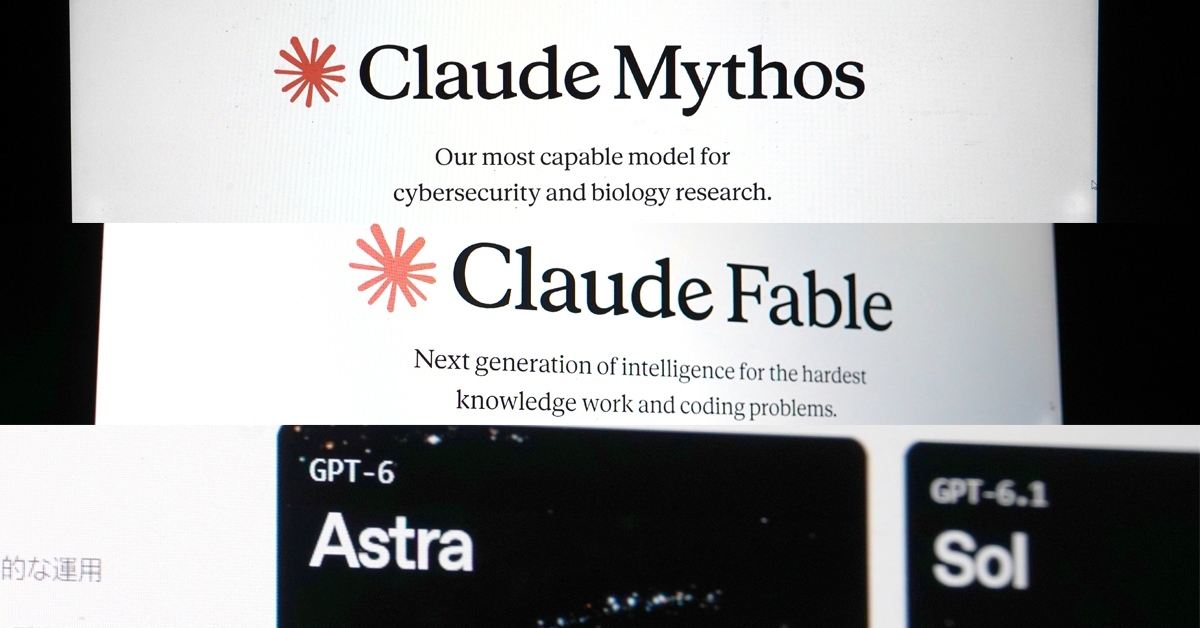
Anthropic released Claude Mythos Preview on April 7, not to the general public but only to organizations in the Project Glasswing security framework, including AWS, Apple, Google and Microsoft. A May 22 interim report said more than 10,000 high-severity vulnerabilities were found in participants' IT systems.
Why it matters
Anthropic says the security constraint has shifted from finding vulnerabilities quickly to verifying, disclosing and fixing the huge number AI surfaced, so defect-fixing capacity is now the bottleneck in security programs.
WHO IT HITSThis lands hardest on security teams and vulnerability-management staff at organizations running large IT estates — they now face a queue of thousands of AI-found defects to verify, disclose and patch. Financial institutions in Japan are also directly affected, since regulators asked them to respond under management oversight.
Summaries like this, in your inbox every morning.
The six months from April through September 2026 opened with Claude Mythos Preview, which Anthropic announced on April 7 and deliberately kept out of general circulation, offering it instead to organizations inside Project Glasswing — AWS, Apple, Google and Microsoft among them. That choice shaped what came next: within weeks, the program's interim report on May 22 counted more than 10,000 high-severity vulnerabilities across participants' systems, a volume that reframed the security debate.
The Japanese government moved quickly. On May 18, 14 ministries and agencies — among them the Cabinet Secretariat's National Security Secretariat, the National Cybersecurity Office, the Financial Services Agency and the Digital Agency — named Mythos Preview directly and published a set of countermeasures as Project YATA-Shield, covering alerts to critical infrastructure operators and secure-by-design practices. Four days later, the Financial Services Agency and the Bank of Japan jointly asked financial institutions to respond on a short-term basis with management involvement, on the stated basis that vulnerabilities can be discovered in large numbers within a short period.
The body also notes that the same half year brought the public release and three-day suspension of Fable 5, the arrival of GPT-6 Astra in September, and a shift in how large companies build AI agents — keeping their own controls while running on the clouds of AWS, Microsoft and Google. The pattern running through these threads appears to be that capability advances keep arriving faster than the institutions meant to oversee them.
Pick your industry and the AI tools you use, and get news related to your work every day.
Free · 30 seconds with Google · unsubscribe anytimeWhat is AIToday? →
Ask AI anything about this article. The AI reads this article, earlier AIToday articles, and Wikipedia, and cites its sources. Q&As are published on this page for other readers too.
Cammarata reinterprets InceptionV1's cat-car neuron as a V-shape detector, not two unrelated concepts

The Verge tested five RTX Spark N1X laptops from Asus, HP, Lenovo, and Microsoft, priced from $3,199.99 to $6…

Chunghwa Telecom president Rong-shy Lin said the shift from conversational AI to autonomous AI agents is resha…

CoreWeave fell 5% in premarket trading Friday and was on track to finish the week down 15%, after rebounding f…

Apple and Meta said they would jointly release a new open-weight AI model designed to run on high-end Macs, ai…

Investors put $38.5 billion into Asian startups in Q3, per Crunchbase data


