
What happened
Insilico Medicine reports that rentosertib, an AI-designed drug originally developed for idiopathic pulmonary fibrosis (IPF), appears to reverse markers of biological aging. Six independent aging clocks predicted that treated patients were biologically up to six years younger than the placebo group.
Why it matters
This is the first study to show clearly that predicted biological age can be reduced, according to Vadim Gladyshev of Harvard Medical School. However, the trial involved only 42 patients, and the results may only apply to those with the lung disease, not healthy people.
What to watch
The study falls short of a definitive trial, so the key test is whether larger studies in healthy people confirm the effect. Rentosertib is currently in a Phase III trial for IPF, the final stage before potential approval.
Ask the AI about this article →
Summaries like this, in your inbox every morning.
The new analysis builds on a previous trial of rentosertib in patients with IPF, where improved lung function was observed. The researchers collected blood samples during that trial and later applied six independent aging clocks to the data. All six models, which share neither features nor training data, predicted a lower biological age for treated patients, with the strongest effect seen at week 4 in the 30 mg twice-daily group.
The fact that the dose that helped the lungs most (60 mg once daily) differed from the one that cut predicted biological age the most (30 mg twice daily) suggests an effect at least partly independent of lung function. Additionally, compared against more than 55,000 profiles from the UK Biobank, the drug appeared to reverse changes typically associated with aging. However, these correlations are not proof, as the company itself notes.
The stakes are high for Insilico, which aims to speed up drug development with generative AI and has developed at least 28 drug candidates as of March 2026. Rentosertib is now in a Phase III trial for IPF, and if the aging findings hold up in larger studies, they could open a new avenue for longevity treatments. Yet the sample size is small, and experts like Eric Topol and Vadim Gladyshev stress that definitive trials, especially in healthy people, are still missing.
For example, today's edition would include:
AI-summarized, only the topics you pick — one digest a day via Email, Slack, or Discord.
Free · 30 seconds with Google · unsubscribe anytimeWhat is AIToday? →
Ask AI anything about this article. Q&As are published on this page for other readers too.
Merck (MRK) shares rose after positive trial results for its personalized cancer vaccine intismeran autogene…

Sands Capital Global Growth Fund highlighted Intuitive Surgical (ISRG) in its Q2 2026 investor letter, saying…

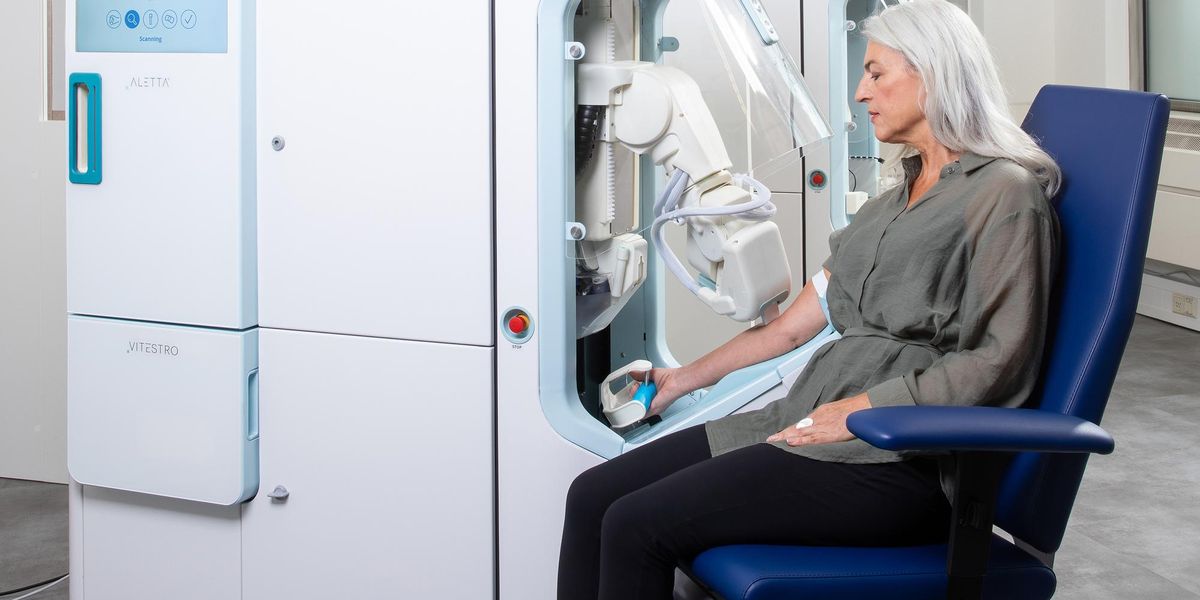
The U.S. Food and Drug Administration gave the go-ahead on 19 August for Aletta, the first autonomous blood-dr…
Researchers in Bengaluru, India, are using AI to train rescue dogs like Chloe to sniff human breath for cancer…

Pfizer's earnings calls now emphasize an AI-native R&D organization and a risk-adjusted high single-digit reve…

Researchers used Google Cloud Vertex AI's code-free automated machine learning to build a model that classifie…