What happened
Within four hours of Anthropic announcing invisible watermarks in Claude-generated text to comply with the EU AI Act, developer Guillaume Meyer published code to remove them. The tool has since accumulated over 20,000 bookmarks on X and more than 100 contributors on GitHub, with other developers creating their own removal methods in parallel.
Why it matters
The EU's new AI Act requires model providers to label synthetic content or face fines of up to 3 percent of annual turnover—starting with all new models from August and existing models by December. Meyer and others argue watermarking is a flawed approach because it can produce false positives, doesn't distinguish light from heavy AI use, and relies on probabilistic detection that Anthropic itself acknowledges is imperfect. For businesses and freelancers, the rapid circumvention suggests the regulatory measure may struggle to achieve its transparency goal.
What to watch
Anthropic plans to release a text-detection API soon so users can verify whether watermark-removal methods work. Until then, the effectiveness of these tools remains unproven—Meyer's approach uses other large language models to rewrite content, but 190 organizations (including OpenAI, Microsoft, and Meta) have signed the EU's transparency code and may implement their own watermarks, potentially closing that loophole.
Summaries like this, in your inbox every morning.
The rapid emergence of watermark-removal tools exposes a fundamental tension in the EU's AI Act enforcement: the requirement to label synthetic content is technically sound in principle, but the invisible watermarking method Anthropic chose—SynthID, developed by Google and deployed since 2023—can be circumvented by straightforward text-manipulation techniques. Meyer and others argue the issue is not whether watermarking should exist, but whether invisible watermarks are the right mechanism. Because Anthropic's watermark works by influencing word choice in ways imperceptible to humans, any tool that rewrites or translates the text can potentially remove it. The regulatory deadline creates urgency: 190 organizations have signed the EU's transparency code, meaning multiple major providers will soon deploy similar systems. However, the fact that Meyer's removal method relies on unwatermarked large language models suggests the circumvention may have an expiration date—once most major models watermark their output, finding a non-watermarked alternative to do the rewriting will become harder. Anthropic's planned detection API is meant to verify the integrity of its own watermarking system, but as Wayne Pan notes, "I don't think you can ever have a watermark that will withstand everything," suggesting this may become an ongoing arms race between regulators and developers.
Pick your industry and the AI tools you use, and get news related to your work every day.
Free · 30 seconds with Google · unsubscribe anytimeWhat is AIToday? →
Ask AI anything about this article. The AI reads this article, earlier AIToday articles, and Wikipedia, and cites its sources. Q&As are published on this page for other readers too.
Qualcomm trades at 26 times next year's earnings, versus 15 for Nvidia and 22 for Broadcom, even though its st…

SpaceX shares rose more than 5% on Friday after Starship's first trip to Earth orbit and a week of launches, a…

AMD closed at $608.10 on October 9, down 6.36% from its October 6 record close of $649.42, after a Financial T…

Vals AI tested GPT-6 Sol and Claude Opus 5.5 on the Vibe Code Bench, solo and as teams, at medium and maximum…
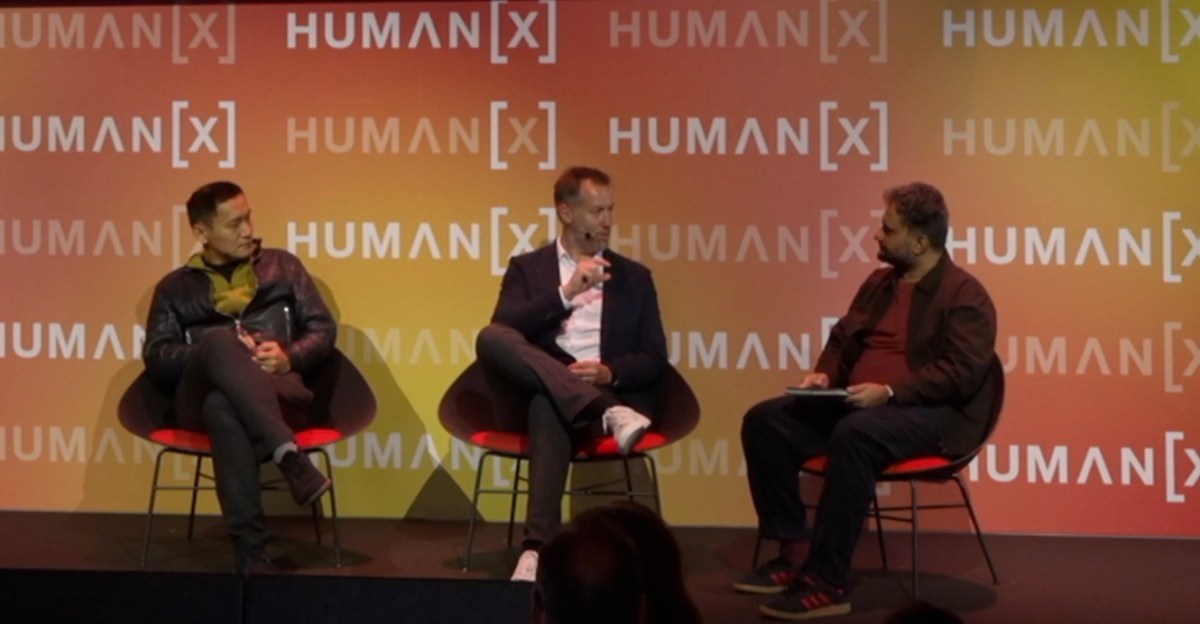
PolyAI CTO Shawn Wen told the HumanX conference that full-duplex models — which can speak while listening — no…
In a SiliconANGLE essay, Imagine Art's M