What happened
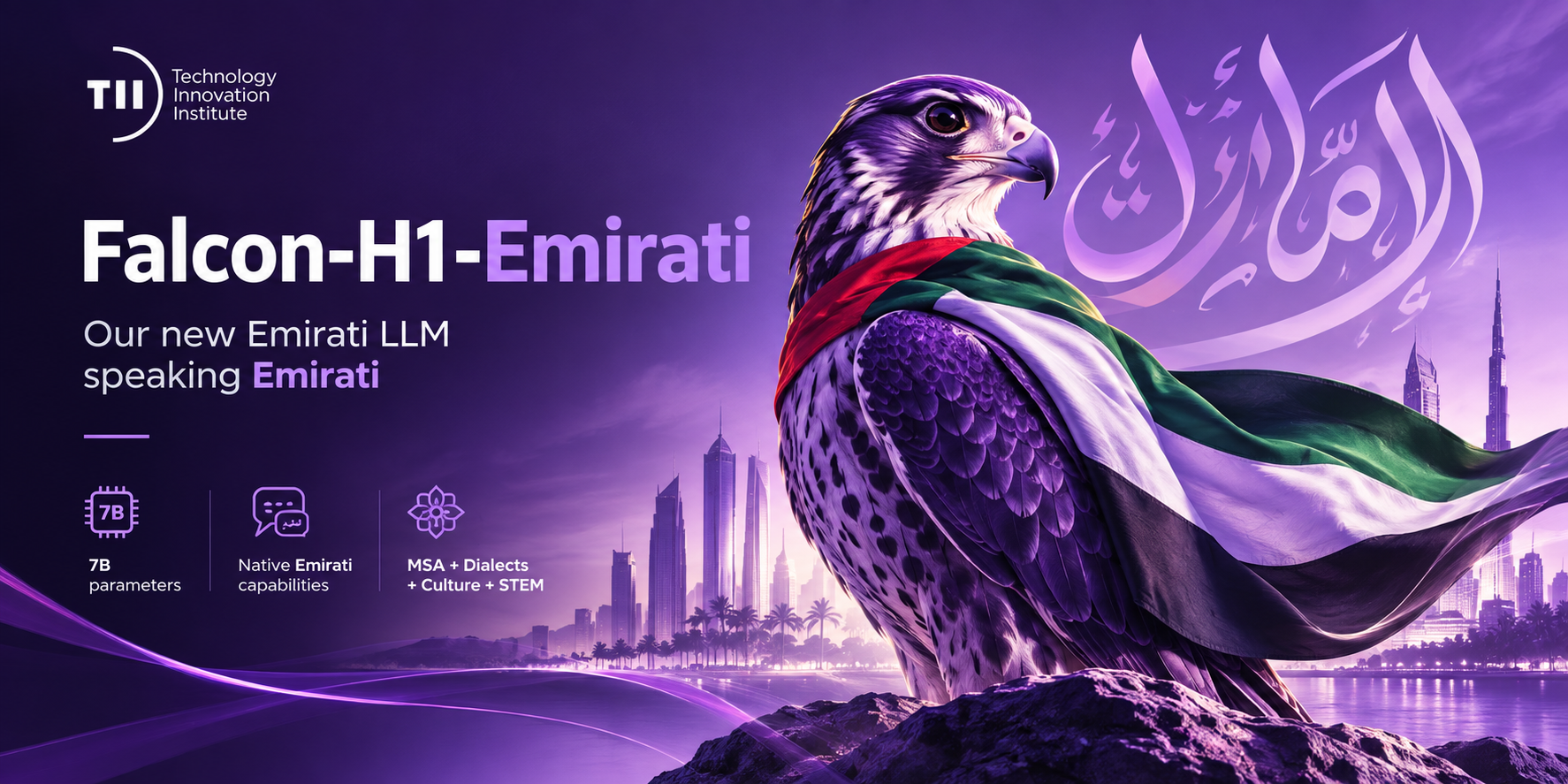
The Technology Innovation Institute released Falcon-Emirati-7B, a 7B-parameter model built on Falcon-H1-Arabic that scores 84.83% on Alyah, a 1,173-sample benchmark for Emirati-dialect Arabic.
Why it matters
Size alone does not buy dialect competence, the researchers say; some of the largest multilingual models scored well below smaller, dialect-aware ones, suggesting Emirati proficiency must be trained for on purpose.
What to watch
In open-ended generation judged by Gemini 3.7 Flash, Falcon-Emirati-7B scored 0.52 on dialect fidelity versus 0.05 for ALLaM, so the test is whether that edge holds outside multiple-choice tasks. Watch Fanar-2-27B-Instruct, which abstained 26.2% of the time.
WHO IT HITSArabic-speaking product teams, customer-service and content-localization groups in the UAE gain a model that answers in Emirati dialect rather than Modern Standard Arabic by default, which could matter for chatbots and cultural-context applications. The technology group behind it is positioning dialect-specific training as a requirement rather than a byproduct of scale.
Summaries like this, in your inbox every morning.
Falcon-Emirati-7B did not start from scratch. It builds on Falcon-H1-Arabic, which the Technology Innovation Institute says already set new benchmarks for Arabic earlier this year and was trained on a mix of Modern Standard Arabic and Gulf, Levantine, Egyptian and Maghrebi dialects. That foundation gave the team a model that understood Arabic broadly broadly, handled long context, and had some dialectal exposure built in — but not the Emirati-specific vocabulary, grammar and cultural knowledge.
The team describes dialect adaptation as genuinely hard for three reasons: Emirati is mostly spoken and shows up far less in online writing than Modern Standard Arabic; meaning is often non-literal, leaning on idioms, proverbs and poetry; and there is no established recipe for how much dialectal data to use or which training stage matters most. To work around that, they built a dedicated Emirati data pipeline from three sources — natively written Emirati web content, Modern Standard Arabic material about Emirati culture and heritage, and synthetic dialect data constrained by Emirati glossaries and style rules.
The results suggest the approach worked, but the comparison set is important. All competing models in the study were instruction-tuned Arabic or multilingual models, and Falcon-H1-Arabic family models were excluded because Falcon-Emirati-7B is built on top of them. The one category where competitors hold their own is Greetings & Daily Expressions, which the team notes is where Emirati and Modern Standard Arabic overlap most. Whether dialect-specialized models like this one become the default for regional applications — rather than a niche layer on top of larger general models — likely hinges on whether the dialect-fidelity advantage holds up in real, open-ended use.
Pick your industry and the AI tools you use, and get news related to your work every day.
Free · 30 seconds with Google · unsubscribe anytimeWhat is AIToday? →
Ask AI anything about this article. The AI reads this article, earlier AIToday articles, and Wikipedia, and cites its sources. Q&As are published on this page for other readers too.
KDDI's ELYZA said on October 2 it set up "ELYZA RSI Research" to study recursive self-improvement, and CEO Yuy…
On a recent episode of The AI Investor Podcast, Eric Bleeker and Austin Smith broke down Google's release of G…
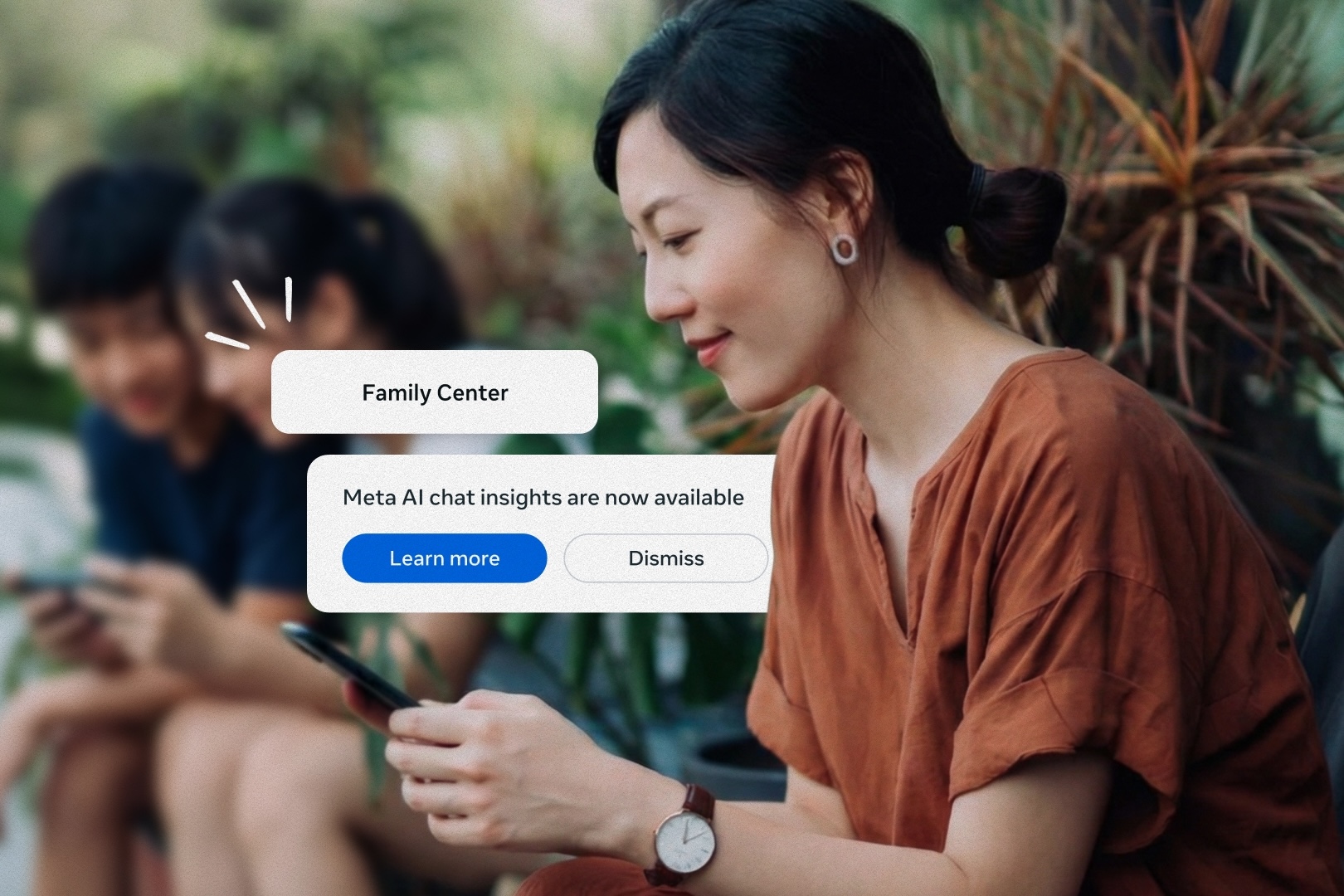
Meta has begun offering parental controls in Meta AI, so parents can review the topics their teens asked about…
OpenAI is adding the textGrain watermark to text from ChatGPT and Codex, applying it to EU outputs over the co…
OpenAI is rolling out a new visual ad format shown while ChatGPT generates images, and will test it with selec…
DeepMind's 2022 study found that at equal compute, balancing model size and data beats pure bigness: a 70 bill…


