What happened
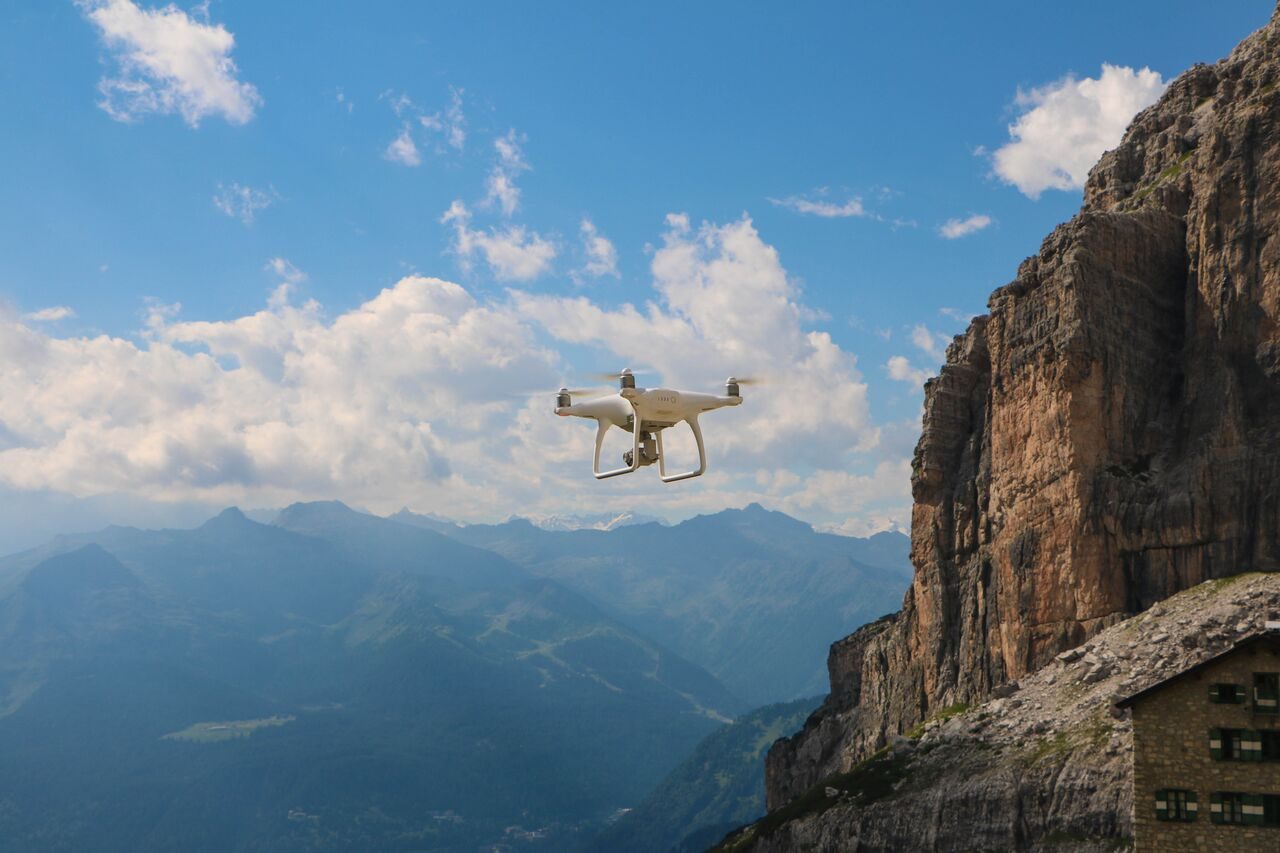
Research from The University of Texas at Austin, led by Rohan Ghuge, found an autonomous vehicle can get most of the benefit of fully adaptive route planning by recalculating its path only two or three times.
Why it matters
Ghuge said that when a robot changes its solution just a few times, it still gets most of the benefit of being fully adaptive, making the approach more practical with a small added cost.
What to watch
The finding comes from computer simulations, so its usefulness for real drones hinges on whether battery power, onboard computing and communications limits allow even a few recalculations. Watch for the simulation-to-field gap.
WHO IT HITSDrone operators in search and rescue, infrastructure monitoring, scientific research and agriculture could use fewer recalculations to save battery and onboard computing, though the result so far comes from simulations.
Summaries like this, in your inbox every morning.
The research, led by Rohan Ghuge at The University of Texas at Austin with Rayen Tan and Viswanath Nagarajan of the University of Michigan, addresses a familiar problem in autonomous operations: a drone may start a mission with limited information, and as it collects data the best route can change. A fully adaptive system keeps changing its planned route as new information arrives, producing better routes but requiring repeated calculations that consume computing resources and time. At the other extreme, a nonadaptive system follows its original route no matter what it discovers. The hybrid approach the team developed sits between those two models: the vehicle follows a planned route for a set period, called a round, then uses the information collected during that round to calculate its next route.
The simulations showed that a hybrid solution using two adaptive rounds was 15 times faster than the fully adaptive model, with a cost only 12% higher. The researchers also found diminishing returns: after three rounds, accuracy did not improve significantly. As Ghuge put it, “You don’t really need all the data to make good decisions. If you’re doing the searches sequentially, two or three rounds are sufficient.” The finding may matter for drone operations because aircraft face limits on battery power, onboard computing resources and communications.
The broader point is that more frequent decision-making does not necessarily produce proportionally better results. Still, the evidence so far comes from computer simulations rather than flight tests, and the body says the research does not mean drones themselves can search an area 15 times faster. Whether the two-round model translates into real missions may depend on how those battery, computing and communications limits play out in the field.
Pick your industry and the AI tools you use, and get news related to your work every day.
Free · 30 seconds with Google · unsubscribe anytimeWhat is AIToday? →
Ask AI anything about this article. The AI reads this article, earlier AIToday articles, and Wikipedia, and cites its sources. Q&As are published on this page for other readers too.
A team led by PhAI Labs, with collaborators from Stanford, Oxford, and Princeton, introduced JEPA-Anything, bu…

ITRI said robotics is shifting from traditional automation equipment into a productivity tool for every indust…
Agile Robots CEO Zhaopeng Chen said at the company's Physical AI Media Day that "physical AI is going to be 10…
Aigen says Element learned lettuce in its Alchemy simulation, then deployed to the field in under a week
On The AI Investor Podcast, co-hosts Eric Bleeker and Austin Smith discussed the future of robotics and how ph…
Reactor said it added Nvidia's venture capital arm and Sapphire Ventures to its cap table, bringing its total…