
What happened
An engineer who adopted a Claude Code suggestion for a small feature without review later hit unexpected edge-case behavior that took time to trace. The author says confirming the proposal's reasoning first would have prevented the rework.
Why it matters
Coding assistants like Claude Code and GitHub Copilot often give no stated rationale, so adoption decisions sit with the user; engineers who accept output just because it runs may be unable to explain their own implementation intent when something breaks.
WHO IT HITSThis falls hardest on working software engineers who paste AI code suggestions straight into production repos, and on reviewers who must trace failures they did not write. Teams facing tight deadlines may need to limit checks to higher-risk areas.
Summaries like this, in your inbox every morning.
The article is written from direct experience: the author once handed a small feature implementation to Claude Code, adopted the suggested logic as-is, saw it appear to work, and then ran into unexpected edge-case behavior later that took time to investigate. The stated lesson is that the rework was avoidable had the reasoning behind the proposal been confirmed first.
The author places the blame less on the tools than on how they are used. Coding assistants such as Claude Code and GitHub Copilot keep improving in accuracy, but proposals often come without any stated basis, leaving the adopt-or-reject call entirely to the engineer. In the author's framing, AI proposals tend to prioritize code that runs and do not guarantee design intent or future extensibility — the gap a human is supposed to fill.
The article is candid about the limits of its own advice. When deadlines are extremely tight and there is no time to verify, the author allows accepting AI suggestions as-is for lower-risk parts. For engineers still learning, working up to comparing alternatives too early can stall progress, so the suggested order is to begin with asking why. On teams, requiring the same level of verification from everyone can raise review costs, so the article advises agreeing on the scope of checks according to project nature and team maturity.
Pick your industry and the AI tools you use, and get news related to your work every day.
Free · 30 seconds with Google · unsubscribe anytimeWhat is AIToday? →
Ask AI anything about this article. The AI reads this article, earlier AIToday articles, and Wikipedia, and cites its sources. Q&As are published on this page for other readers too.
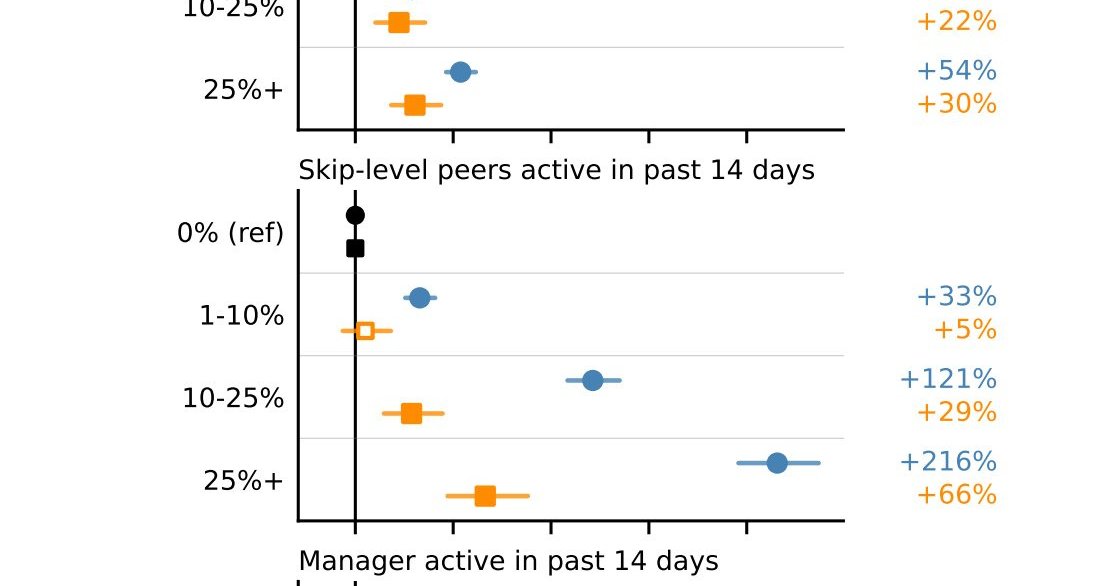
Researchers at Microsoft published a paper titled "Adoption and Impact of Command-Line AI Coding Agents: A Stu…
Meta released open weights for Muse Spark Open, an 816B-parameter model built for coding and long-running agen…

In a Zenn article, EC自動化工房 laid out a pre-generation cleanup step for product masters, adding notation rules t…
Three one-line requests and three requests with written completion criteria to Claude Code produced functional…
Kamei detects confidential and identifying information in text or code, swaps it for pseudonyms that keep thei…
Anthropic built Scion, a centralized source-control system for always-connected coding agents, with a seven-pe…

