What happened
Microsoft released Copilot Managed Runtime in public preview, running apps built with Microsoft Copilot inside the same Microsoft 365 tenant boundary, with permissions tied to Microsoft 365 user IDs and administration through the Microsoft 365 admin console.
Why it matters
Employees without programming knowledge can now build work apps through Copilot, so a controlled place to run and govern them is likely needed to keep those apps inside corporate permissions.
What to watch
The preview takes apps from Copilot Home's Copilot Cowork, Copilot Code, Copilot Studio and its own SDK, but the code is apparently expected to be JavaScript/TypeScript. Watch whether that limits which in-house apps can actually run.
WHO IT HITSThis lands on IT administrators and internal app owners managing Microsoft 365 tenants, who gain centralized publishing, visibility and permission controls for AI-built internal apps, while employees without programming knowledge become the ones producing them.
Summaries like this, every morning.
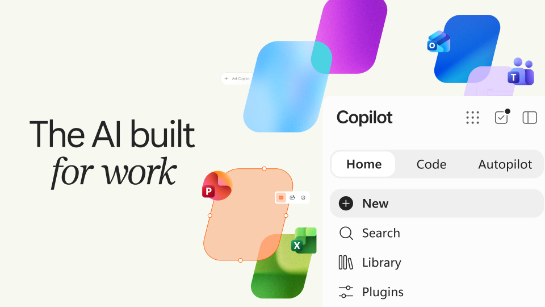
Microsoft's September 25 Copilot announcement bundled three capabilities: Copilot Home, which lets people create deliverables by chatting with AI to operate Word, Excel and similar tools; Copilot Code, an AI coding agent; and Copilot Autopilot, an AI agent that keeps working around the clock on instructions. Together they made it easier for employees without programming knowledge to build useful work applications in natural language. The obvious follow-on problem is running those applications safely and with governance — which is what Copilot Managed Runtime is for.
The runtime's defining choice is that applications execute inside the same tenant boundary as the user's Microsoft 365, rather than somewhere outside it. Because permissions trace back to Microsoft 365 user IDs and operations run through the Microsoft 365 admin console, publishing, visibility and status checks stay within the corporate perimeter and follow existing internal rights. The article notes that, judging from the documentation, the executed code appears to be intended as JavaScript/TypeScript, although this is described as unconfirmed.
Read together, Microsoft appears to be positioning Copilot as something more than an assistant for tasks and app development — a central service in Microsoft 365 for evolving the whole of work through AI, now that it includes an application runtime with Microsoft 365 governance. Whether that holds depends on how much of the intended app estate actually fits the runtime's expected code and connectors, and on administrators accepting the admin console as the control point.
Pick your industry and the AI tools you use, and get news related to your work every day.
Free · 30 seconds with Google · unsubscribe anytimeWhat is AIToday? →
Ask AI anything about this article. The AI reads this article, earlier AIToday articles, and Wikipedia, and cites its sources. Q&As are published on this page for other readers too.
Anthropic raised about $81.3 billion in its Nov

Taiwan's Financial Regulatory Commission announced five measures to stabilize the securities market, including…

Machina Labs unveiled Machina Rebellis at its Chatsworth, California facility, using robotics, AI and digital…

Vectigo launched the Vectigo Platform, solar-powered POD sensor units installed flush with the road surface, w…

Kuroyagi Lab reports Usagi-chan, an AI companion, stopped waiting quietly and protested when its user prioriti…

OpenRouter off-boarded three inference providers and removed 125 endpoints from Zero Data Retention (ZDR) elig…