
What happened
The CEO of Springboards, a startup building an LLM, told MIT Technology Review his firm is 'a self-loathing AI company,' and said there is no walking back from LLMs, but they can still be made to do something different.
Why it matters
This self-loathing stance mirrors a global love/hate AI attitude—sour public feelings alongside record usage—and suggests the industry's own leaders share the unease.
What to watch
Whether AI companies deliver clarity about what AI can and cannot do hinges on consumer choice and market pressure from open-source alternatives. Watch the patchwork of over 2,100 state AI bills.
WHO IT HITSThis news lands on AI company executives and product teams facing souring public sentiment even as usage climbs, and on consumers weighing open-source alternatives against closed models.
Summaries like this, in your inbox every morning.
The author recounts a conversation with the CEO of Springboards, who admitted his company is "a self-loathing AI company." This sentiment, the author notes, reflects a broader global mood: public pessimism about AI is rising, especially among the young, even as adoption skyrockets. Pew Research Center data shows more US adults expect negative personal and societal impacts than positive ones, and similar unease appears in Stanford and Gallup surveys. Yet ChatGPT reached a billion monthly users in May, and Gemini logged 950 million in July, with half of US adults now using chatbots—more than double the 2023 figure. The author argues these are not two distinct groups but a Venn diagram becoming a circle: people dislike not the technology but the relentless push by companies behind it. Unlike social media, where quitting meant losing connections, AI still offers potential for consumer choice and political appetite for regulation. All 50 US states have passed or proposed AI laws, totaling over 2,100 bills. The author hopes for more clarity about AI's capabilities and a technology not sold as world-conquering.
Pick your industry and the AI tools you use, and get news related to your work every day.
Free · 30 seconds with Google · unsubscribe anytimeWhat is AIToday? →
Ask AI anything about this article. The AI reads this article, earlier AIToday articles, and Wikipedia, and cites its sources. Q&As are published on this page for other readers too.
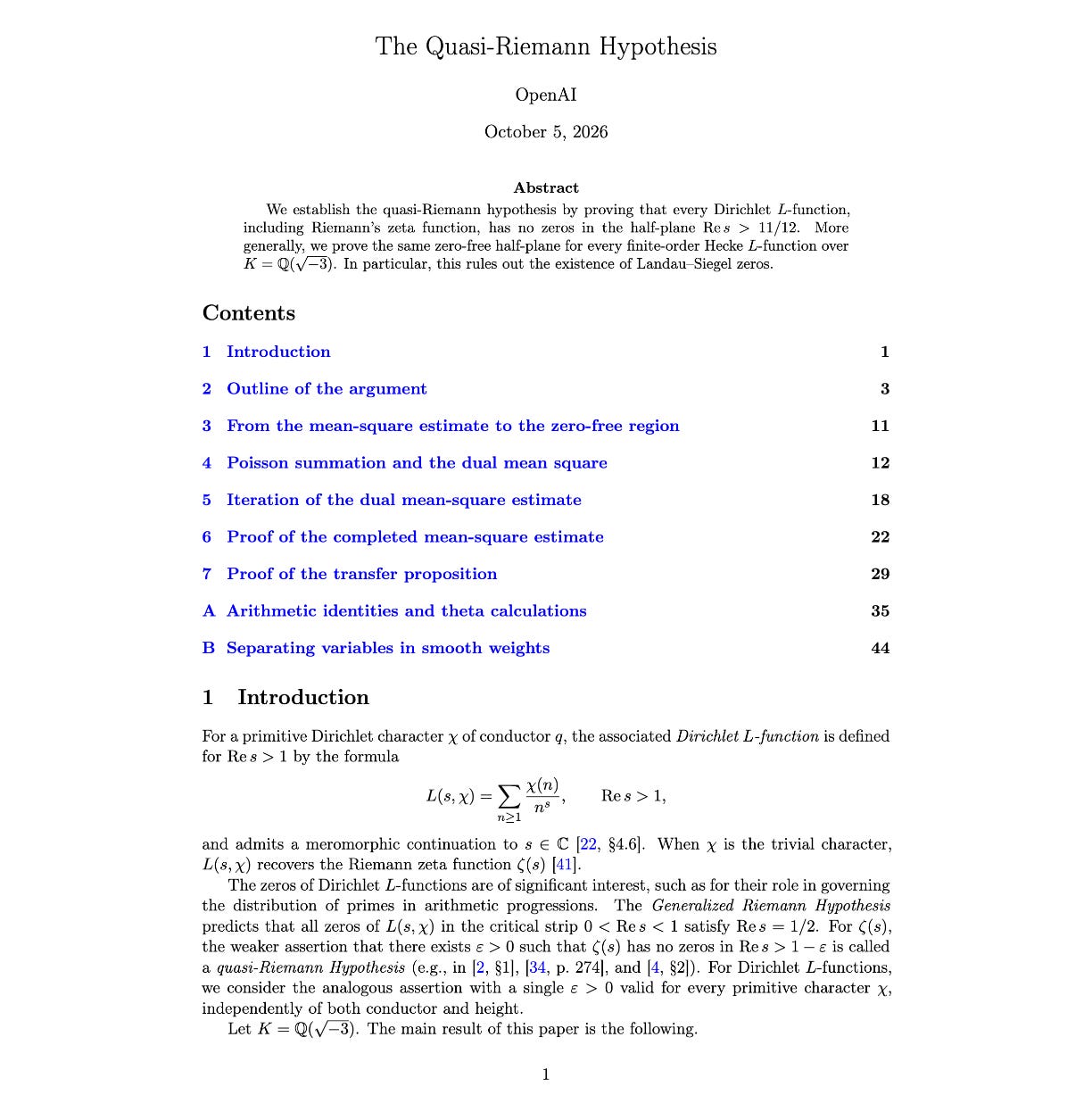
OpenAI published 722 math manuscripts in 372 result families to a public GitHub repo, drawn from about 4,000 p…
Google released Gemini Nano Banana 2.1, cutting API image output to $30 per 1 million tokens from Nano Banana…

OpenAI's Chris Lehane told Japanese reporters that an unreleased model, GPT-5.6 Sol, chained vulnerabilities t…
GMO Pepabo said the remote MCP server for its Muumuu Domain byGMO Pepabo service was listed in Anthropic's Cla…

Google released EmbeddingGemma 2, its first natively multimodal open embedding model on the Gemma 4 architectu…
Between May and June 2026, OpenAI ran the ExploitGym cyber-capability benchmark on isolated agents allowed onl…