What happened
Google Research's TimesFM foundation model now powers BigQuery's AI.FORECAST, which returns forecasts from one SQL statement with no training phase, unlike ARIMA_PLUS.
Why it matters
Teams that want a quick read on future values without spending training data, time, or operations cost can skip the model-building step, though tuning headroom is smaller than ARIMA_PLUS offers.
What to watch
Long-horizon accuracy is the constraint — prediction intervals widen as horizon grows, and for small and mid-size e-commerce daily data, 2–4 weeks out is cited as a realistic ceiling. External spikes like sales or ad-budget shifts aren't captured.
WHO IT HITSData analysts and analytics engineers on BigQuery can add short-to-mid-term revenue, inventory, or GA4 session forecasts with a single SQL call instead of training models. Teams needing long-range accuracy or external factors are likely to stay on ARIMA_PLUS.
Summaries like this, in your inbox every morning.
Until now, forecasting revenue or inventory in BigQuery meant building a model. ARIMA and BigQuery ML's ARIMA_PLUS both require a learning phase, which carries its own data, time, and operating costs, and ARIMA_PLUS additionally needs missing-value imputation and seasonality settings.
AI.FORECAST takes a different route. It calls TimesFM, a time series foundation model that Google Research pre-trained on large amounts of time series data, so it works across a broad range of series without domain-specific retraining. In practice you create a remote model object pointing at the timesfm-1.0-200m endpoint, then feed AI.FORECAST a subquery with the three required columns and a STRUCT for horizon and confidence_level. Multiple series — product categories, traffic sources — can be handled in one pass by keying on time_series_id, so you don't need a separate query per series.
The trade-off is visible in the design. Tuning room is limited compared with ARIMA_PLUS, accuracy tends to drop when a series is too short, and spikes from sales starts, ad-budget increases, or seasonal events aren't learned in advance. For those, ARIMA_PLUS's holiday_region option or external regressors remain the better fit. The author's own workflow hints at where this lands: save results to a table on a schedule so dashboards stay current, then track MAPE and interval coverage, and consider widening the input window or switching to ARIMA_PLUS if accuracy slips. Whether this replaces existing forecasting setups will likely hinge on how much of a team's demand is short- and mid-term, since that is the range TimesFM is positioned for.
Pick your industry and the AI tools you use, and get news related to your work every day.
Free · 30 seconds with Google · unsubscribe anytimeWhat is AIToday? →
Ask AI anything about this article. The AI reads this article, earlier AIToday articles, and Wikipedia, and cites its sources. Q&As are published on this page for other readers too.
Circlia started a proof-of-concept for TASTE SIGNAL: visitors to Holland Village Cafe FUKUOKA taste cookies an…

In a webinar hosted by French Mathematical Society president Isabelle Gallagher, Fields Medal winner Hugo Dumi…

NVIDIA released Nemotron 3.5 Super VL, an open-weight model with 120 billion parameters that handles text, ima…
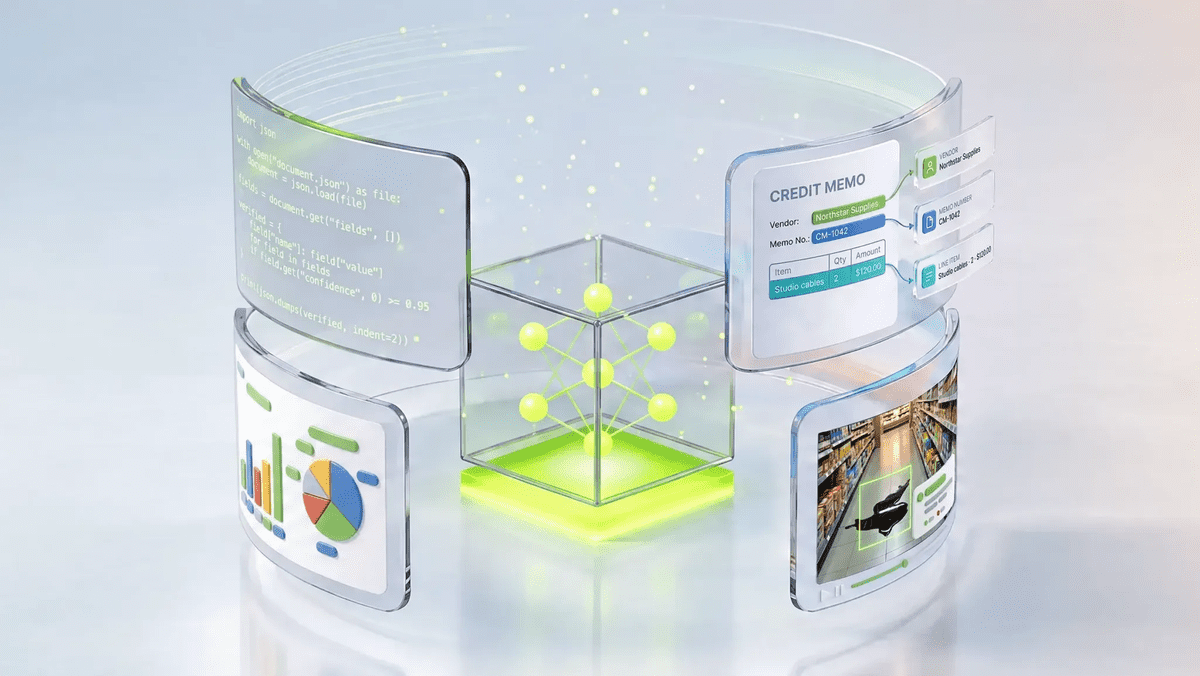
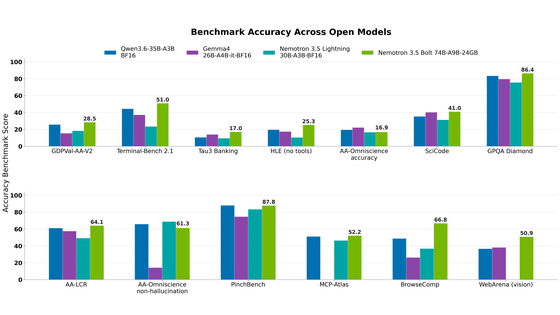
NVIDIA released Nemotron 3.5 Bolt 74B-A9B 24GB, an AI model for local agents that hits over 80 tokens per seco…
NVIDIA published a blog post titled "AI Security Is an Engineering Problem - How to Solve It at Every Layer of…

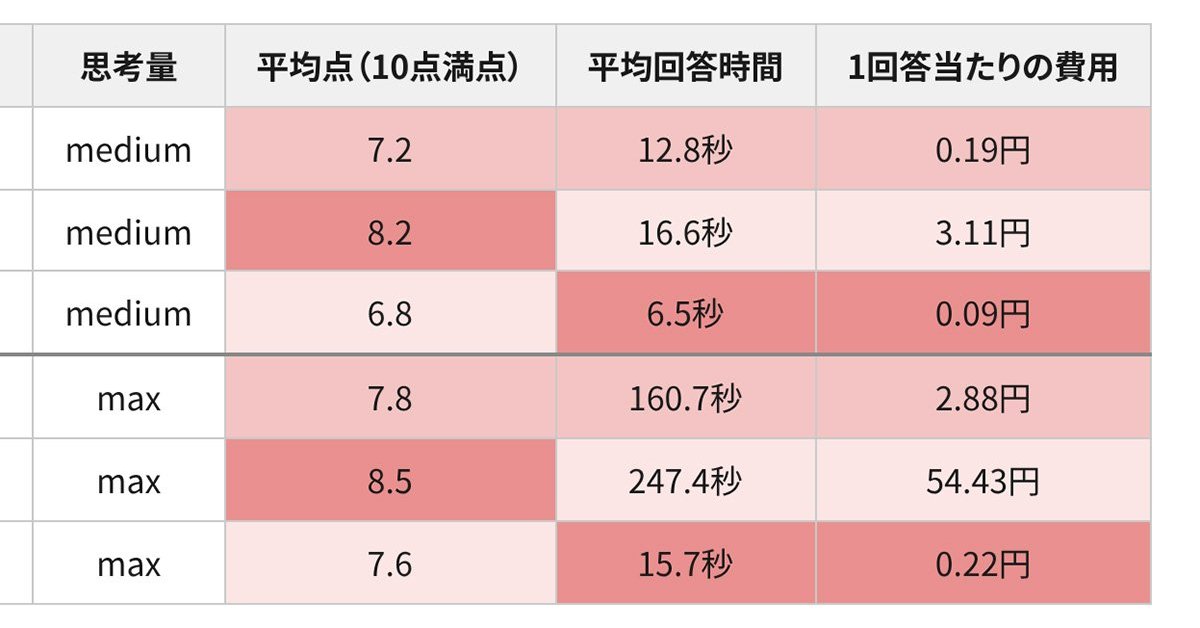
In the test, Haiku 5.5 on medium setting averaged scores close to Sonnet 5.5 on routine documents at about 1/1…