What happened
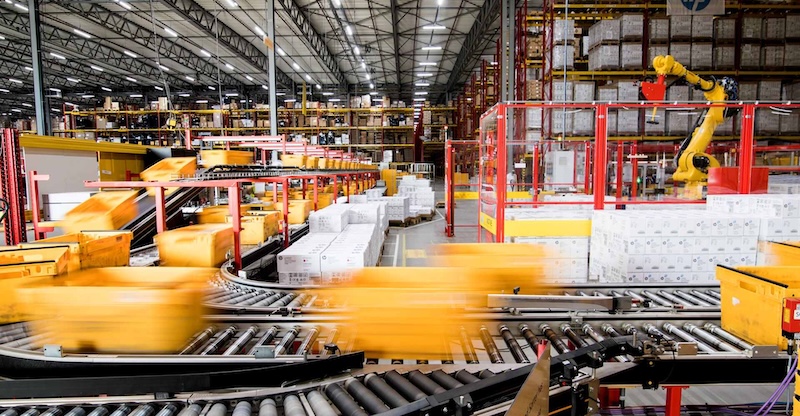
DHL Supply Chain is testing adaptive AI-powered robots and, after a successful proof of concept, has begun introducing AI orchestration software into operational warehouses, connecting employees, automated equipment and operational data.
Why it matters
The orchestration is meant to move beyond automating individual tasks toward coordinating entire warehouse workflows, letting operators allocate resources dynamically as order volumes change and respond to demand fluctuations, DHL says.
WHO IT HITSWarehouse operators and logistics site managers stand to gain tools that adjust robot and equipment allocation as order volumes shift, while DHL's human workers are positioned to handle judgment and expertise as robots take on repetitive and physically demanding work.
Summaries like this, every morning.
DHL Supply Chain frames the shift as moving past automating individual tasks toward coordinating entire warehouse workflows, which is why the orchestration software matters as much as the robots. Conventional warehouse robots largely follow predefined instructions, while the adaptive robots DHL is testing are designed to interpret changing conditions and adjust their actions to reach specific goals. One application being tested combines autonomous mobile robots, packaging equipment and warehouse management systems to allocate resources dynamically according to changing order volumes.
The scale DHL already operates gives the pilot unusual weight. It has installed more than 9,000 robots across its global logistics network, completed more than 1.5 billion robotic picks, and recorded 10 million robotic case unloads using Boston Dynamics' Stretch robot. More than 95 percent of its warehouses worldwide now use advanced digitalization technologies, and its analytics and AI solutions have been introduced more than 1,400 times, including over 500 implementations during 2026. Its conversational AI systems have logged more than 2.5 million minutes of interactions.
DHL separates physical AI, which controls robots and machinery, from digital AI, which analyzes information and supports decisions. Tim Tetzlaff describes them as complementary forces that optimize information flow and material flow respectively, and the company says human employees will remain central, contributing operational expertise and judgment while robots take on repetitive and physically demanding work. The aim, per DHL, is improving productivity without requiring every task or decision to be fully automated.
Pick your industry and the AI tools you use, and get news related to your work every day.
Free · 30 seconds with Google · unsubscribe anytimeWhat is AIToday? →
Ask AI anything about this article. The AI reads this article, earlier AIToday articles, and Wikipedia, and cites its sources. Q&As are published on this page for other readers too.
Epic Games, the game maker that has clashed with platform operators including Apple, continues litigation in t…
The Motley Fool's analyst chose SoundHound AI over Rigetti Computing for 2027, pointing to SoundHound's 6.8x P…

Treasury Secretary Scott Bessent said on Fox News Sunday that he wants Nvidia's answers within 10 days on whet…

Treasury Secretary Scott Bessent told Fox News that Treasury, War, USTR and State backed blacklisting Megaspee…

kickflow raised about ¥700 million through a third-party allotment of new shares, with SMBC Venture Capital an…
Anthropic, the AI developer, is listing at a valuation of 220 trillion yen, a debut that puts a concrete price…