What happened
Bots and AI agents now generate the majority of web traffic. CloudFlare reports that bots crossed 50% of webpage requests in June, with 57.5% of all requests now coming from bots. According to HUMAN Security's 2026 report, traffic from agents that take direct action on the web—clicking links, filling forms—grew 7,851% year over year, while scraper traffic grew 597% over the same period.
Why it matters
The internet's advertising and analytics business model was built on the assumption that visitors are human. With agents now dominant, this assumption has collapsed, forcing companies to rethink how they monetize and measure web activity. Stripe reports that 70% of API commands to access data now come from agents, and approximately 25% of developers now design APIs with agents as the primary consumer rather than humans—a fundamental shift in how the web operates.
What to watch
CloudFlare CEO Matthew Prince had predicted bots would cross 50% by end of 2027, but the crossover arrived more than a year early in June. However, the underlying infrastructure remains fragmented: payments and liability for AI agents are unsolved, and bot-detection systems miss agents that mimic human behavior, meaning the true scale of agent traffic is likely underestimated.
Summaries like this, in your inbox every morning.
The crossing of bots above 50% of web traffic represents a fundamental inversion of the internet's original architecture. For decades, the web was designed around human visitors generating pageviews, ad impressions, and conversion funnels—the metric trio that powered digital advertising and e-commerce. Developers built APIs, analytics tools, and monetization systems with that human assumption baked in. The dead internet theory, once dismissed as fringe speculation, has become measurable fact, though the exact timing and scale remain contested because no single cybersecurity firm has visibility into the entire web.
The discrepancy between CloudFlare's June crossover date and Thales's 2023 date underscores a critical measurement gap: bot-detection systems struggle to distinguish between legitimate traffic and sophisticated agentic browsers that mimic human behavior patterns. HUMAN Security's finding that agentic traffic (agents that actually execute tasks) grew 7,851% year over year, far outpacing scraper traffic at 597%, reveals that the composition of bot traffic is shifting toward functional agents rather than simple data collection. This shift is already reshaping how companies build infrastructure; Stripe reports 70% of API commands now come from agents, and Alpaca saw monthly API calls driven by agents jump from single digits in Q4 2025 to 30% in Q1 2026.
Yet the economic significance remains contained. Pitchbook estimates only 1% of roughly $20 trillion(約3200兆円) in work that could plausibly be automated is actually flowing through agents today, with global agent GDP at $36 billion(約5.8兆円) annually. The bottleneck is not technical but structural: payments and liability frameworks for autonomous agents do not yet exist. Without the ability to settle transactions or establish accountability, agents cannot fully participate in the online economy. This gap creates both a constraint on growth and a window for companies to adapt their infrastructure before agent traffic becomes the overwhelming norm.
For example, today's edition would include:
AI-summarized, only the topics you pick — one digest a day via Email, Slack, or Discord.
Free · 30 seconds with Google · unsubscribe anytimeWhat is AIToday? →
Ask AI anything about this article. Q&As are published on this page for other readers too.
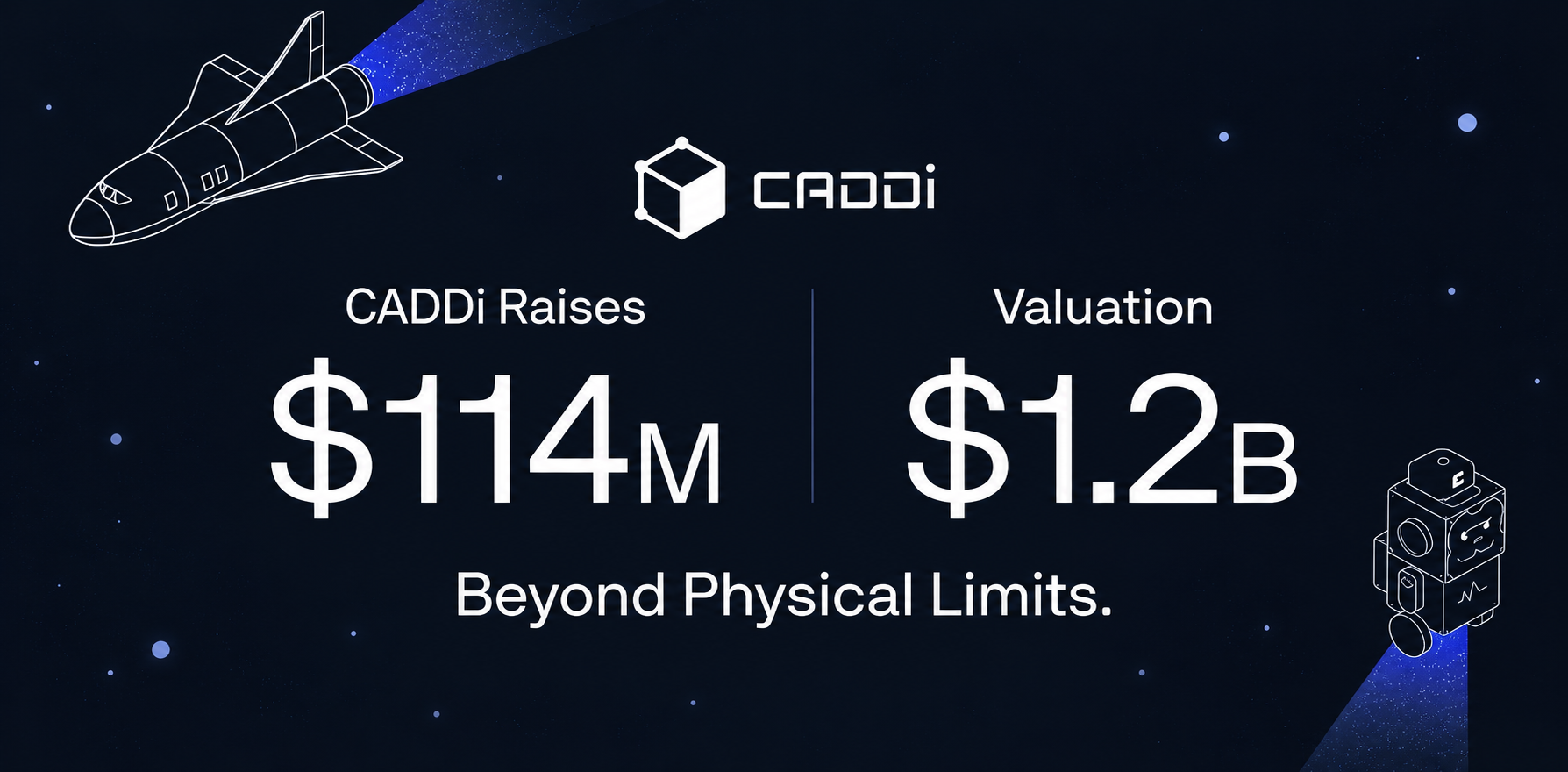
CADDi raised $114 million at a $1.2 billion valuation, versus the $470 million it reported at its March 2025 S…
Anthropic merged chatbot Claude with agentic tool Claude Cowork effective immediately, and launched Claude Doc…

Hang Ten Systems Inc., founded by ex-Infosys chief Vishal Sikka, announced a $53 million second seed round led…

Cohere and Aleph Alpha signed a merger agreement today, formalizing an April plan; the combined company will r…
Elon Musk has hinted at a Tesla-SpaceX merger, according to DIGITIMES, which notes the two companies are alrea…
Anthropic posted guidance saying Claude Code's output tokens cost about 5 times its input tokens, and that one…