What happened
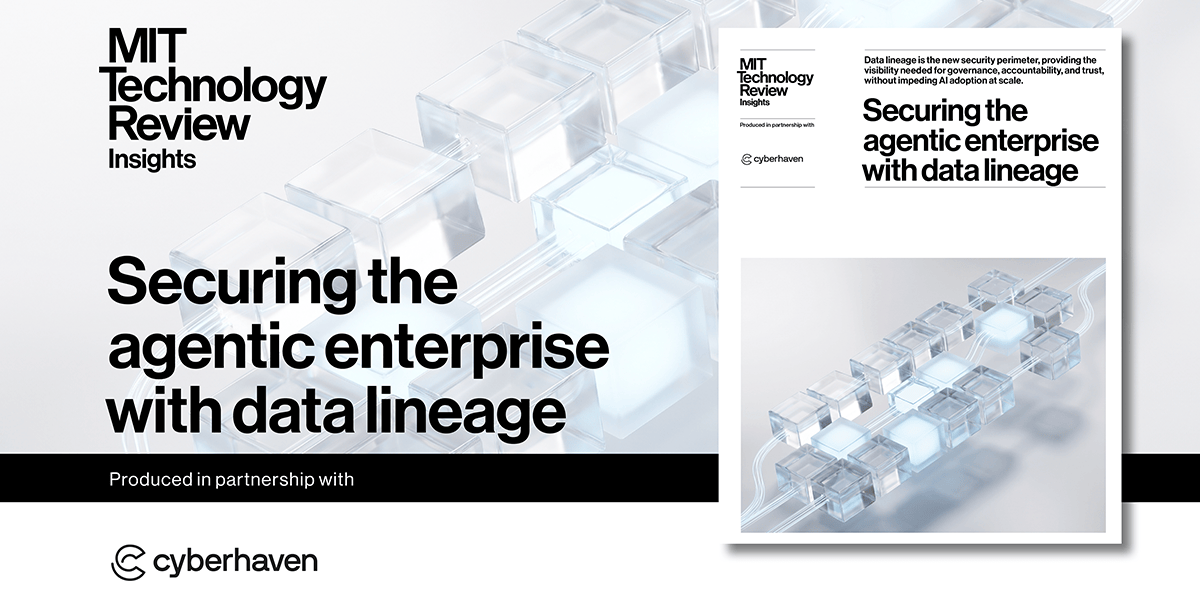
A sponsored MIT Technology Review Insights piece argues that securing agentic AI at scale requires data lineage, not traditional defenses built around applications, systems, networks, or endpoints.
Why it matters
In its example, agents pulled restricted pricing, internal messages, and archived quotes into a proposal with no human check, and no one could trace where the sensitive data entered or how it spread.
Summaries like this, every morning.
The piece opens with a concrete failure story: a sales rep asks an AI agent for customer pricing, the agent pulls from restricted pricing systems, internal communications, and archived quotes, and a second agent drafts the proposal without any human checking either handoff. Only later does anyone discover the proposal contains unapproved, confidential, and sensitive information, and by then no one can trace where it entered the workflow or how it spread. That story is the argument in miniature: as enterprises put agentic AI into daily workflows, they are managing moving and fragmented data that is continuously ingested, copied, summarized, transformed, reused, and redistributed, not static files.
The prescription follows from that diagnosis. Rather than adding another tool, the piece frames agentic AI security as a data visibility problem and calls for data lineage to support governance, accountability, and trust across human, agentic, and hybrid workflows. It is a sponsored item from Insights, MIT Technology Review's custom content arm, researched and written by humans with any AI tools limited to production processes under human oversight.
Pick your industry and the AI tools you use, and get news related to your work every day.
Free · 30 seconds with Google · unsubscribe anytimeWhat is AIToday? →
Ask AI anything about this article. The AI reads this article, earlier AIToday articles, and Wikipedia, and cites its sources. Q&As are published on this page for other readers too.
Anthropic released FlashProve, an open-source research prototype that uses zkSNARK cryptography to prove a res…
GitHub announced GitHub Copilot Dreaming in public preview at GitHub Universe 2026, held October 28–29 in San…
Crosstalk-Solutions released Project NOMAD, a free open-source tool that serves Wikipedia, e-books, medical ma…
Uber executives said only four rides were arranged by third-party AI agents in the third quarter of 2026; AI-a…

OpenAI made Daybreak Red available to approved customers in AWS GovCloud (US-East) through Amazon Bedrock, giv…
ExaWizards will strengthen its business partnership with Fukuoka Financial Group, targeting back-office work a…