What happened
Kewpie used Devin, an AI agent from Cognition AI supplied through DeNA AI Link, to write Plant Simulation models. Development work for one large-scale model fell from an estimated 8.5 person-months to 1.8 person-months.
Why it matters
The build previously demanded scarce expertise in SimTalk and Plant Simulation's GUI (graphical user interface), so DeNA AI Link says the time saved points to design work shifting toward higher-value tasks.
What to watch
The 78.8% cut applies to one large-scale model in a PoC, so broader replication hinges on whether the Playbook and a growing library of reference documents keep working across other models.
WHO IT HITSManufacturing production-engineering and factory-planning teams — especially those who depend on a few specialists for Plant Simulation and SimTalk skills — could see simulation model building shift to AI agents, while their specialists move to design and review.
Summaries like this, in your inbox every morning.
Kewpie's production engineering team has used Siemens' Tecnomatix Plant Simulation to verify production-line and equipment designs before investment. Building those models required dedicated software and a specialized programming language called SimTalk, making the work heavily dependent on a small number of skilled people. When the team set out to use generative AI to raise the level and efficiency of that work, it ran into three obstacles: general-purpose LLMs could not produce accurate SimTalk code; Plant Simulation's GUI meant AI-written code could not run in the environment; and the work was confined to one team, with no path for other members or the wider organization to use it.
To address this, Kewpie adopted Devin, a self-hosted AI agent developed by Cognition AI and supplied with support from DeNA AI Link, a DeNA Group company that helps businesses adopt AI. Rather than starting with the full Plant Simulation environment, DeNA AI Link began by feeding Devin documents through a browser, so that knowledge and know-how accumulated in one place and could be shared across the team. Code execution and verification, which Plant Simulation could not handle, was moved to Devin CLI, where Devin itself can run programs, catch errors and fix them without an engineer's involvement. A set of repeatable "Playbook" procedures for extracting review points was built in as an asset.
The published result — 8.5 person-months falling to 1.8 person-months, a 78.8% reduction — is a PoC figure for one large-scale model, and Kewpie's production technology department frames it as confirmation that a shift to higher-value work is possible, with confidence that putting AI at the center of dev work points the way forward. DeNA AI Link describes the result as expanding the variations and scale of simulations that can be handled, and says it aims at "making factory simulation second nature," in which engineers in each process build models on their own. The extent to which that larger goal is reached is likely to depend on how well the Playbook and accumulated reference documents travel beyond the conditions of this one test.
For example, today's edition would include:
AI-summarized, only the topics you pick — one digest a day via Email, LINE, or Slack.
Free · 30 seconds with Google · unsubscribe anytimeWhat is AIToday? →
Ask AI anything about this article. Q&As are published on this page for other readers too.
Amazon blocked Meta's Muse agent from its marketplace and said Muse fails to identify itself as an agent by em…

SpaceX introduced Grok 4.7, which averaged $4.69 per task on CursorBench 4.0, ahead of GPT-5.6 Sol and Fable 5…
Tesla's robot team ran intensive supplier audits across China's Yangtze River Delta last week, covering Ningbo…

Gartner predicted in June 2026 that 70% of mainframe modernization projects begun in 2026 will fail, and point…

Headwaters began offering SyncLect Agent Garden on September 18, 2026, drawing on Teams meetings and existing…
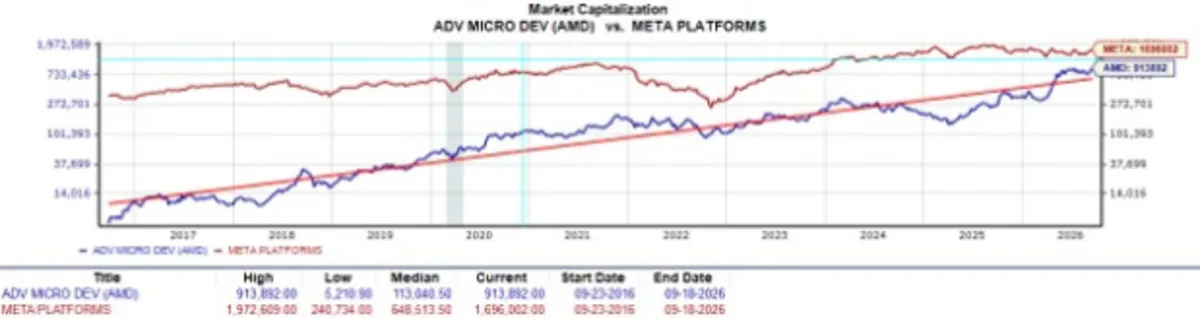
AMD and Meta Platforms each surged roughly 10% on Monday, with AMD reaching a $1 trillion market-cap threshold…