What happened
European AI-focused startups raised $23 billion in the first half of 2026, up 130% year over year and 55% of the region's venture funding, per a joint Crunchbase and HumanX report. Axelera AI CEO Fabrizio Del Maffeo said Europe lacks the US flywheel because big businesses don't buy from startups.
Why it matters
Funding alone won't give Europe more control over its AI future, according to the executives. Del Maffeo said the missing purchases mean Europe is missing value creation, which he expects will weaken European economies.
What to watch
The test is whether European governments and large businesses start buying from local startups, a purchasing culture Del Maffeo called less established than in the US. AI71's Mehdi Ghissassi pointed to the UAE's three-month mandate for government agencies to set up agentic processes as the contrasting model.
WHO IT HITSEuropean AI startup founders and their investors are the most directly affected, since the executives say growth depends on large businesses and government agencies choosing local suppliers over established foreign providers. Government procurement and IT teams across Europe would be the ones making those purchasing decisions.
Summaries like this, in your inbox every morning.
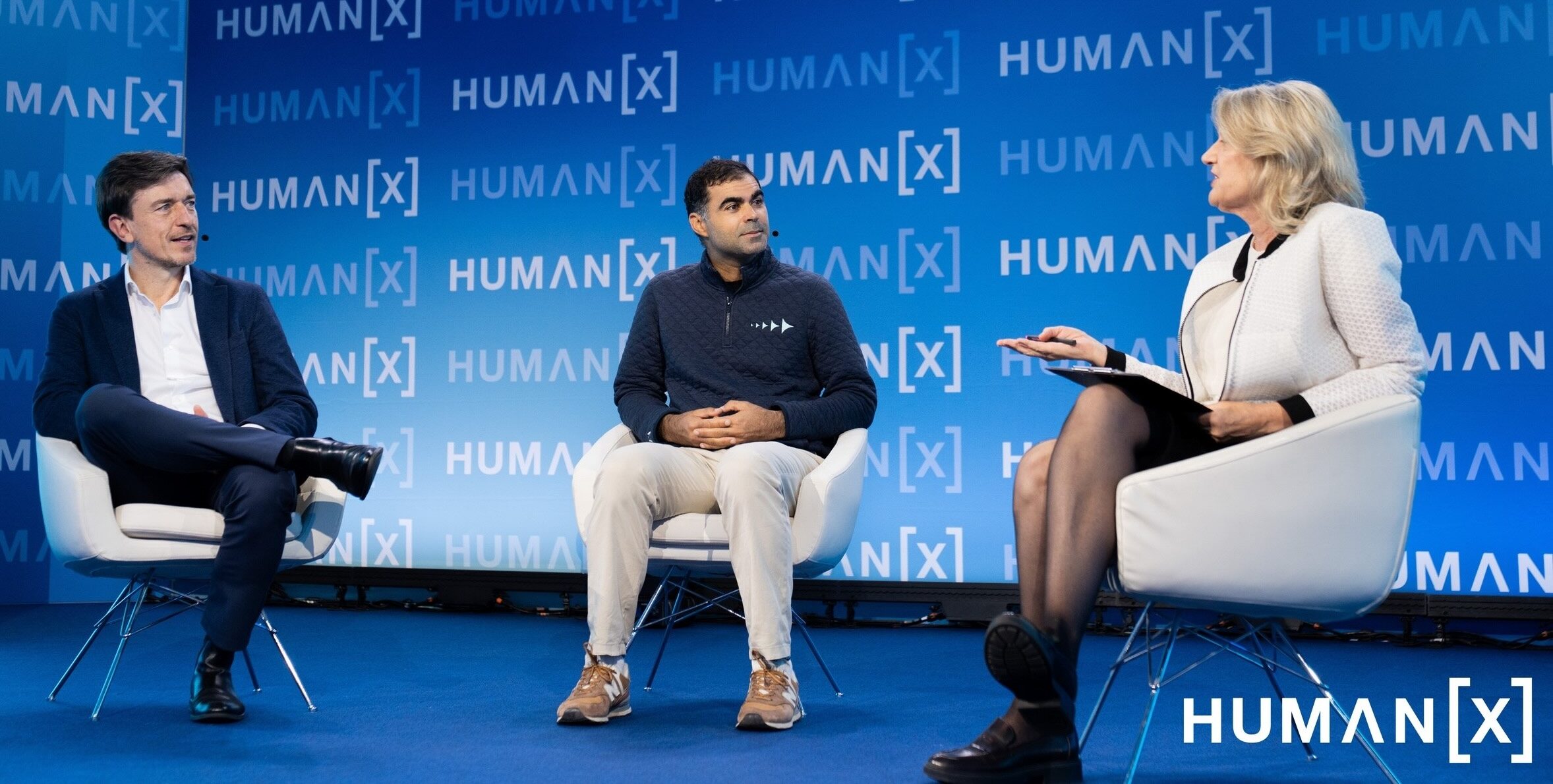
The conversation at last month's HumanX conference in Amsterdam, where Crunchbase News' Gené Teare spoke with Axelera AI's Fabrizio Del Maffeo and AI71's Mehdi Ghissassi, framed sovereign AI less as a matter of ownership and more as a matter of purchasing. Both executives argued that sovereignty does not require owning every layer of the AI stack. Nvidia CEO Jensen Huang has described that stack as a "five-layer cake" spanning energy, chips, infrastructure, models and applications, and the two executives picked different slices of it.
Del Maffeo, whose five-year-old Axelera AI sells two generations of inference chips to around 600 customers and plans to expand into decentralized cloud computing, argued Europe's opportunity is at the semiconductor layer as AI processing moves from centralized data centers onto devices. Ghissassi, whose Abu Dhabi-based AI71 works with large organizations and government agencies, said competing at the model layer does not make sense because only two, three or four companies can afford the race and the technology commoditizes quickly. For him the application layer is where data ownership is decided.
The two regions' constraints differ in ways the executives laid out: the UAE has the largest compute per capita in the world, abundant cheap energy, and a three-month mandate for every government agency to set up agentic processes, while Europe is a net importer of energy, has strengths in semiconductors but lacks the real compute for AI, and has a less established culture of large businesses buying from startups. That last gap is what Del Maffeo said worries him most. Whether Europe's record funding converts into economic value appears to hinge on whether governments and large businesses change their buying habits, and on whether Europe's research talent and population of 440 million people can be paired with that demand.
Pick your industry and the AI tools you use, and get news related to your work every day.
Free · 30 seconds with Google · unsubscribe anytimeWhat is AIToday? →
Ask AI anything about this article. The AI reads this article, earlier AIToday articles, and Wikipedia, and cites its sources. Q&As are published on this page for other readers too.

