
A new startup called Physical Superintelligence has launched with $58 million in funding.
It uses AI physicists named Emmy to solve physics problems.
The goal is to make data centers more efficient and to send a probe to Alpha Centauri.
What happened
Physical Superintelligence launched out of stealth on Tuesday with $58 million in funding, led by the Bill Gates-founded Breakthrough Energy Ventures. The startup is deploying a team of AI physicists, collectively called Emmy, to solve unsolved physics challenges.
Why it matters
The goal is to make data centers more efficient and to send an interstellar probe into deep space. Data centers are an early use case, with PSI aiming to optimize cooling, power, and electrical flows before facilities are built, starting with a large site in Texas.
What to watch
Emmy is built with hard verifiers that aim to catch when the AI is being 'extremely confident and completely wrong.' The startup is also a partner on a privately funded, AI-planned project to send a craft to Alpha Centauri, a trip estimated to take 70,000 to 75,000 years.
Ask the AI about this article →
Physical Superintelligence's launch marks an early attempt to apply AI to fundamental physics, with the ambition of tackling problems that have resisted conventional solutions. The startup's focus on data centers is pragmatic: optimizing cooling, power, and electrical flows before construction could yield significant efficiencies, starting with a large site in Texas. This approach suggests that AI-driven design may become a standard tool in infrastructure planning, potentially reducing energy waste and operational costs.
The partnership on an interstellar probe project, while speculative, underscores the breadth of the startup's vision. The estimated 70,000-to-75,000-year journey to Alpha Centauri highlights the extreme challenges of deep-space travel, but the involvement of AI planning could open new possibilities in mission design. However, these are early-stage goals, and the practical impact will depend on Emmy's ability to deliver reliable results, aided by hard verifiers to prevent confident errors.
For business readers, the key takeaway is the potential for AI to move beyond software into physical optimization. The data center use case, with its concrete near-term application, is likely to be the first test of whether PSI's approach can deliver measurable improvements in energy and cost efficiency.
For example, today's edition would include:
AI-summarized, only the topics you pick — one digest a day via Email, Slack, or Discord.
Free · takes 30 seconds · unsubscribe anytimeWhat is AIToday? →
Ask AI anything about this article. Q&As are published on this page for other readers too.
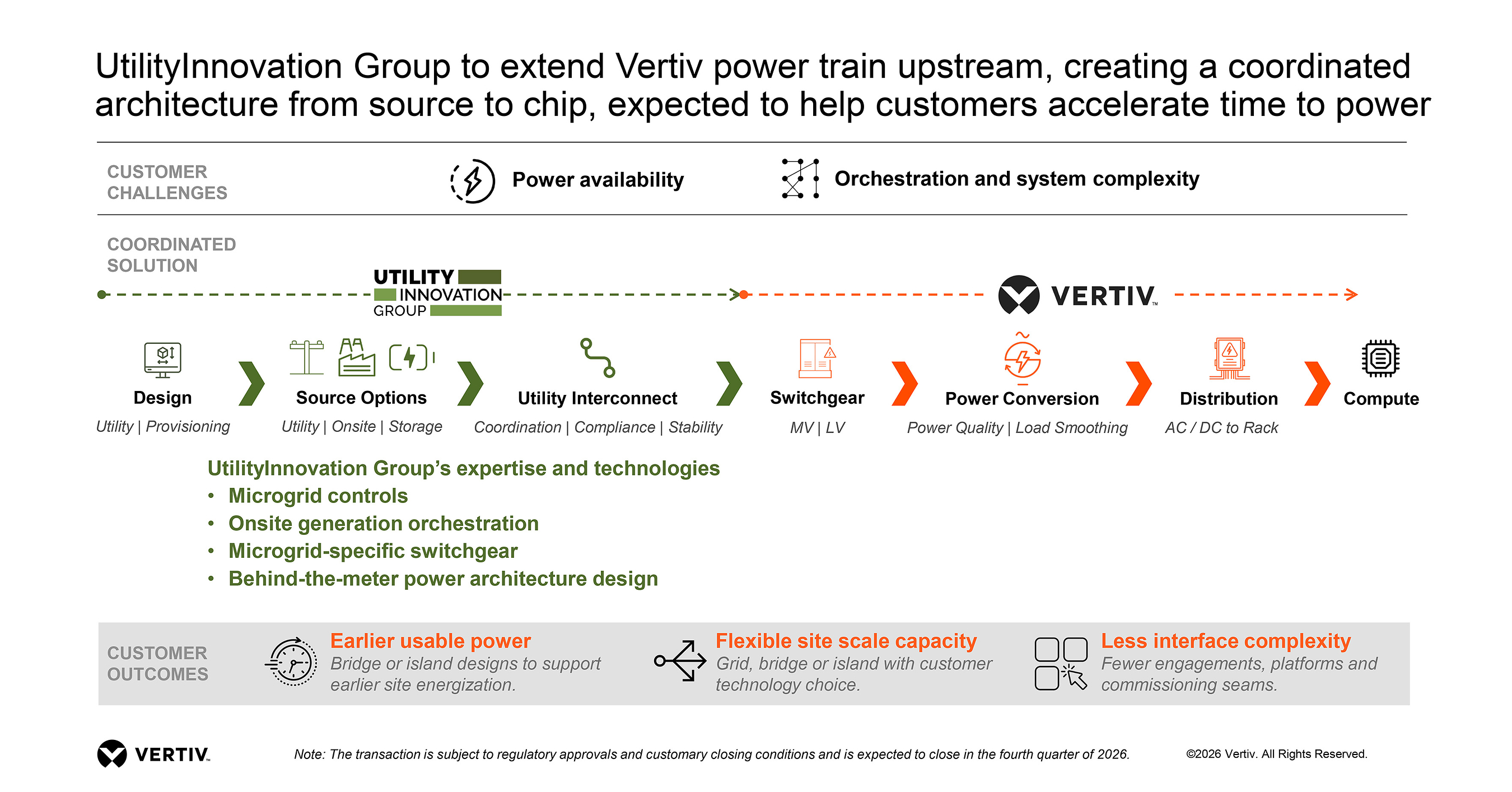
Vertiv Holdings Co. (NYSE: VRT) announced its wholly-owned subsidiary has entered into an agreement to acquire…
Interactive Brokers has begun connecting its platform with AI tools including ChatGPT, Claude, and Grok, and o…

The article highlights three AI healthcare stocks from a screener: Pfizer (PFE), Tempus AI (TEM), and Medtroni…

MBody AI Ltd. (NASDAQ: MBAI) announced that its MBody AI Orchestrator platform has been shortlisted for AI Dep…

A new report by Alipay+ and S&P Global, based on a survey of 6,000 consumers across nine markets in Asia, Euro…

MaxLinear's Infrastructure business is projected to grow, driven by demand from AI data centres

