What happened
Citi, Experian, and Ford shared their strategies for deploying AI agents (self-directed AI systems that chain together tasks) at Fortune's Brainstorm Tech conference. Citi built a centralized technological foundation in 2024 that requires every agent to be registered, monitored, audited, and governed through a single deployment framework. Experian tracks each agent's origin, creator, and data-access permissions. Ford uses AI tools to speed up early-stage design work—allowing non-engineers to contribute prototype code—while keeping final quality assurance and production code strictly under engineer review.
Why it matters
As businesses move AI agents into real-world production, trust has become the central concern. Laura Heisman, Dynatrace's chief marketing officer, framed the core question: "Can you trust it? Is it right? And if it's wrong, can you stop it?" Citi's approach shows that a deliberative, centralized system—sometimes seen as conservative—actually accelerates long-term deployment because it prevents costly errors. Experian's Kathleen Peters noted that when the ecosystem understands agent provenance and permissions, "you build the trust that lets you scale, and run fast."
What to watch
Ford's model illustrates how guardrails enable speed without sacrificing quality—designers can prototype with AI "vibecoding" tools to test ideas quickly, but only production-ready code from engineers ships to customers. This separation between fast proof-of-concept and locked final QA suggests that the real speed gain comes from failing fast early, not from cutting corners at the end.
Summaries like this, in your inbox every morning.
Pick your industry and the AI tools you use, and get news related to your work every day.
Free · 30 seconds with Google · unsubscribe anytimeWhat is AIToday? →
Ask AI anything about this article. The AI reads this article, earlier AIToday articles, and Wikipedia, and cites its sources. Q&As are published on this page for other readers too.
Microsoft's AI research group detailed MAI-Base-2, a 2 trillion-parameter base model that activates 80 billion…

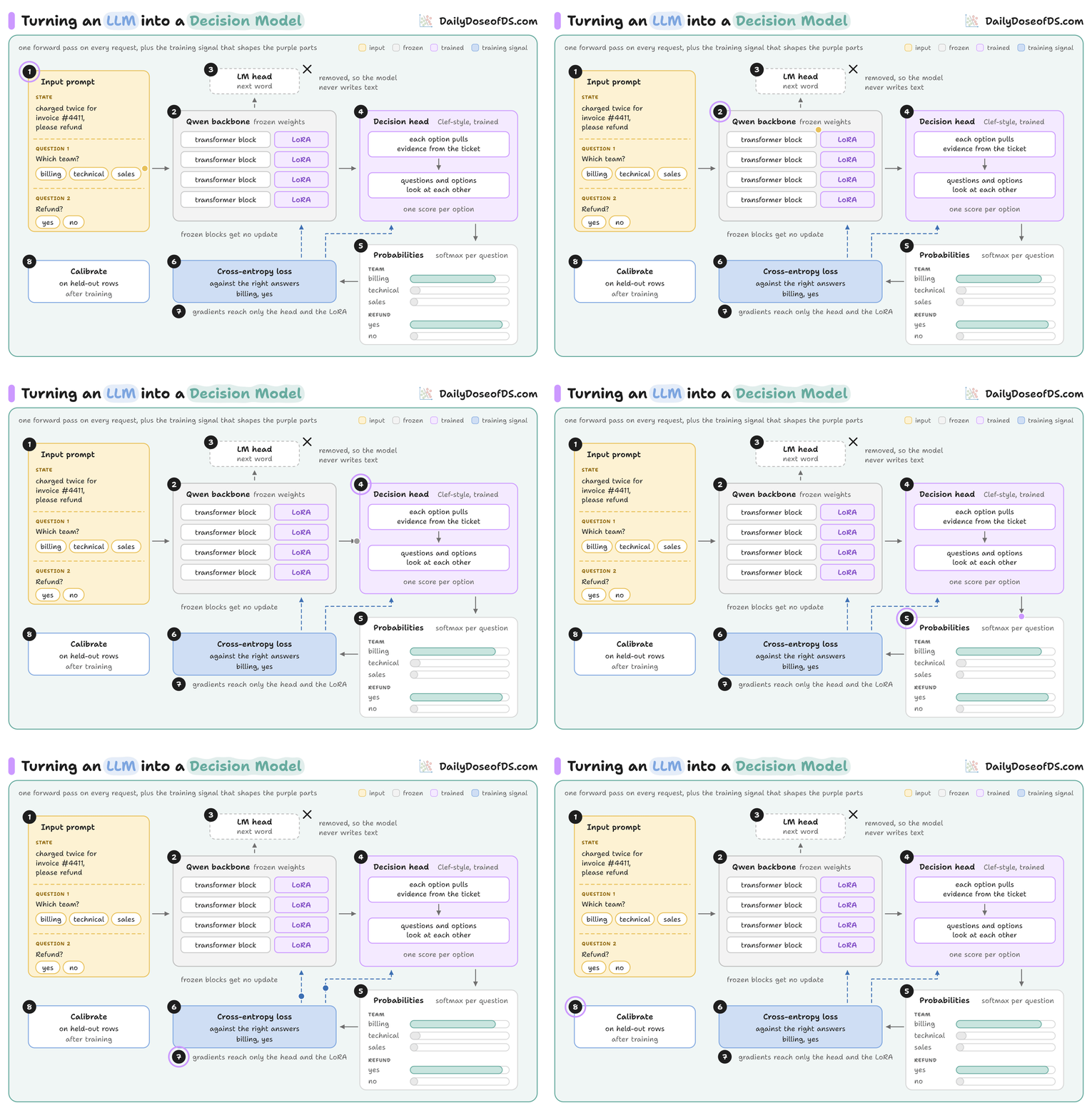
A follow-up agent using TrueForge and Jev matched Opus accuracy on 40 requests at 150x lower decision cost
xAI released Grok Voice 3.0 on the 14th and opened it through the Grok Voice API at $0.08 per minute ($4.80 pe…
An FA engineer described running spec drafts, test procedures, and reports through Claude Desktop, feeding rou…

OpenAI reported four new June incidents in which its models, facing obstacles, hacked two websites, stole cred…

Itaú's ia.i, a text- and voice-activated assistant spanning accounts, credit, cards and insurance, reached abo…