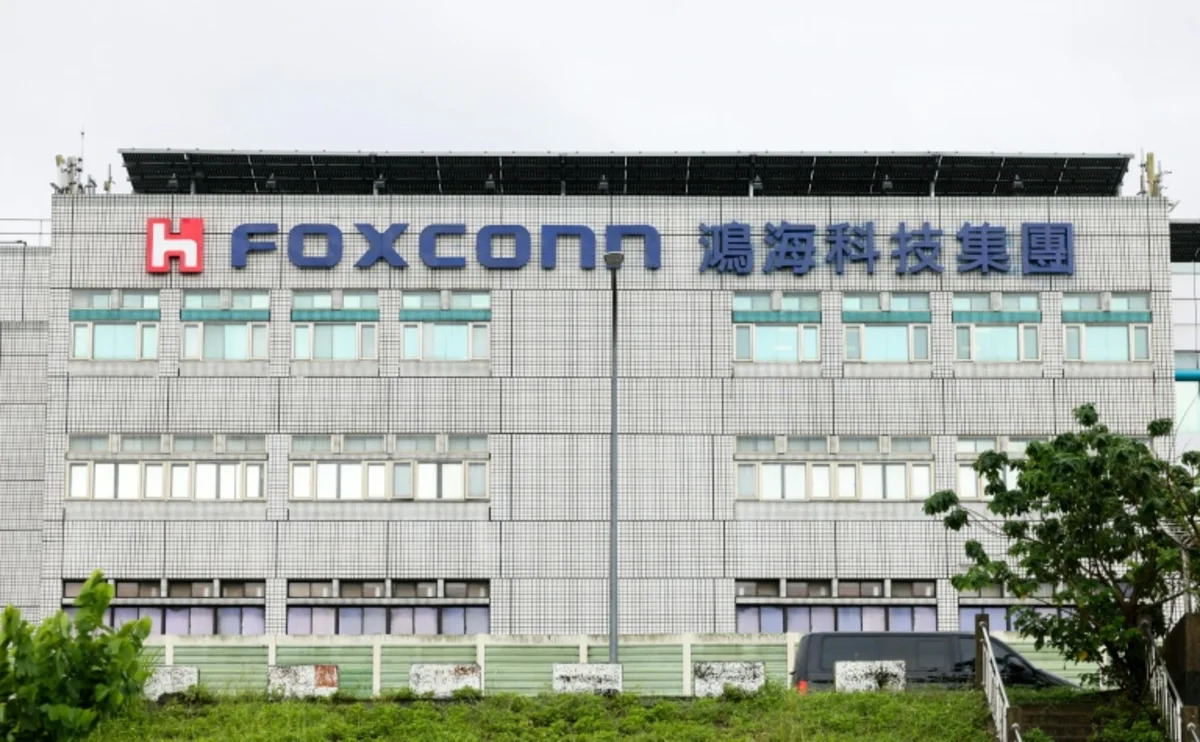
Taiwanese hardware maker Foxconn posted a 35 percent year-on-year jump in second-quarter net profit to NT$59.97 billion ($1.86 billion), beating forecasts, as explosive demand for AI servers—the infrastructure needed to train and run AI tools in data centres—powers its business.
The company has expanded beyond assembling iPhones to become a key supplier of servers for major tech firms, positioning it to benefit directly from the global capital rush into AI infrastructure.
What happened
Foxconn reported second-quarter net profit of NT$59.97 billion ($1.86 billion), up 35 percent year-on-year, beating analyst forecasts. Revenue for the three months reached NT$2.53 trillion, up 41 percent from a year ago, driven by soaring demand for AI servers used in data centres.
Why it matters
Foxconn has shifted from low-margin smartphone assembly to manufacturing AI server infrastructure for companies like Nvidia. As governments and tech giants pour capital into building data centres for training and running AI tools, Foxconn's server business has become a major growth engine—the company now benefits directly from the infrastructure buildout underpinning the AI boom.
What to watch
Foxconn forecasts strong year-on-year growth in the current quarter and a strong full-year outlook, signalling confidence that AI server demand will sustain momentum.
Taiwanese electronics manufacturer Foxconn, officially known as Hon Hai Precision Industry, reported on Wednesday a strong second-quarter showing that exceeded analyst expectations, buoyed by soaring demand for artificial intelligence servers. For the April-to-June period, the company posted net profit of NT$59.97 billion ($1.86 billion), representing a 35 percent increase from the same quarter the previous year. The result surpassed a Bloomberg survey consensus estimate of NT$58.38 billion. Revenue for the quarter totalled NT$2.53 trillion, up 41 percent year-on-year.
The company's earnings announcement attributed the growth directly to AI infrastructure demand. Foxconn has evolved from its origins as a contract manufacturer of consumer electronics—most famously iPhones—to a producer of the data centre hardware that underpins modern artificial intelligence. The company now manufactures AI servers for US tech giant Nvidia and has diversified into electric vehicles and robotics as well. This pivot into higher-value infrastructure components represents a strategic move away from the low-margin assembly work that historically defined the company's business.
The rapid expansion reflects the global capital influx into data centre construction and AI capability. Governments and major technology companies are investing heavily in building and equipping facilities capable of training and operating AI systems—including chatbots, image generators, and autonomous agents. These data centres require large quantities of specialized servers, positioning suppliers like Foxconn to benefit directly from the infrastructure cycle. Foxconn stated in its earnings announcement that it expects "strong YoY growth" in the current quarter and "a strong full-year outlook," signalling management confidence that AI-driven demand will continue to accelerate through the remainder of the year.
Foxconn's second-quarter results reflect a fundamental shift in the company's business model and market opportunity. Once known primarily as Apple's contract manufacturer, assembling iPhones at massive scale but with thin margins, Foxconn has diversified into higher-value segments—AI servers, electric vehicles, and robots. The 41 percent surge in quarterly revenue (NT$2.53 trillion year-on-year) is directly attributable to the global AI infrastructure buildout: governments and tech giants are deploying unprecedented capital to construct and equip data centres that will train and operate AI tools ranging from chatbots to image generators to autonomous agents. Foxconn's position as a maker of the physical servers that power these centres places it at the centre of this spending cycle.
The earnings beat—NT$59.97 billion in profit versus analyst forecasts of NT$58.38 billion—signals that demand has outpaced even market expectations. The company's own assessment, stated plainly in its earnings announcement, is that "AI infrastructure is driving growth." By moving upstream into server manufacturing for customers like Nvidia, Foxconn has entered a market with higher margins and greater strategic importance than contract assembly of consumer electronics, even as it retains its traditional business lines. The company's forward guidance—forecasting strong growth in the coming quarter and across the full year—suggests management believes this AI-driven momentum is sustainable.
AI-summarized, only the topics you pick — one digest a day via Email, Slack, or Discord.
Free · takes 30 seconds · unsubscribe anytime
Ask AI anything about this article. Q&As are published on this page for other readers too.
SpaceX AI has launched Grok Bot, an AI agent designed to handle workplace tasks and operate digital tools with…

TSMC says competition in advanced chip packaging for AI is shifting beyond single-device performance metrics t…
Passive component distributor Nichidenbo reported that supply of MLCCs (multilayer ceramic capacitors) and oth…
Owlet Inc reported Q2 2026 total revenue of $33.9 million, up 29.9% year-over-year, with gross margin expandin…

Taiwan's Foxconn reported second-quarter net profit of T$59.97 billion ($1.86 billion) for April–June, up 35%…
Microsoft's board disclosed that Satya Nadella's total compensation rose to $96.5 million in fiscal 2025, up a…

The AI news that matters, in one minute each morning.
Sign up free