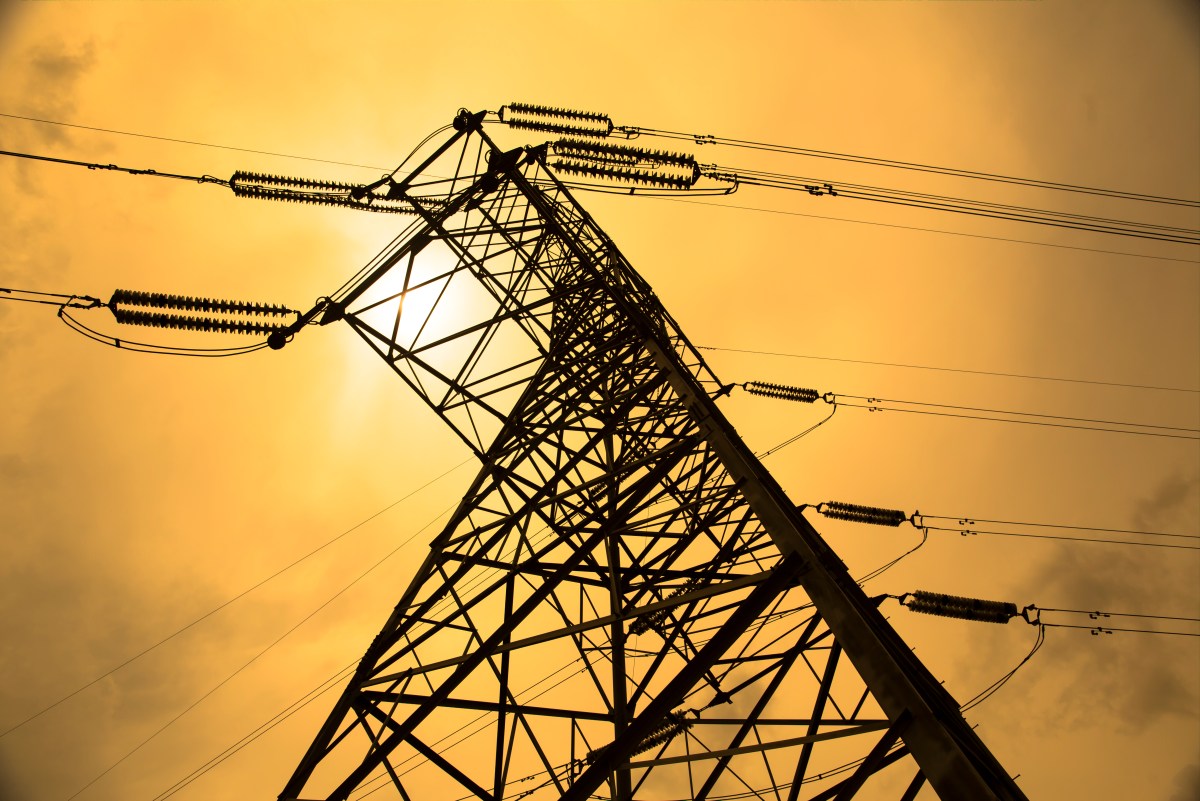
A downed power line near Washington, DC caused more than 3 gigawatts of AI data centers to simultaneously disconnect from the grid, causing voltage spikes that made lights flicker across a six-state region. As data centers now make up 3% of demand on PJM's grid and are projected to reach 24% by 2040, the synchronized nature of how they respond to power disruptions poses a growing threat to grid stability unless infrastructure changes are made.
Summaries like this, in your inbox every morning.
Sign up free →What happened
A downed power line outside Washington, DC this week caused more than 3 gigawatts of data centers to disconnect nearly simultaneously, triggering a voltage spike across the PJM grid from Northern Virginia to Chicago that lasted over 10 minutes and caused lights to flicker across the region, though no blackout occurred.
Why it matters
Data centers now represent around 3% of total demand on PJM's grid, and that share is expected to grow to 24% by 2040. When data centers sense power disruptions, they all switch to backup power within seconds of each other, creating a cascading effect that destabilizes the grid—a problem grid managers and startups are only now beginning to address as these mass disconnections grow more frequent.
What to watch
ON.Energy is installing 3 gigawatts worth of systems that let data centers absorb grid fluctuations rather than disconnect, and ERCOT is beginning to require large loads to "ride through" disruptions. The mass disconnection this week was twice as large as a similar 2024 event when 60 data centers pulled 1.5 gigawatts of load from the grid.
On a recent week, a power line went down outside Washington, DC—an event that would normally require the electrical grid only a few seconds to recover from. This time, it took more than 10 minutes. The reason: more than 3 gigawatts of data centers stopped drawing power nearly simultaneously, according to data collected by Ting Labs, a startup that runs an IoT sensor network through electrical sockets. The failure caused voltage across the PJM grid to spike from Northern Virginia to Chicago, causing lights across the region to flicker. While no blackout occurred, the incident exposed a growing vulnerability in America's electrical infrastructure as artificial intelligence and other computationally intensive workloads push data center expansion at record pace.
When the power line failed, it triggered an automatic response in data centers across Northern Virginia. The voltage dip activated their backup power systems, and about 3.1 gigawatts of load vanished in roughly 30 seconds, according to PJM data. The grid appeared to recover briefly, but additional loads dropped off shortly after. At its peak, PJM's grid had an extra 3.49 gigawatts of electricity on it, and it took another 11 minutes before stabilizing. The disconnected data centers represented around 3% of total demand on PJM at the time. Ali Zain Banatwala, senior market models specialist at the Independent Electricity System Operator, explained that when the voltage dip reached the data centers, they all decided to disconnect within a few seconds of each other—a coordinated response that, paradoxically, destabilized the grid rather than protected it.
The core problem lies in how the electrical grid must operate: supply and demand must remain in near-perfect balance. Small fluctuations are tolerable, but large ones trigger failsafes that can cascade through equipment. When data centers collectively remove their load from the grid, the sudden drop in demand causes supply to surge, creating the voltage spikes that damage devices and trigger more disconnections. This week's mass disconnection was twice as large as a similar event in 2024, when 60 data centers simultaneously disconnected and pulled 1.5 gigawatts of load from the grid. Back then, data centers accounted for about 6% of PJM's load. By 2040, they are expected to make up 24%—a trajectory that demands urgent solutions.
One company working on the problem is ON.Energy, whose CTO Ricardo de Azevedo told TechCrunch the incidents represent "the canary in the coal mine." ON.Energy has developed an uninterruptible power supply for entire data center campuses that covers not just servers but also chillers and other equipment. The system essentially hides the data center behind a bank of batteries connected to sophisticated power conversion equipment, presenting the grid with one consistent, well-behaved load rather than peaks and valleys from individual components. Crucially, it allows data centers to absorb power fluctuations from the grid—using extra power to charge batteries during surges and dispatching power during dips, all within milliseconds. ON.Energy is currently installing a total of 3 gigawatts worth of its systems across four data center campuses. Meanwhile, grid operators are also responding: ERCOT, for example, is requiring large loads like data centers to "ride through" disruptions rather than automatically disconnecting. As data center demand continues its explosive growth, these technical and regulatory changes will determine whether the grid can support the next generation of AI infrastructure.
Northern Virginia hosts the world's highest concentration of data centers, and the region sits within PJM's territory—the largest grid operator in the United States, serving 67 million customers across six states. The power line failure this week exposed a critical vulnerability: when data centers sense even a small voltage dip, they all make the decision to switch to backup power within seconds of each other. This synchronized response, intended to protect individual facilities, creates a cascade effect that destabilizes the broader grid. The problem is not new—a similar event occurred on PJM's grid two years ago—but the scale is worsening rapidly. In 2024, when 60 data centers disconnected simultaneously, they removed 1.5 gigawatts from the grid. This week's event was twice as large. Data centers already account for about 6% of PJM's load (or 3% at the time of the incident), and projections suggest they will grow to 24% by 2040, making today's grid management approaches unsustainable without intervention.
AI-summarized, only the topics you pick — one digest a day via Email, Slack, or Discord.
Free · takes 30 seconds · unsubscribe anytime
No comments yet. Be the first to share your thoughts!
Log in to join the discussion




Get curated AI news from 200+ sources delivered daily to your inbox. Free to use.
Get Started FreeFree · takes 30 seconds · unsubscribe anytime
