What happened
The UK government's AI Security Institute found that recent open-weight models GLM-5.2 and DeepSeek V4-Pro now perform similarly to frontier closed models released 4 to 7 months earlier, compared with a 6 to 10 month gap measured through most of 2025. On narrow cybersecurity tasks, GLM-5.2 matches Claude Opus 4.6 (released 4.3 months prior) and DeepSeek V4-Pro sits between Claude Opus 4.5 and GPT-5.
Why it matters
As open-weight models catch up to proprietary ones in cybersecurity capabilities, defenders face a narrowing window to prepare before frontier cyber capabilities may become accessible without the safeguards used by proprietary companies. This shift from a controllable frontier to widely diffused, openly available AI systems will reshape both the threat landscape and policy discussions.
What to watch
The UK AI Security Institute intends to test Kimi K3 (a Chinese 2.8 trillion parameter model) on the same cybersecurity evaluation basis once its weights are publicly released. The institute found the gap widens somewhat on long-horizon cyber tasks that chain multiple capabilities together, with GLM-5.2 reaching Claude Opus 4.5 level while DeepSeek V4-Pro falls below Sonnet 4.5.
Summaries like this, in your inbox every morning.
The UK AI Security Institute's analysis reveals a structural shift in the AI landscape: the technical capability gap between closely guarded proprietary models and freely available open-weight alternatives is contracting faster than previously observed. Through 2025, this gap averaged 6 to 10 months; now it has narrowed to 4 to 7 months for cutting-edge capabilities. This trend is driven partly by aggressive open-source development from Chinese firms (exemplified by DeepSeek and Kimi), but the implications extend beyond geopolitical competition.
The significance lies not in the raw performance numbers, but in the control surface. Proprietary models are deployed by a small number of companies that can theoretically gate access, apply safety classifiers, and enforce know-your-customer procedures. Open-weight models, once released, cannot be recalled or centrally controlled. As the gap narrows, widely distributed, uncontrollable AI systems with cybersecurity capabilities—one of the most sensitive domains—become inevitable. The Institute notes that long-horizon cyber tasks (which chain multiple capabilities into full hacking operations) still show a wider gap, suggesting open models may still lack some generalization ability; but this too will likely close over time.
Pick your industry and the AI tools you use, and get news related to your work every day.
Free · 30 seconds with Google · unsubscribe anytimeWhat is AIToday? →
Ask AI anything about this article. The AI reads this article, earlier AIToday articles, and Wikipedia, and cites its sources. Q&As are published on this page for other readers too.
ElevenLabs completed a $300 million employee tender at a $22 billion valuation, and co-founder Mati Staniszews…

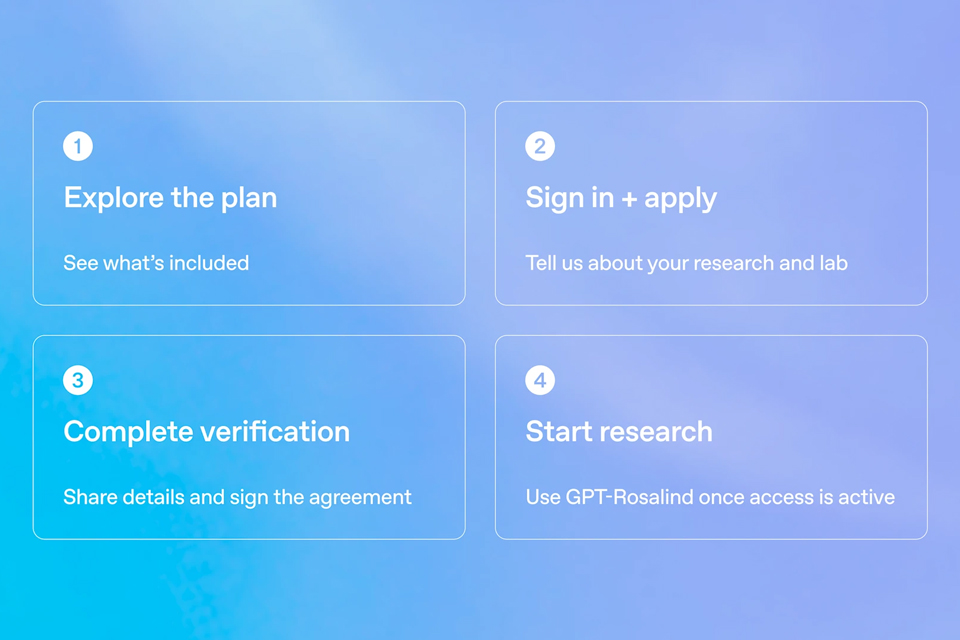
On October 15, OpenAI announced the Rosalind Academic Plan, giving approved US university labs free access to…
A Qiita article compared automated red-teaming methods for LLM apps — GCG, PAIR, and TAP — using mock implemen…

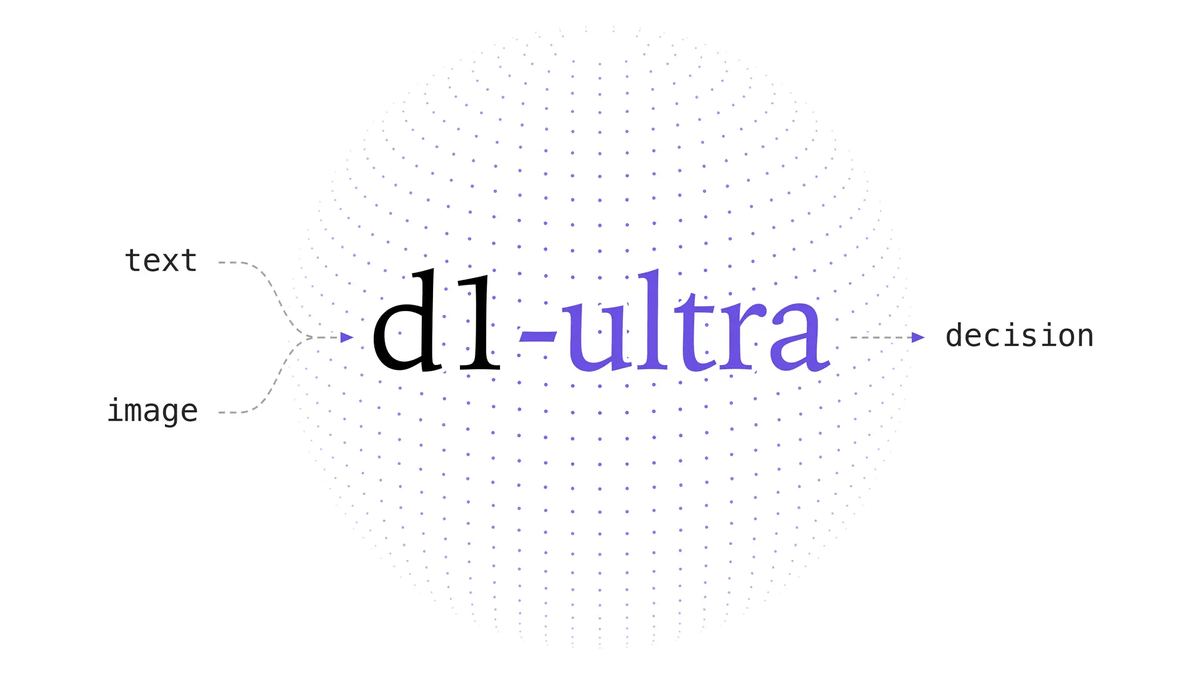
Liquid AI released d1-ultra on October 15, 2026, an upgraded open-weights decision model that averaged 76.7 ac…
Taiwan is considering much stricter export controls on AI chip sales to China, part of a greater alignment wit…

Circlia started a proof-of-concept for TASTE SIGNAL: visitors to Holland Village Cafe FUKUOKA taste cookies an…