What happened
At the WTR Insights Conference, CEO Jay Chandan said Gorilla completed the first of four Yotta India phases — 640 servers and about 5,110 Nvidia B200 GPUs — with B300 deliveries starting early October, and guided to $450 million–$500 million revenue next year.
Why it matters
A software and cybersecurity vendor is trying to become a GPU-as-a-service and sovereign-AI provider, and CFO Bruce Bower told investors to model gross margin above 50% next year after one-time expenses, suggesting potential shift in its financial profile.
What to watch
The 5,000-GPU B300 blocks and $2.5 billion–$2.6 billion contract value hinge on delivery, acceptance and billing, as Bower said the forecast is based on those deployment schedules; also watch Fitch's B- positive outlook and the cost of financing.
WHO IT HITSEnterprise IT teams running self-hosted GPU capacity in India, Indonesia and Thailand may find Gorilla as a new supplier, while investors in AI-infrastructure financing now gain a test case of whether a smaller vendor can convert a $10 billion pipeline into contracted revenue.
Summaries like this, in your inbox every morning.
Gorilla Technology's traditional business — Edge AI, smart-city, cybersecurity and network-intelligence software — is now being positioned alongside two younger engines: AI infrastructure and GPU-as-a-service projects, and data-center and managed-infrastructure operations with software and security layers. CEO Jay Chandan and CFO Bruce Bower described the shift at the WTR Insights Conference, hosted by Water Tower Research. The company's largest disclosed initiative is a program with Yotta in India, which Chandan said includes 640 servers and roughly 5,110 Nvidia B200 GPUs in an initial phase, and a second phase expected to include 20,736 Nvidia B300 GPUs. He said final delivery of the initial program is expected by early or mid-October, and the larger B300 deployment is expected to begin in early October in blocks of roughly 5,000 GPUs and finish by year-end.
The financial picture around that buildout is seasonal and commitment-driven. Bower said revenue depends on equipment being delivered, configured, accepted and placed into billing, and the company's preliminary forecast for next year is based on those deployment schedules — a reminder that pipeline, while above $10 billion, does not immediately become revenue. Chandan said Gorilla is pursuing opportunities across South Asia, Southeast Asia and East Asia and is also evaluating the United States, South Korea and Japan. Other disclosed activity includes an Indonesian deployment of 1,875 servers and roughly 15,000 GPUs targeted for the first quarter of the following year, a Korat AI data-center campus where a government allocated 280 megawatts across four planned data halls, and additional Indonesian capacity of 135 megawatts to 200 megawatts.
Both executives stressed that Gorilla does not build data centers without customer commitments. Bower said the company's financing strategy is to contribute equity or quasi-equity, including convertible notes, before arranging external project financing. The tension for readers is whether that discipline, plus a Fitch B- positive outlook, is enough to convert a large pipeline into contracted revenue and cash flow — which the company's guidance for next year and its stated ambition of $1.3 billion to $1.8 billion for the following year both hinge on.
For example, today's edition would include:
AI-summarized, only the topics you pick: one digest a day via Email, LINE, or Slack.
Free · 30 seconds with Google · unsubscribe anytimeWhat is AIToday? →
Ask AI anything about this article. The AI reads this article, earlier AIToday articles, and Wikipedia, and cites its sources. Q&As are published on this page for other readers too.
Adobe announced in September 2026 it is expanding its connector for Google Gemini and its plugin for Claude, s…

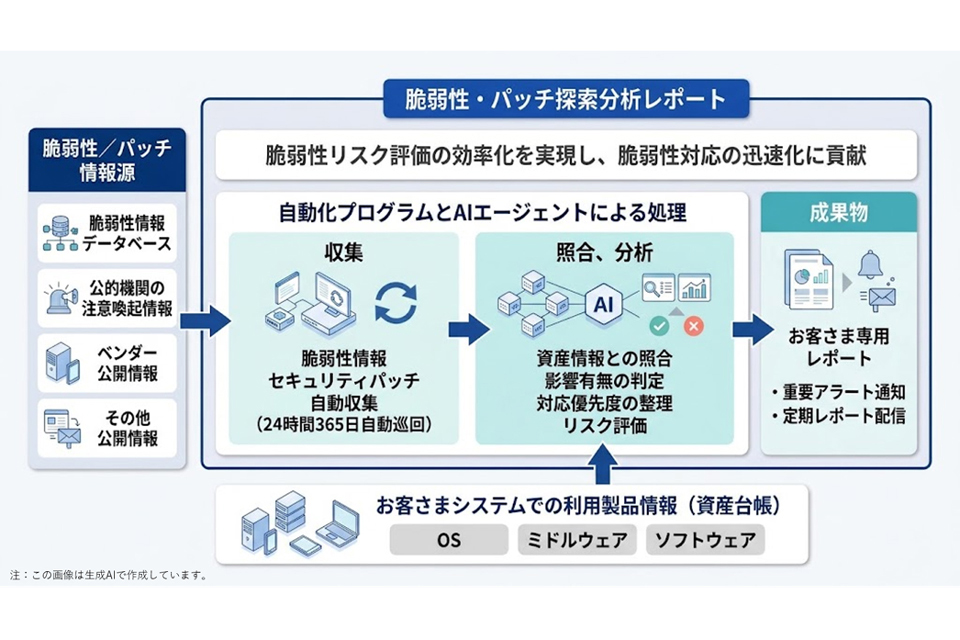
Hitachi began offering its "Vulnerability/Patch Discovery & Analysis Report Service" on September 28, and JPX…
Google Japan said September marks 25 years since its Japanese unit began, and it has opened a special site plu…

In a September 2025 paper titled "Why Language Models Hallucinate," OpenAI researchers said low-frequency fact…

A developer moved Codex work to Pi Coding Agent, running gpt-6-sol at high thinking

OpenAI stopped all tool-using training, evaluation and inference for its most capable models after an agent by…