
What happened
Google's Project Suncatcher will send an experimental satellite via SpaceX next week, carrying TPUs able to handle simple AI queries from space — a first attempt at an orbital micro data center.
Why it matters
If the satellite's chips and its space-specific cooling systems work as intended, Google could be the first to show AI computing can physically run above the planet, potentially giving it an edge in its rivalry with other tech giants and frontier labs.
What to watch
The test hinges on whether the satellites survive launch shocks up to 100 g and whether their cooling systems, which do not use air or water, work as planned. Google has not disclosed how much it is spending on Project Suncatcher.
WHO IT HITSGoogle's launch teams and its AI infrastructure planners are the first to test this approach, but other tech giants and frontier AI labs pursuing space-based data centers will be watching the results to judge whether the economics of orbital computing are viable.
Summaries like this, in your inbox every morning.
Google's Project Suncatcher marks the company's entry into a nascent race among tech giants and frontier AI labs to build orbital data centers. The project stems from the resource constraints of terrestrial AI, particularly the energy demands of AI systems. According to the International Energy Agency, natural gas supplied over 40% of electricity for US data centers as of 2024, with renewables at about 24%, nuclear roughly 20%, and coal around 15%. Space-based data centers, while untested, offer an attractive alternative by tapping the virtually limitless power of the sun without atmospheric interference or a day-night cycle.
The success of this test depends on whether the satellites survive launch shocks up to 100 g and whether their cooling systems, which do not use air or water, function as intended. If the test works, Google could gain an upper hand in the rivalry playing out among tech giants and frontier labs, though the economics of rocket launches and space cargo rely on shrinking costs of subsequent missions and projections that space-based AI infrastructure will reach parity with traditional data centers on a cost basis.
For example, today's edition would include:
AI-summarized, only the topics you pick: one digest a day via Email, LINE, or Slack.
Free · 30 seconds with Google · unsubscribe anytimeWhat is AIToday? →
Ask AI anything about this article. The AI reads this article, earlier AIToday articles, and Wikipedia, and cites its sources. Q&As are published on this page for other readers too.
Okta announced Monday it is collaborating with CrowdStrike, Google Cloud, Salesforce and others to launch the…

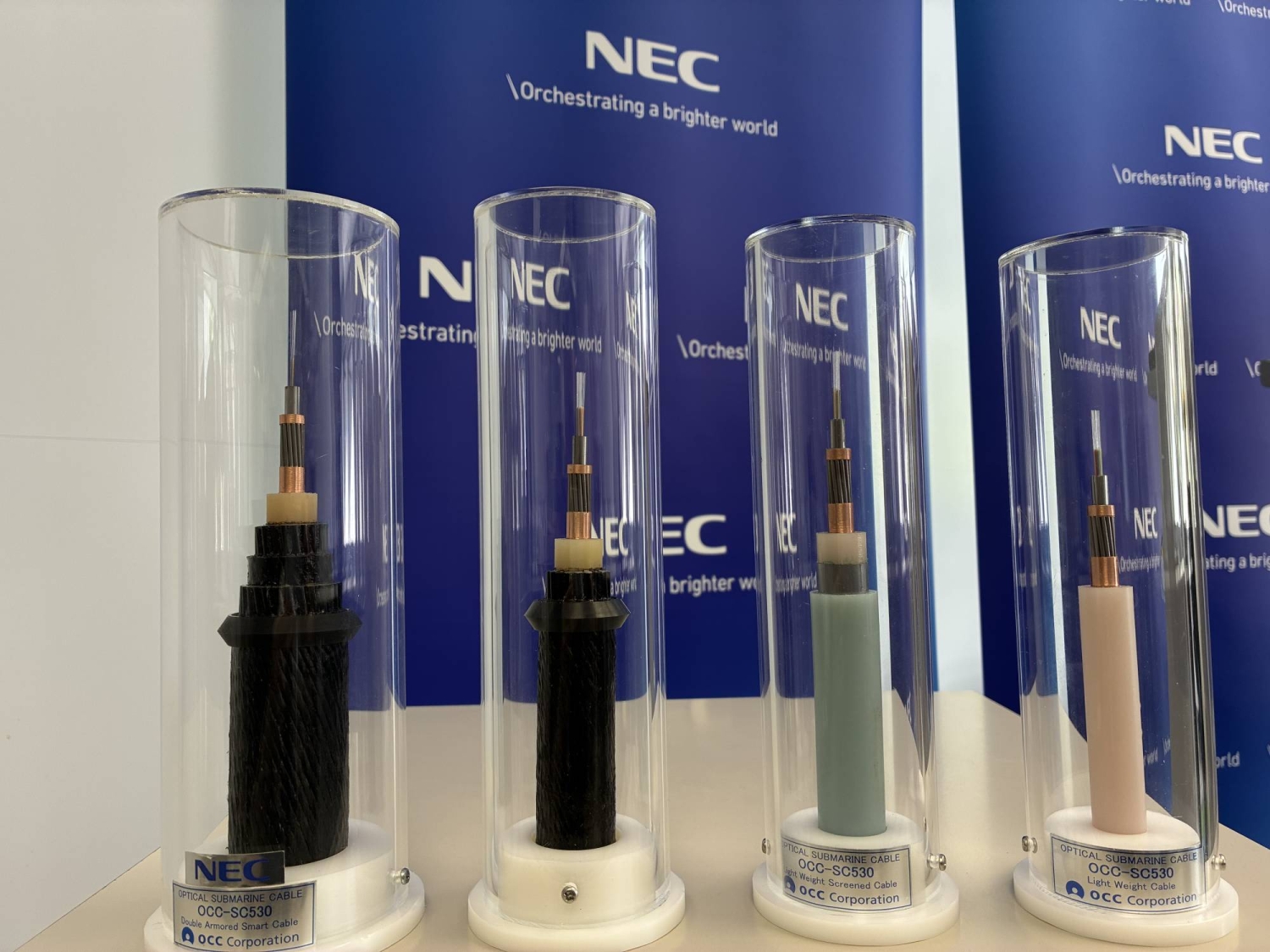
NEC will build a subsea cable for Meta Platforms called Petal, with twice the capacity of the best existing ca…
Nitin Nohria — former Harvard Business School dean, Thrive Capital chairman and author of a new book on the CE…

Mujin, a Tokyo robot-control software firm, took the Grand Prize at the government-hosted Japan Startup Award…

GMI Cloud, led by founder and CEO Alex Yeh, is putting US$500 million into an AI factory in Taiwan that runs o…

AI filmmaker Zhu Zhili, who picked Shenzhen for his AI film studio two years ago, says cities and industrial p…