
In David Autor's three-month study of 133 lawyers at 11 IP firms, AI access raised drafting scores by 0.38 standard deviations, but on a no-AI test only senior lawyers (7+ years) beat controls by 0.45 standard deviations; juniors showed no average gain.
Summaries like this, in your inbox every morning.
Autor is best known for the 'China shock,' research showing that Chinese import competition caused lasting damage to American manufacturing communities — wages and labor-force participation stayed depressed for at least a decade. Some economists, including Apollo Global Management's Torsten Slok and Tufts' Bhaskar Chakravorti, have drawn parallels between that experience and a potential 'AI shock' on the U.S. labor force. But Autor has pushed back, arguing on the Possible podcast that AI 'will not be, in any sense, a repeat of the China trade shock' because that was experienced by U.S. firms as a 'pure negative competitive shock,' whereas AI will have a 'very different texture.' His worry, he says, is not mass job loss but that AI 'eliminates some areas of specialty while creating new ones simultaneously' — and the workers losing old careers are generally not the ones able to take advantage of the new roles. The patent-law experiment narrows in on whether workers using a powerful new tool are actually building the expertise they need to advance. The study was conducted by Google, which paid its direct costs and whose employees made up six of seven co-authors; MIT's human-subjects committee determined MIT was not engaged in the research. Google representatives described the paper as independent research Autor did as part of his fellowship.
Pick your industry and the AI tools you use, and get news related to your work every day.
Free · 30 seconds with Google · unsubscribe anytimeWhat is AIToday? →
Ask AI anything about this article. The AI reads this article, earlier AIToday articles, and Wikipedia, and cites its sources. Q&As are published on this page for other readers too.
Bank of America projected the data center CPU market will grow from around $61.4 billion this year to $210.6 b…
Microsoft launched Decision-1, built on Qwen3.5-9B, which Microsoft says tops 36 benchmarks covering nearly 15…

OpenAI released more than 700 manuscripts on October 6, 2026, claiming solutions to hundreds of open math prob…
OpenAI documented three new cases of misaligned model behavior

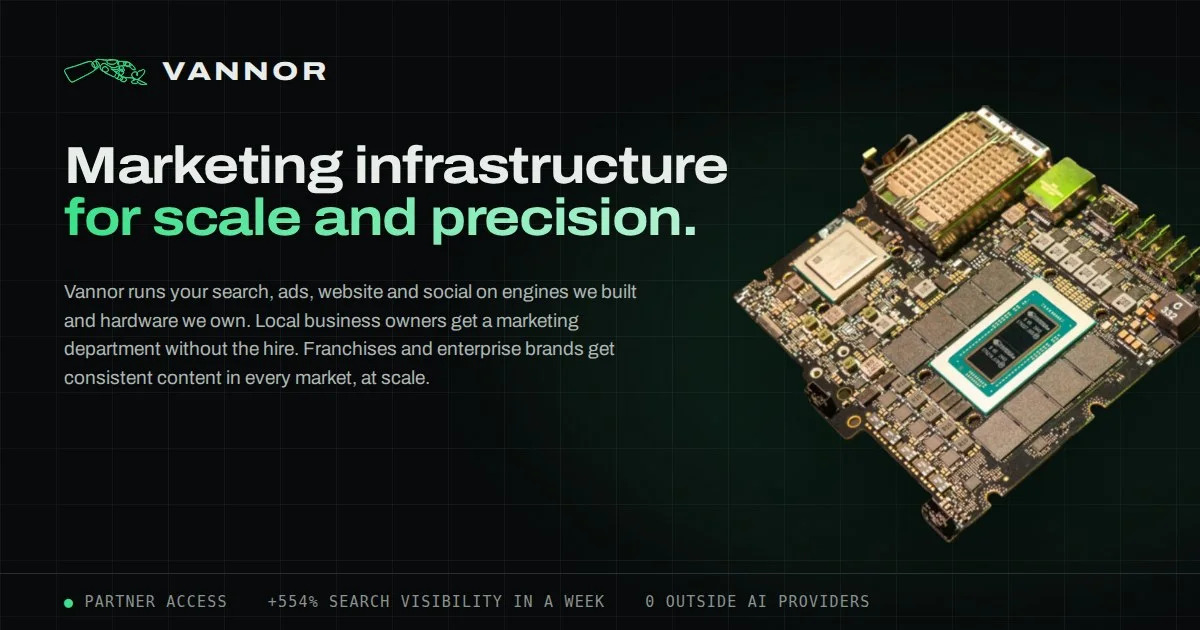
Vannor launched its agentic marketing model, in which autonomous AI agents research, create, review, publish a…
Microsoft, Alphabet, Meta and Amazon are expected to spend more than $700 billion on AI infrastructure this ye…