Alphabet's stock tumbled 7% after announcing $205 billion(約33兆円) in 2026 capital spending and negative free cash flow, signaling that investors have abruptly stopped rewarding Big Tech's lavish AI infrastructure investments. The shift in sentiment is rippling through the market: the Magnificent Seven index fell 4.8%, and questions are mounting about whether the hundreds of billions Big Tech is pouring into AI will ever generate returns, even as chip makers—the intended beneficiaries—face heightened volatility and uncertainty.
Summaries like this, in your inbox every morning.
Sign up free →What happened
Alphabet shares fell more than 7% on Thursday, their worst day in over a year, after the company raised 2026 capital expenditures to as much as $205 billion(約33兆円) and reported negative free cash flow in Q2—the first time since its 2004 IPO. The stock decline came despite Google reporting an 82% increase in cloud-computing revenue that surpassed Wall Street estimates.
Why it matters
Investors have shifted from rewarding AI spending to penalizing it. The change signals a broken deal between Big Tech and the market: companies can no longer spend heavily on AI infrastructure and expect stock gains if capital outlays keep rising. Microsoft is down 21% this year despite spending more than $190 billion(約30兆円) on capex; Meta is down 9.8%; together, Alphabet, Microsoft, Amazon, and Meta are projected to spend about $724 billion(約120兆円) on capital this year and nearly $950 billion(約150兆円) in 2027, raising concerns about whether those investments will ever pay off.
What to watch
Microsoft, Meta, Amazon, and Apple earnings arrive next week (Microsoft and Meta on Wednesday, Apple and Amazon on Thursday). Meanwhile, chip stocks—the main beneficiaries of Big Tech's spending—have become volatile: the Philadelphia Semiconductor Index is down 17% in July alone and has experienced 17 moves of 5% or more this year, the most since 2008. Apple, which has avoided large AI outlays, is up 23% in 2026 and gained 15% in July, showing investors rewarding capital restraint.
Alphabet Inc.'s share price fell more than 7% on Thursday, marking its worst trading day in over a year, after the company announced plans to raise capital expenditures in 2026 to as much as $205 billion(約33兆円). The decline was especially striking because it accompanied a powerful earnings beat: Google reported an 82% increase in cloud-computing revenue, far surpassing Wall Street expectations. Yet investors were unmoved. The real shock was that Alphabet reported negative free cash flow in the second quarter—the first time this has occurred since the company's 2004 initial public offering.
The selloff exposed a fundamental shift in investor sentiment toward Big Tech's AI spending strategy. As Jason Lemire, chief investment officer at Bold Wealth Partners, observed: "People are really focused on capex, obsessed with it. It used to be the more the better, but now it is the less the better. We're seeing capital raises, negative cash flows, rising debt. All that adds risk to the picture." This reversal came as a shock to market participants who had long accepted—or even celebrated—massive AI infrastructure investments as a necessary cost of competition.
Alphabet was hit especially hard because it had been perceived as the biggest AI winner among the Magnificent Seven, buoyed by the popularity of its Gemini AI services, internally developed data center chips, and booming cloud-computing business. Yet even that narrative advantage crumbled when faced with the reality of negative free cash flow. The broader Magnificent Seven index, which also includes Microsoft, Meta, Apple, Amazon, Nvidia, and Tesla, fell 4.8% on Thursday—its worst day since the Trump tariff "liberation day" announcement in April 2025. The index is now down 3.7% in 2026 after soaring for the previous three years. Leadership in the market has begun to shift toward the companies receiving the huge capital outlays—such as chip makers Micron Technology and Advanced Micro Devices—away from the spenders themselves.
Microsoft faces similar headwinds. Once seen as an AI leader through its stake in OpenAI (ChatGPT's owner), the company is the second-weakest stock in the Magnificent Seven this year, down 21%, amid concerns it is falling behind despite analysts estimating it will spend more than $190 billion(約30兆円) on capex in the current calendar year. Meta shares have dropped 9.8% as investors question the wisdom of its own AI investments. Together, Alphabet, Microsoft, Amazon, and Meta are projected to spend about $724 billion(約120兆円) on capital expenditures this year and nearly $950 billion(約150兆円) in 2027, according to the average of analyst estimates compiled by Bloomberg. Willy Lee, principal at venture firm Neostellar Capital, warned: "We're in a period where people are inclined to sell off on capex, and Microsoft and Meta and Amazon are all holdings hands with Alphabet and jumping in to spend. We're going to see scrutiny on all parts of their businesses as they keep spending."
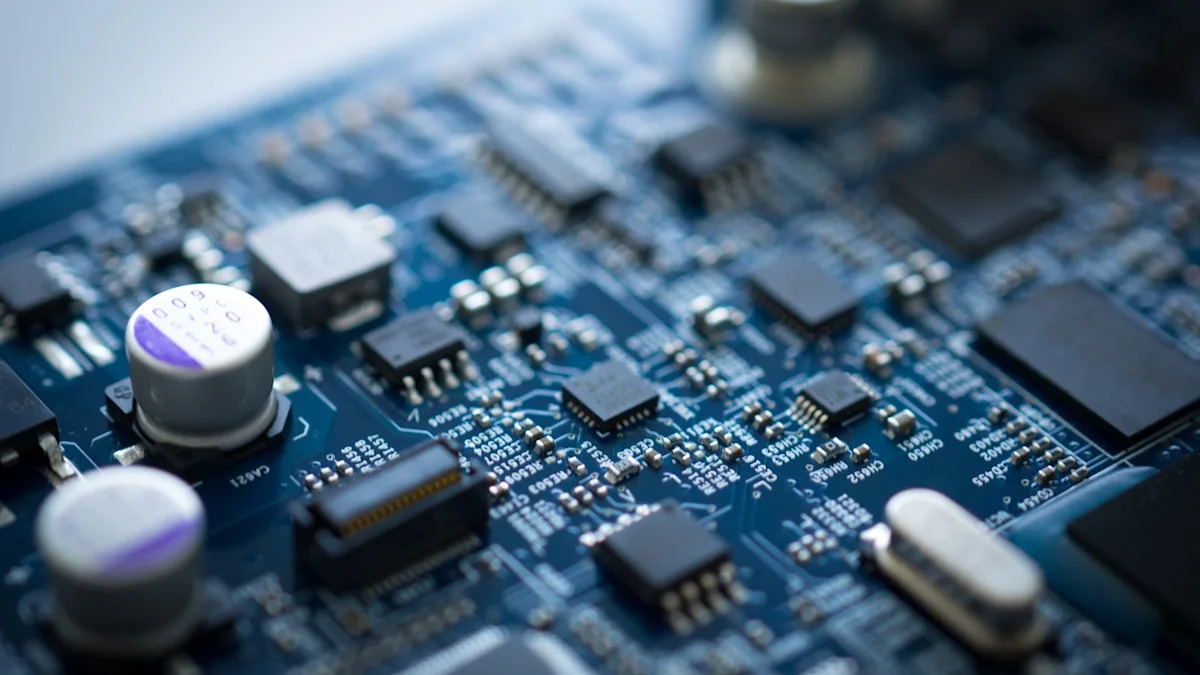
The investor revolt has created acute uncertainty even for the companies theoretically benefiting from the spending spree—chip makers. The Philadelphia Stock Exchange Semiconductor Index (SOX) surged 101% through the first half of 2026 but has lost 17% in July and is on pace for its worst month since June 2022. The volatility has reached levels not seen since 2020, the pandemic year. The SOX has recorded 17 moves of 5% or more in 2026, matching the highest count since 2008, while the broader S&P 500 and Nasdaq 100 have had none. Lemire cautioned: "There is going to be an AI winter at some point. When you look at how exceptional margins are—especially in memory—well, it is impossible to maintain those over a long timeframe. At some point, we will see margin compression and valuation compression, and that will have a huge impact on the market."
In contrast, Apple has positioned itself as the outlier. The iPhone maker has avoided major AI capital outlays, instead partnering with external model developers to power its services. Investors have rewarded this restraint handsomely: Apple shares rose 15% in July, putting them on pace for their best month in exactly three years, and the stock has gained 23% in 2026, making it the biggest points contributor to the S&P 500's 8.3% rise. However, Apple is not without headwinds. Surging demand for memory chips used in AI computing has driven the company to raise prices on products like MacBooks and iPads, and the long-term impact on customer demand and profit margins remains uncertain.
Multiple valuations offer little comfort to investors. Microsoft trades at 19 times estimated profits, a steep discount to its 10-year average of 27, while Meta is priced at around 14 times compared with its 10-year average of 20. Brad Warden, senior portfolio manager at Nomura Asset Management (whose fund holds Nvidia, Alphabet, Microsoft, and Amazon), captured the new calculus: "They look cheap right now, but when you look forward at potential disruption, they are guilty until proven innocent. Is the current business model sustainable? Will economics get worse?" Warden expects the AI spenders ultimately to realize returns on their investments, but acknowledged the core question now is "what pain you're willing to endure in an investment cycle and how strongly you believe you'll ultimately get the economics on the other end of the cycle." Next week's earnings from Microsoft and Meta on Wednesday and Apple and Amazon on Thursday will test whether investors remain skeptical of the AI spending narrative.
For years, Big Tech enjoyed a remarkable investor advantage: Wall Street tolerated—even celebrated—massive capital spending on artificial intelligence as long as revenues climbed. That implicit contract has shattered. Alphabet's Thursday plunge, despite a blockbuster 82% surge in cloud revenue, marks the moment the market's appetite for capex-heavy growth collapsed. The shift is structural, not cyclical. Investors are now fixated on free cash flow deterioration, rising debt, and the fundamental question of whether AI infrastructure investments will ever generate returns. Alphabet's Q2 free cash flow turning negative for the first time since 2004 shocked the market precisely because it exposes the real cost of the AI arms race: even a company with Google's revenue scale cannot maintain both heavy capital spending and positive cash generation simultaneously.
The selloff extends across the entire Magnificent Seven. Microsoft, despite its early AI dominance through its OpenAI stake, has fallen 21% this year on worries that it is falling behind despite spending more than $190 billion(約30兆円) on capex. Meta is down 9.8% amid questions about the wisdom of its own AI investments. Meanwhile, the very beneficiaries of Big Tech's spending—chip makers like Micron and Advanced Micro Devices—are themselves in freefall. The Philadelphia Semiconductor Index, up 101% through mid-year, has lost 17% in July and is experiencing volatility at its highest since 2020, with 17 moves of 5% or more this year matching the record since 2008. This volatility underscores a deeper unease: if Big Tech cannot convince investors that its AI spending will pay off, how can chip makers justify their own valuations? Apple's contrasting strength—up 23% in 2026 by avoiding heavy AI capex and partnering instead—suggests the market is beginning to reward capital discipline over infrastructure aggression.
AI-summarized, only the topics you pick — one digest a day via Email, Slack, or Discord.
Free · takes 30 seconds · unsubscribe anytime
No comments yet. Be the first to share your thoughts!
Log in to join the discussion


Get curated AI news from 200+ sources delivered daily to your inbox. Free to use.
Get Started FreeFree · takes 30 seconds · unsubscribe anytime