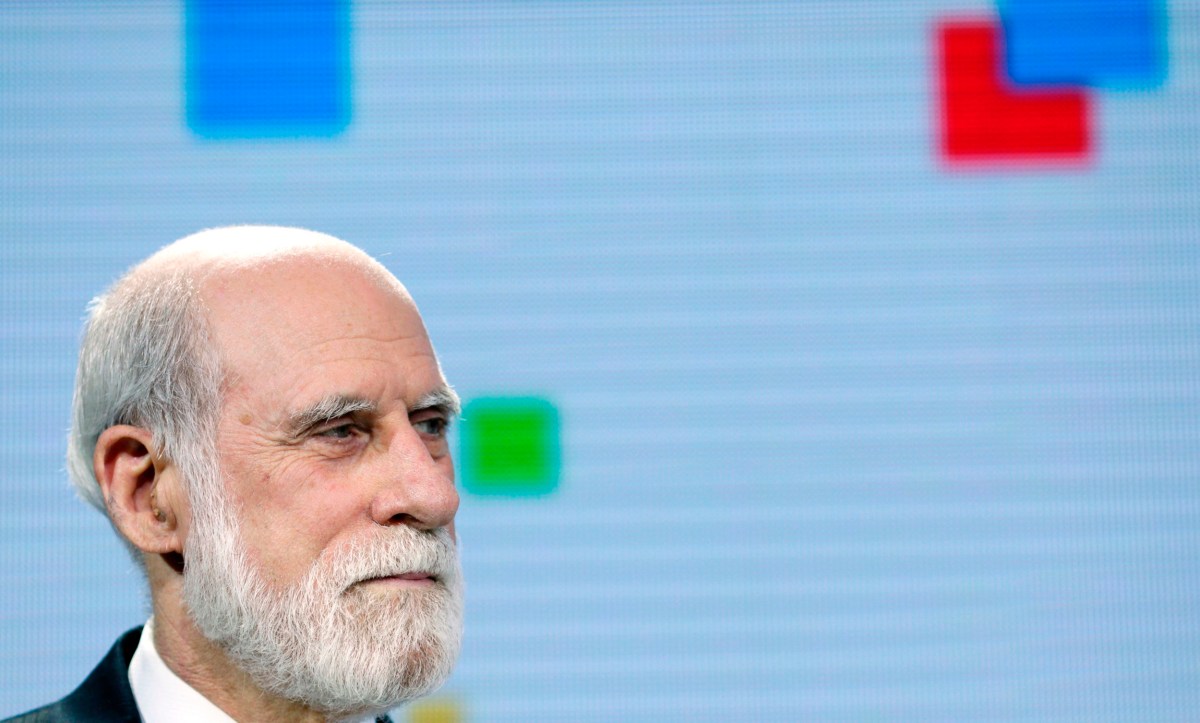
Vint Cerf, one of the architects of internet protocols, has joined Innovation Labs to help develop DNSid, a system for identifying and auditing AI agents operating on the open internet using domain-name infrastructure and cryptographic verification. As businesses plan for autonomous agents to interact directly with each other and users across the web, the lack of a shared identification standard has been a major obstacle; Cerf believes this initiative will be crucial to establishing accountability and trust in an emerging agentic economy.
Summaries like this, in your inbox every morning.
Sign up free →What happened
Vint Cerf, an internet protocol architect who left Google last week after 20 years, is now advising Innovation Labs, a subsidiary of Identity Digital, to develop DNSid—a registry system that uses domain names and cryptographic proofs to identify and audit AI agents operating on the open internet.
Why it matters
Most AI agents today operate within closed proprietary systems, but businesses are planning for a future where agents interact autonomously across the internet with other agents. A shared identification standard is critical to establish accountability and trust, especially as questions arise about what authorities agents have and who is responsible for their behavior—issues Cerf identifies as central to the internet's evolution.
What to watch
Innovation Labs is trialing DNSid standards with several unnamed hyperscalers and identity companies. Cerf emphasizes that adoption will depend on functionality and interoperability; he draws a parallel to TCP/IP, where user demand drove competing technologies to work together, and notes that an open, non-proprietary approach (rather than a hyperscaler controlling the data) is key to broad acceptance.
Vint Cerf, one of the original architects of the protocols that underpin the open internet, left Google last week after 20 years and is immediately stepping into a new role advising Innovation Labs, a subsidiary of Identity Digital (a DNS registry company). Starting today, Cerf is lending his expertise to an effort to create an open architecture for identifying and auditing AI agents operating on the internet.
The problem Innovation Labs is trying to solve is concrete and urgent: most AI agents today operate within proprietary, closed systems—they stay within a single company's infrastructure and call on internal resources for specific tasks. But businesses are already envisioning a radically different future where agents operate autonomously across the open internet and interact directly with other agents, much as different companies' websites interact today. The major roadblock so far has been the absence of a shared standard for identifying agents and holding them accountable. Innovation Labs has proposed DNSid, a registry system that links each AI agent to an existing internet domain name and uses cryptographic proofs to create a tamper-resistant log of its registration over time. The company is currently trialing this standard with several unnamed hyperscalers and identity companies.
Cerf explained his motivation to TechCrunch: "I felt like I might be able to help them in a period of time when naming and identification is becoming increasingly important. This is largely triggered by the notion of AI agents and the question of what authorities they have, where they have derived those authorities, who is accountable for the behavior of an agent in this context, and where and how its identity is established, and why [you'd] trust it." He acknowledges the challenge is thorny because AI agents are far more active and autonomous than domain names, and organizations have not yet settled on what commitment they are making when they register one. Cerf described the coming period as "fascinating—and at the same time maybe even exasperating—" because the functionality agents will enable is "so dramatically powerful."
Cerf stressed that the success of any protocol will hinge on functionality and interoperability. He offered an analogy to the early internet: "Company X uses agent Y's technology, and company A uses agent C's technology, and then they don't interwork with each other. Nobody can do everything that you might want every agent to do… and so we're going to have to rely on the pressure coming from the users. This is what happened with TCP/IP." A deliberate design choice of Innovation Labs is that DNSid does not position the company as owning the registration data or entering broader AI business—a posture Kline says is essential to adoption. "I think there's a lot of organ rejection to a hyperscaler releasing [a standard] and having that proprietary data," she told TechCrunch. When asked whether he believes an agentic economy is inevitable, Cerf demurred but noted a deeper truth: "I don't think it's inevitable. But what I do think is inevitable is that people will try to do that. We are fundamentally lazy creatures, and if we find a way to have an agent do something for us, we're very likely to choose to do that because [it's] just easier."
Vint Cerf's move from Google to advise Innovation Labs reflects a broader inflection point for the internet: the transition from human-to-human and human-to-machine interaction toward agent-to-agent interaction. The article frames this not as speculative but as already underway—businesses are actively planning autonomous agent deployments that will operate across the open internet, yet lack a common language for identifying and trusting one another. This is the same gap that faced the early internet; Cerf himself helped close it by co-creating TCP/IP, a protocol that became universal precisely because it was functional and vendor-neutral.
Innovation Labs' choice to anchor agent identity in domain-name infrastructure is pragmatic: domains already carry trust signals and legal accountability (a registrant is identified), and the DNS system is decentralized and proven at scale. By tying agents to domains and adding cryptographic proofs, DNSid aims to make agents auditable without requiring a central authority or hyperscaler to own the registration data—a deliberate choice Kline highlights as critical to avoiding "organ rejection" from the ecosystem. Cerf's framing of the challenge—establishing what authorities an agent has and who is accountable for its behavior—suggests this is not a technical detail but a foundational governance question for the internet's next era.
No comments yet. Be the first to share your thoughts!
Log in to join the discussion


Get curated AI news from 200+ sources delivered daily to your inbox. Free to use.
Get Started FreeFree · takes 30 seconds · unsubscribe anytime
1 minute a day. The AI essentials.
200+ sources · Email / LINE / Slack
