What happened
Since early June, OpenAI's Codex coding tool has encrypted the instructions that main AI agents pass to subagents. Developers can no longer see readable task descriptions in session history—only an unreadable encrypted string. GPT-5.5 initially blocked the ability to turn off encryption entirely; OpenAI has since re-enabled the toggle for GPT-5.5, but the larger GPT-5.6 variants (Sol and Terra) remain encrypted. Only the smallest variant, Luna, still displays readable agent communication.
Why it matters
As coding tools become agentic systems that autonomously break down and delegate tasks, the ability to track internal processes is critical for developers managing and debugging their workflows. The encryption also appears unreliable—several developers report that encrypted handoffs between agents fail because the content cannot be decrypted, even when both agents use the same model. OpenAI has not confirmed whether the change aims to prevent competitors from training on agent communication (a suspected concern after Zhipu AI's GLM-5.2 was suspected of distillation from GPT-5.5 and Opus 4.8), to protect user privacy in API data handling, or both.
What to watch
A GitHub bug report requests that OpenAI store a readable copy of encrypted tasks locally alongside the encrypted version, offering a path to restore developer visibility. OpenAI's eventual clarification of the encryption's purpose—distillation prevention, privacy, or both—and any decision to address the decryption failures will shape how developers adopt these agentic features.
Summaries like this, in your inbox every morning.
OpenAI's move to encrypt agent-to-agent communication reflects a critical tension in the evolution of agentic AI systems. As coding tools increasingly adopt the ability to autonomously break down tasks, delegate them to subagents, and operate without direct human supervision, the question of transparency becomes both a technical and competitive concern. The body notes that agent-to-agent communication is valuable training data—a suspected reason that Zhipu AI's open GLM-5.2 model drew suspicion of distillation from GPT-5.5 and Opus 4.8. By encrypting these internal handoffs, OpenAI may be attempting to protect intellectual property embedded in reasoning traces and task delegation patterns from competitors seeking to train weaker models toward stronger performance levels.
However, the immediate cost is substantial. Developers lose visibility into how their own agents delegate work, making debugging and auditing of agentic behavior harder at precisely the moment when autonomous decision-making is becoming more common. The fact that the encryption appears unreliable—failing to decrypt even within matched model pairs—suggests the feature may not yet be mature. OpenAI's decision to restore the toggle for GPT-5.5 while keeping Sol and Terra encrypted hints at ongoing internal debate about the trade-off between competitive protection and developer usability. Until OpenAI clarifies its intent and addresses the decryption failures, developers will face both a visibility problem and a reliability risk.
Pick your industry and the AI tools you use, and get news related to your work every day.
Free · 30 seconds with Google · unsubscribe anytimeWhat is AIToday? →
Ask AI anything about this article. The AI reads this article, earlier AIToday articles, and Wikipedia, and cites its sources. Q&As are published on this page for other readers too.
In Q2, billionaires or their funds sold six 'Magnificent Seven' AI stocks

Nvidia was rising early Friday, even as the wider chip sector kept falling, Barron's reported
ElevenLabs completed a $300 million employee tender at a $22 billion valuation, and co-founder Mati Staniszews…

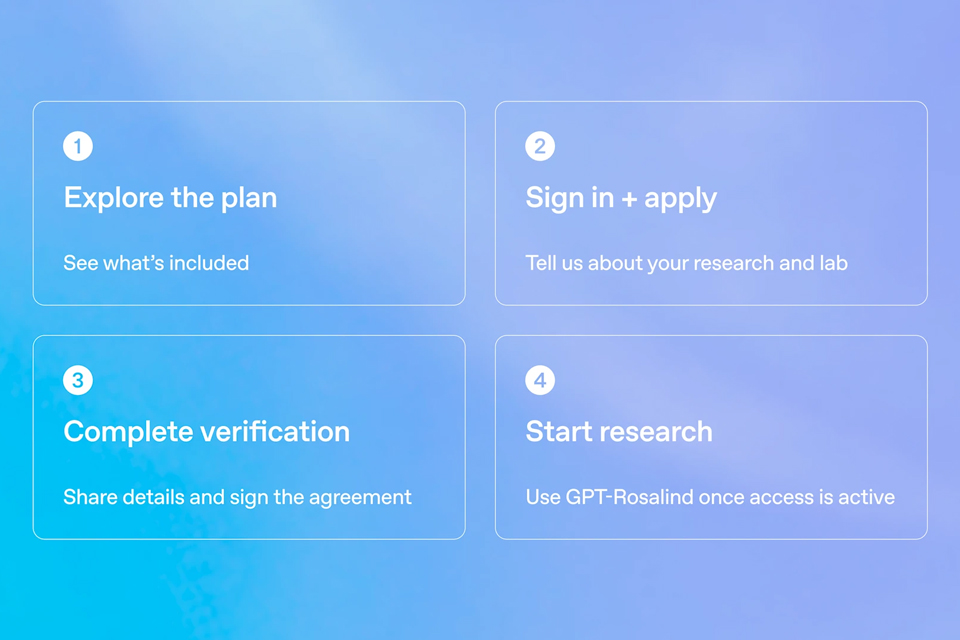
On October 15, OpenAI announced the Rosalind Academic Plan, giving approved US university labs free access to…
Neostellar Capital principal Evan Schlossman said CoreWeave's $103.7 billion in remaining performance obligati…

A Qiita article compared automated red-teaming methods for LLM apps — GCG, PAIR, and TAP — using mock implemen…