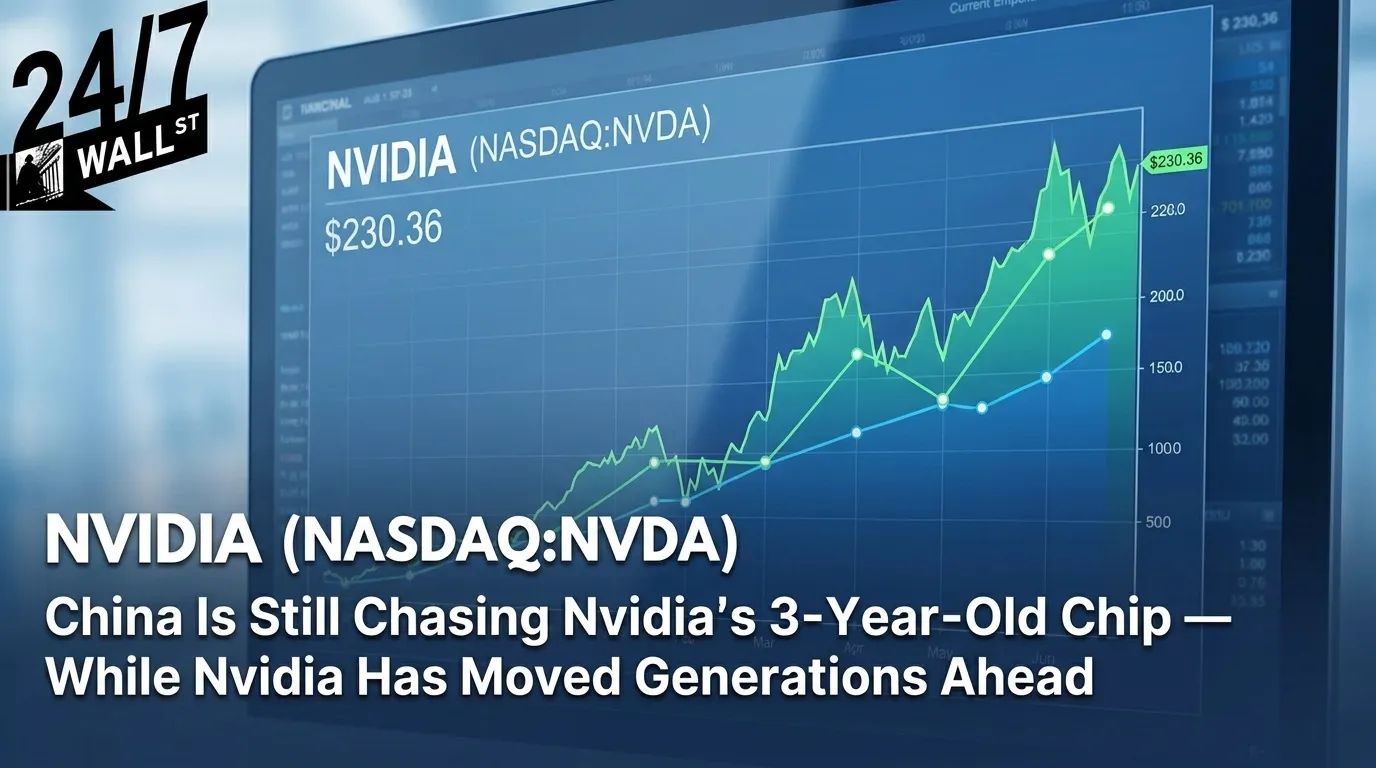
Huawei's best AI chip still lags Nvidia's three-year-old hardware.
The gap is widening as Nvidia ships newer generations.
Nvidia's Q2 revenue hit $96.22 billion, up 105.85%.
What happened
Huawei's Ascend 910C tops out at roughly 780 TFLOPS of FP16 performance, less than half of the ~1,700 TFLOPS delivered by Nvidia's H200, a chip unveiled nearly three years ago. Nvidia has since moved through Blackwell, Blackwell Ultra, and into full production on Vera Rubin, whose single GPU delivers 4,000 TFLOPS of FP16 compute.
Why it matters
The performance gap is widening faster than most investors realize, reinforcing Nvidia's moat. In Q2 FY27, Nvidia's Data Center revenue reached $89.02 billion, up 117% year over year, and the company's Data Center segment alone is more than thirteen times larger than AMD's entire Data Center revenue of $6.72 billion.
What to watch
The test is whether Nvidia can sustain its growth as it ramps Vera Rubin, given that its Q3 guidance assumes zero Data Center compute revenue from China. Watch for whether the company's gross margin—guided at ~74% for Q3—holds as new products scale.
Ask the AI about this article →
Summaries like this, in your inbox every morning.
Nvidia's lead over domestic Chinese rivals like Huawei is not just about raw performance—it is a generational gap. While Huawei's Ascend 910C delivers less than half the compute of Nvidia's H200, Nvidia has already moved through Blackwell and Blackwell Ultra into full production on Vera Rubin, which quadruples the H200's performance. This widening moat is reflected in Nvidia's financials: Q2 FY27 revenue of $96.22 billion, up 105.85% year over year, with data center revenue up 117%. By contrast, AMD, the closest US-listed peer, posted data center revenue of only $6.72 billion, making Nvidia's data center segment more than thirteen times larger.
The company's capital returns—approximately $26 billion in Q2, with ~$99.0 billion left on its buyback authorization—further bolster its investment case. The main risk, China export controls, appears priced out: Hopper shipments to China were less than 1% of total Data Center revenue in Q2, and Q3 guidance assumes zero from China. As CEO Jensen Huang put it, "AI has reached its inflection point... compute is revenue."
The stakes hinge on whether Nvidia can sustain its growth trajectory as it ramps Vera Rubin, especially given its assumption of zero China revenue. For long-duration holders, the compounding effect of Vera Rubin's performance gains and continued buybacks will be the key story to watch, as any slowdown in the AI infrastructure buildout could pressure the premium valuation.
For example, today's edition would include:
AI-summarized, only the topics you pick — one digest a day via Email, Slack, or Discord.
Free · 30 seconds with Google · unsubscribe anytimeWhat is AIToday? →
Ask AI anything about this article. Q&As are published on this page for other readers too.
In January, Ukraine's defense ministry said it would share millions of data points from tens of thousands of d…

OpenAI Group PBC acknowledged it did not publicly disclose an episode where its AI agents wrote to outside web…

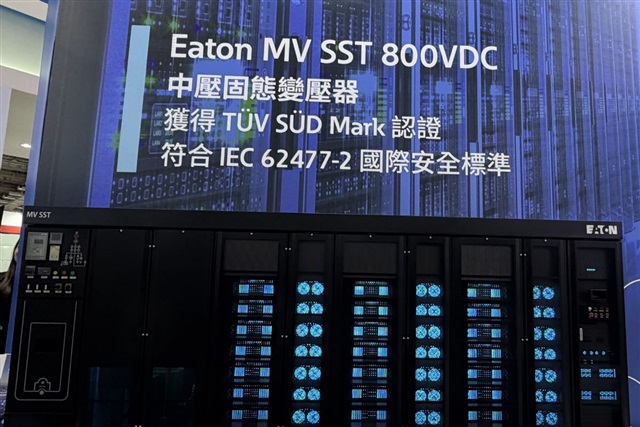
Eaton is expanding beyond traditional power management into modular power deployment, next-generation DC conve…
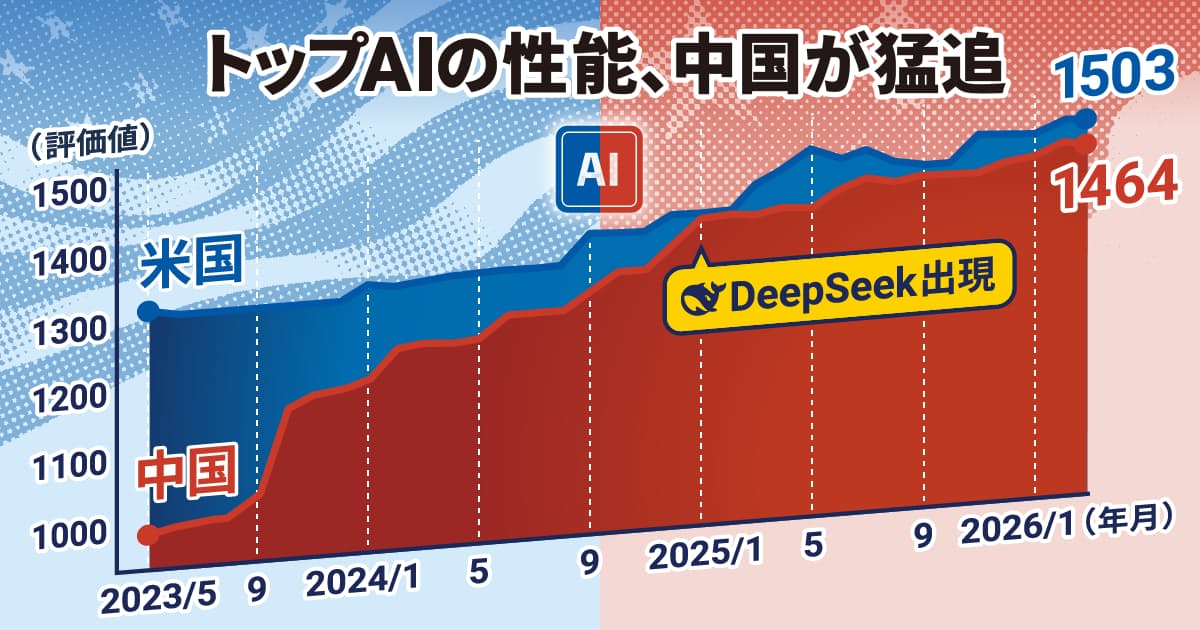
Stanford University reports that the performance gap between top US and Chinese AI models has narrowed sharply…
A new lawsuit alleges Meta turned footage captured through its AI-powered Meta Glasses into training data for…

Micron Technology and Sandisk Corporation are both benefiting from a memory shortage driven by AI infrastructu…