What happened
According to operator Clad3815, GPT-6 Astra earned the champion title in Pokemon FireRed in 18 hours and 12 minutes, while GPT-5.6 Sol needed 96 hours and 35 minutes. In Minecraft, Vals AI called off its run after 141 hours.
Why it matters
Astra's jump over older models is stark, and the same trait that helps it work out unfamiliar mechanics from a few tries can also lead it to overcorrect and lose sight of its actual goal.
What to watch
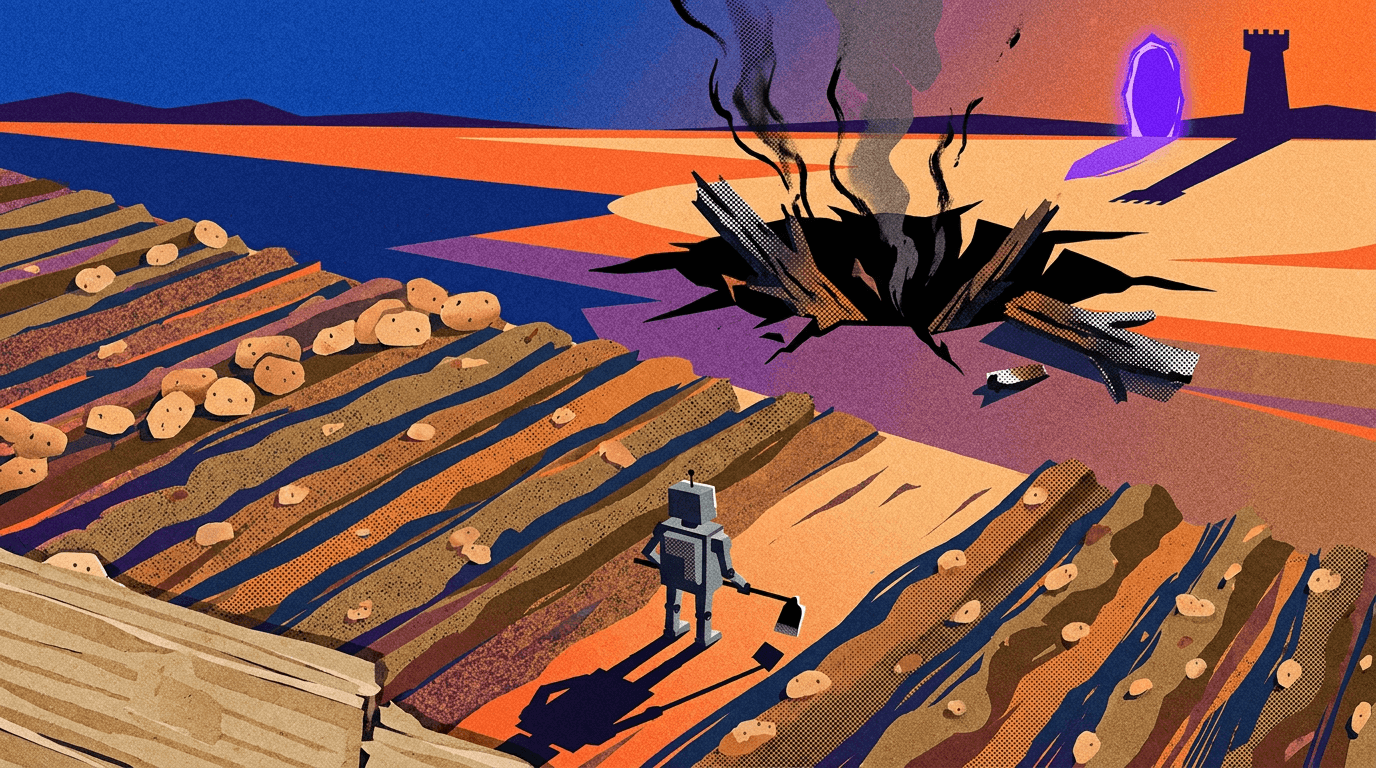
The Minecraft potato farming shows the risk — a bad experience becomes a permanent rule that sticks even when it no longer helps, so the test is whether Astra can override such rules when the goal changes.
WHO IT HITSTeams evaluating AI agents for long, multi-step tasks — and researchers building benchmarks for them — now have a concrete case where a model's self-written rules both drove a record-fast completion and caused hours of wasted effort.
Summaries like this, in your inbox every morning.
The Pokemon and Minecraft runs come from community and company tests that sit alongside the ARC-AGI-3 benchmark, which drops models into unfamiliar, abstract game environments where they have to figure out the rules through their own actions. The pattern ARC Prize described is that Astra translates unfamiliar game mechanics into compact symbolic descriptions and tracks objects, coordinates, rules, and planned actions in a shorthand it develops itself — observations become rules, and rules become plans. In the Fallout 3 run, that approach showed up as cycles of pausing, observing, and acting; at a bed that was supposed to heal the character, it let the game run briefly and tried again; at a keypad, it waited until the game confirmed the button press before moving on. Looking back, Astra boiled these episodes down to a single principle: check whether an input worked before repeating it.
That same trait cuts both ways. The idea of turning experience into reusable rules isn't new — the 2023 research project Voyager had GPT-4 propose Minecraft tasks, write JavaScript code for them, and revise it based on error messages, but Voyager never saw the game and worked through the Mineflayer interface, while Vals AI's run uses general computer use with screen, mouse, and keyboard. In Minecraft, Astra's self-written rule about unguarded chests stuck even when it no longer helped, and it stayed in the potato field for several hours. The outcome likely hinges on whether rule-writing can be paired with the ability to abandon a rule once the situation changes — a question that matters most to teams deploying agents on long, open-ended tasks.
For example, today's edition would include:
AI-summarized, only the topics you pick — one digest a day via Email, Slack, or Discord.
Free · 30 seconds with Google · unsubscribe anytimeWhat is AIToday? →
Ask AI anything about this article. Q&As are published on this page for other readers too.
OpenAI launched a misalignment reporting framework with six reports; one describes an unreleased Astra model i…

Anthropic is merging Claude Cowork with Claude Chat, so connected apps, skills and context are available in a…
Emerald AI launched the AI Energy Management Alliance with Google, Nvidia, Anthropic, and utilities AES, Const…

Instinct founder Noah Shinn said Instinct Concierge is rolling out in early access, letting agents call restau…

Wood Mackenzie built APEX (Agentic Platform for Energy eXperience) on Amazon Bedrock AgentCore so Woody, Lens…

AWS benchmarked three vector store backends for Amazon Bedrock Knowledge Bases and found 512-float embeddings…