
What happened
Emerald AI launched the AI Energy Management Alliance with Google, Nvidia, Anthropic, and utilities AES, Constellation, National Grid, and NRG Energy, aiming to free up 100 gigawatts of grid capacity via demand response.
Why it matters
The alliance backs demand response, where data centers pause noncritical tasks or shift loads, as a way to add capacity without new power plants — a role utilities have long used for factories.
What to watch
Emerald AI's edge is connecting utilities directly to data centers for battery-like speed, backed by $150 million in Series A funding led by Energize Capital and DCVC. But chief scientist Ayse Coskun says it will blunt, not eliminate, the need for new power sources.
WHO IT HITSData center operators and utilities planning new sites gain a potential path to connect more capacity without waiting for new power plants. Electricity customers in high-demand regions could see less pressure on the grid if demand response scales — though the body notes it won't remove the need for new generating sources.
Summaries like this, in your inbox every morning.
Demand response has been a utility staple for decades, used to manage peak loads by paying large users like factories to cut consumption. With AI compute loads growing, the same approach is being adapted to data centers, which can pause noncritical tasks or shift loads to other sites where the grid has headroom. Emerald AI's software connects utilities directly to data centers, letting them respond quickly, much like batteries. The startup has raised $150 million in a Series A led by Energize Capital and DCVC to scale up.
The new AI Energy Management Alliance — founded by Emerald AI with Google, Nvidia, Anthropic, and utilities including AES, Constellation, National Grid, and NRG Energy — wants demand response to become an integral part of data center development, estimating it could allow an additional 100 gigawatts of data centers to connect to the grid. The coalition also plans to help tech companies and utilities find new sites for data centers, which the body describes as a difficult task for both parties.
The approach is not unique: Google has been developing its own tools, and Enel X lets data centers tap uninterruptible power supplies to shave peaks. A Goldman Sachs study published last year found that limiting max grid usage to 90% for a few hours at a time could free up 76 gigawatts of capacity. Yet even sophisticated demand response won't solve all grid problems today — Emerald AI's chief scientist Ayse Coskun told TechCrunch the technology promises to blunt the need for new generating sources, but won't eliminate it entirely. Whether the coalition's 100-gigawatt ambition materializes may hinge on how quickly data centers can adopt these programs and whether utilities and developers can agree on new sites.
For example, today's edition would include:
AI-summarized, only the topics you pick — one digest a day via Email, Slack, or Discord.
Free · 30 seconds with Google · unsubscribe anytimeWhat is AIToday? →
Ask AI anything about this article. Q&As are published on this page for other readers too.
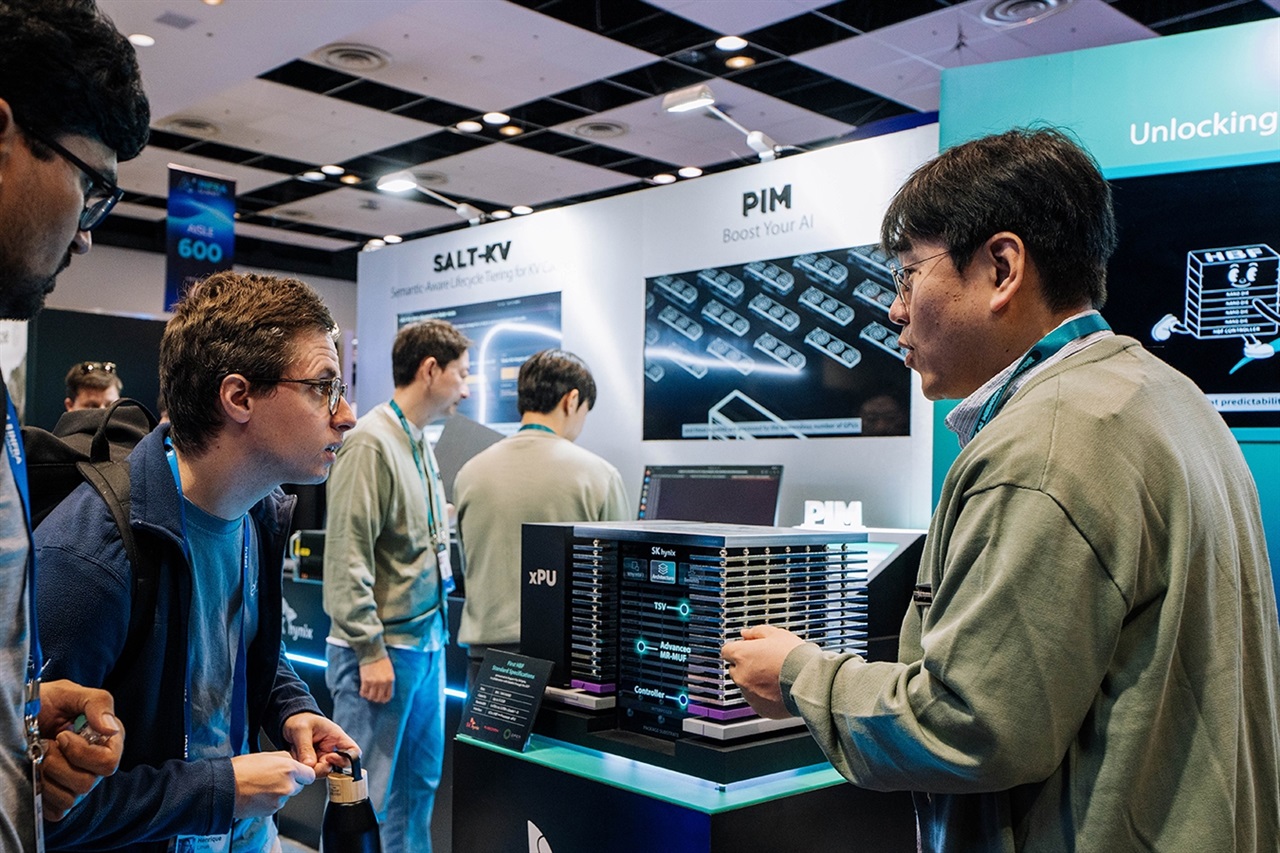
SK Hynix showcased PIM, HBF and SALT-KV technologies at AI Infra Summit 2026 in Santa Clara, moving beyond the…
Musk, Zuckerberg and Nvidia's Jensen Huang privately pushed back in Oval Office meetings against a Google Deep…

Camtek, which holds about 60% market share in advanced packaging inspection and metrology, said CEO Rafi Amit…

According to operator Clad3815, GPT-6 Astra earned the champion title in Pokemon FireRed in 18 hours and 12 mi…

OpenAI launched a misalignment reporting framework with six reports; one describes an unreleased Astra model i…

Anthropic is merging Claude Cowork with Claude Chat, so connected apps, skills and context are available in a…