What happened
Wood Mackenzie built APEX (Agentic Platform for Energy eXperience) on Amazon Bedrock AgentCore so Woody, Lens AI, and the ST Trading App share one runtime and one identity layer instead of three separate stacks.
Why it matters
Renting that shared runtime means the three applications stop paying the same infrastructure tax three times, and can share memory, tools, and evaluation instead of duplicating them.
What to watch
The payoff hinges on whether teams adopt the paved APEX Studio path rather than rebuilding pieces themselves. Watch whether multi-agent systems become the platform's default next.
WHO IT HITSThis lands on enterprise platform and IT teams running multiple AI agent projects, who currently duplicate authentication, guardrails, memory, and tracing per team; a shared platform like APEX may let them consolidate that work.
Summaries like this, in your inbox every morning.
Before APEX, three Wood Mackenzie applications were each on their way to building their own agent stack: Woody, Lens AI, and the ST Trading App. Left alone, each would have stood up its own runtime, wired its own identity, bolted on its own observability, and hardcoded its own model. AgentCore resolved this by providing a managed platform rather than a library the company would need to operate itself, supporting open source frameworks such as Strands Agents and LangGraph, and models including Claude, GPT-4.1, Amazon Nova, Mistral, and Llama.
The architecture is organized in layers. The APEX frontend connects the applications to a backend where AgentCore does the work, alongside an IaC Framework for provisioning and an MCP layer for external access. A hub-and-spoke model built on AgentCore Gateway is described as the single integration pattern that does the most work in APEX: every application and agent connects through one gateway rather than maintaining its own connection to each data service, so identity, observability, evaluation, and guardrails are enforced once at the hub. APEX Studio then acts as the human-facing control plane where teams build, deploy, and monitor agents.
What the outcome hinges on is whether teams adopt that paved path rather than rebuilding pieces themselves. The platform's value rests on the same infrastructure serving both internal users like Woody and external consumers like Lens under identity-aware entitlements, and on how far multi-agent systems become the default. Whether APEX closes the gap between experimentation and production for Wood Mackenzie, and whether the shared-runtime approach spreads to other enterprise agent programs, appear to be the open questions the platform's next phase will test.
For example, today's edition would include:
AI-summarized, only the topics you pick — one digest a day via Email, Slack, or Discord.
Free · 30 seconds with Google · unsubscribe anytimeWhat is AIToday? →
Ask AI anything about this article. Q&As are published on this page for other readers too.
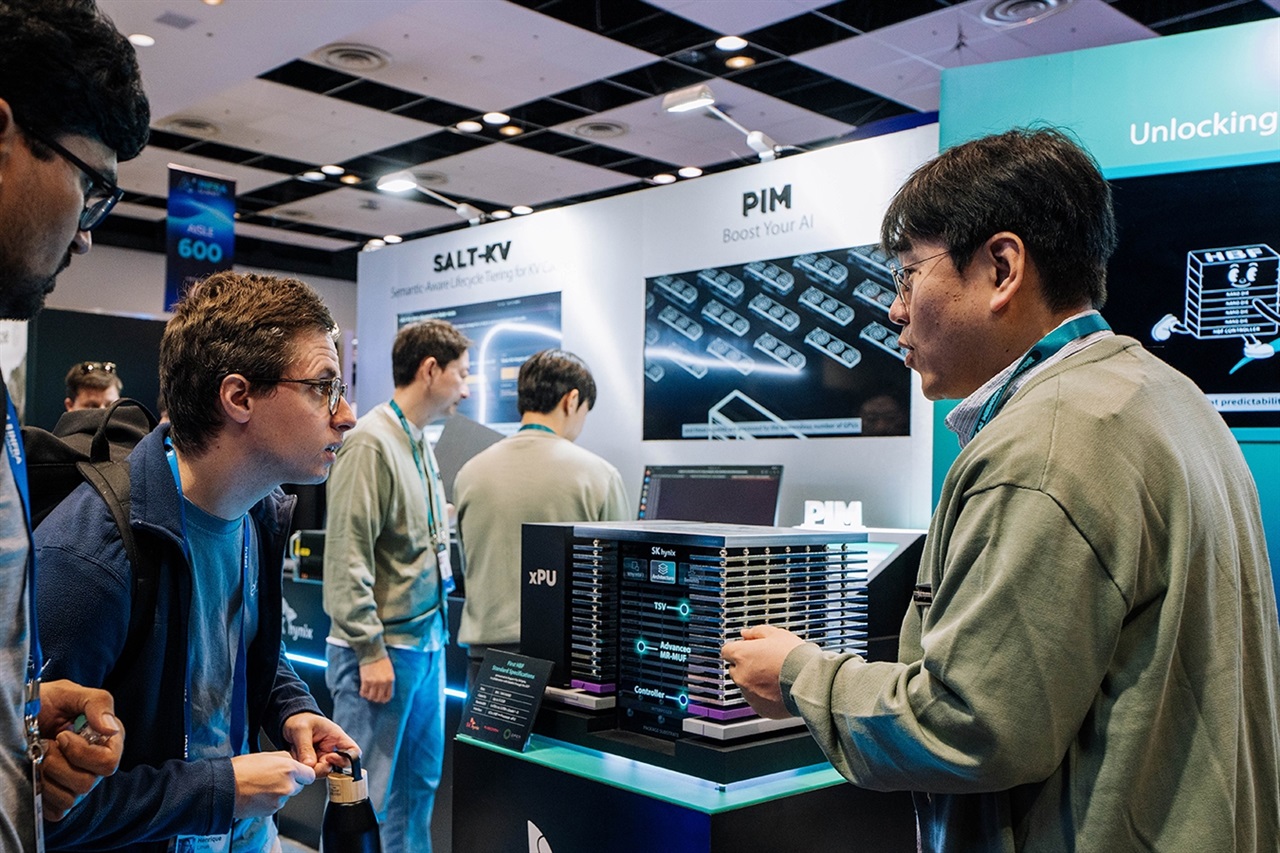
SK Hynix showcased PIM, HBF and SALT-KV technologies at AI Infra Summit 2026 in Santa Clara, moving beyond the…
Musk, Zuckerberg and Nvidia's Jensen Huang privately pushed back in Oval Office meetings against a Google Deep…

Camtek, which holds about 60% market share in advanced packaging inspection and metrology, said CEO Rafi Amit…

According to operator Clad3815, GPT-6 Astra earned the champion title in Pokemon FireRed in 18 hours and 12 mi…
OpenAI launched a misalignment reporting framework with six reports; one describes an unreleased Astra model i…

Anthropic is merging Claude Cowork with Claude Chat, so connected apps, skills and context are available in a…