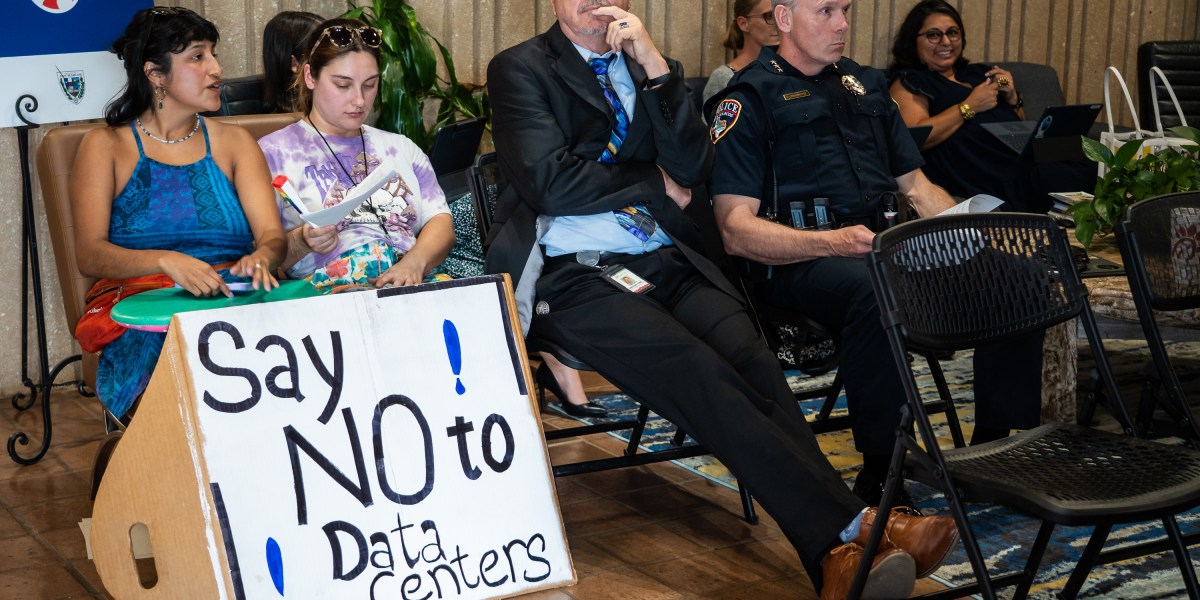
Major tech companies like Amazon and Microsoft are negotiating direct deals with towns and utilities across America to build AI data centers, pledging hundreds of millions to billions in local benefits—schools, housing, parks, and tax revenue. The push reflects tension over surging electricity demand: data centers are projected to add roughly $23 billion(約3.7兆円) in power costs to mid-Atlantic and Midwest customers through 2028, making communities negotiate for a share of the gains. Towns with transparent processes are securing major wins; those that cut backroom deals face voter backlash, and at least 75 projects worth roughly $130 billion(約21兆円) were delayed or blocked in the first three months of 2026.
Summaries like this, in your inbox every morning.
Sign up free →What happened
Towns across America are striking "community benefit" agreements with Big Tech to host data centers, securing commitments worth hundreds of millions to billions of dollars in local investment, tax revenue, and infrastructure. Hobart, Indiana received roughly $200 million(約320億円) in commitments from Amazon; LaPorte, Indiana projects $1 billion(約1600億円) in 30-year tax collections from Microsoft; Jasper County approved $98 million(約160億円) upfront plus $23 million(約37億円) annually for a decade.
Why it matters
Data centers are projected to drive roughly $23 billion(約3.7兆円) in higher electricity costs for mid-Atlantic and Midwest customers through at least 2028, so communities are now negotiating directly with tech companies to capture benefits and offset strain on local utilities. Towns that secure transparent, negotiated deals are funding schools, housing programs, and public services without raising taxes—but lack of transparency can provoke backlash: Festus, Missouri voters removed half the city council in spring 2026 after officials backed a data center deal without community input.
What to watch
The Federal Energy Regulatory Commission required all six regional grid operators in June to revise rules on how large energy users connect and pay for upgrades. Companies like NIPSCO (the utility led by the article's author) are already pioneering models where data centers finance their own generation rather than drawing on the public rate base—a shift that is expected to return $1.4 billion(約2200億円) to existing customers as more projects come online.
The debate over data center power is no longer a Silicon Valley story; it is being decided in Main Street town councils and utility commissions across America. The article opens with a recognition of the scale: data centers are expected to drive roughly $23 billion(約3.7兆円) in higher electricity costs for customers in the mid-Atlantic and Midwest, running through at least 2028. The central question facing the industry is how to meet massive energy demand while keeping the lights on and bills affordable.
The most striking case is Hobart, Indiana, a town of about 30,000 where civic debates usually center on zoning and the local high school. When Amazon approached Hobart about building a data center, the town negotiated rather than simply accepted. Hobart's entire annual tax levy is about $25 million(約40億円)—yet it left the table with roughly $200 million(約320億円) in commitments from Amazon. The funds will support public parks, youth programs, and public safety without raising income taxes, and AWS committed to recruiting from Hobart high schools. This model is spreading. LaPorte, Indiana projects $1 billion(約1600億円) in tax collections over 30 years from its Microsoft project, with 15% dedicated to the local school system. Jasper County approved a community benefit plan worth $98 million(約160億円) upfront and $23 million(約37億円) annually for a decade, with $1 billion(約1600億円) in expected total tax revenue. Henrico County, Virginia created the first county housing trust entirely funded by data center revenue—$60 million(約96億円) for teachers, nurses, and factory workers who just miss traditional housing assistance.
But transparency is essential. In Festus, Missouri, voters removed half the city council in spring 2026 after officials backed a $6 billion(約9600億円) data center deal without proper community input. Rick Belleville, a first-time candidate who unseated an eight-year incumbent, attributed the uprising to "the way the deal was handled." Festus is not isolated: by one count from the research group Data Center Watch, at least 75 projects worth roughly $130 billion(約21兆円) were delayed or blocked across the country in just the first three months of 2026.
The article identifies utilities as key brokers designing agreements that power data centers while protecting existing ratepayers. Joe Bowring, the independent monitor of the PJM market, has warned that capacity prices could stay high and argues that large loads like data centers should bring their own generation rather than lean on infrastructure the rest of us pay for. This is beginning to happen. AEP Ohio now makes large load customers pay for most of the capacity they reserve, whether they use it or not. NIPSCO (led by the article's author) created a separate company that lets data centers finance their own generation rather than drawing on the existing rate base. Already, the utility has signed agreements with Amazon and Alphabet; these data centers will pay for their own electric service and return an expected $1.4 billion(約2200億円) to existing customers—a figure expected to grow as more projects come online. In June, the Federal Energy Regulatory Commission required all six regional grid operators to revise or justify rules governing how large new energy users connect and who pays for needed upgrades. The consensus emerging: large loads should carry the costs their projects create, and communities should share in the promise of the AI-driven buildout.
The article frames a fundamental shift in how data center infrastructure is negotiated in America: rather than being imposed top-down from Silicon Valley or decided in utility boardrooms, the decisions are now made in town councils and utility commissions, with local communities holding meaningful leverage. The stakes are enormous. Data centers powering AI are expected to drive roughly $23 billion(約3.7兆円) in higher electricity costs for customers in the mid-Atlantic and Midwest through at least 2028, making the question of who bears those costs—and who captures the benefits—a central civic issue.
The article's core argument is that the most successful deals are those struck transparently, with clear "community benefit" frameworks. Examples like Hobart (roughly $200 million(約320億円) in commitments), LaPorte ($1 billion(約1600億円) in 30-year tax revenue), and Jasper County ($98 million(約160億円) upfront plus $23 million(約37億円) annually) show that communities are not powerless; they can extract real resources in exchange for hosting data centers. However, the backlash in Festus, Missouri—where voters removed half the city council over a backroom $6 billion(約9600億円) deal—demonstrates that secrecy and perceived unfairness trigger political revolt. The Data Center Watch tally of at least 75 projects worth roughly $130 billion(約21兆円) delayed or blocked in the first quarter of 2026 suggests that communities are increasingly willing to block deals they do not trust.
Crucially, the article presents a structural solution emerging on the utility side: instead of spreading data center costs across existing rate bases (which would charge ordinary households more), utilities like NIPSCO are requiring large loads to finance their own generation. This approach is already signed with Amazon and Alphabet and is expected to return $1.4 billion(約2200億円) to existing customers. The Federal Energy Regulatory Commission's June directive to all six regional grid operators to revise connection rules suggests this model may become standard, embedding the principle that large energy users should pay for the infrastructure they create rather than shifting costs to smaller consumers.
AI-summarized, only the topics you pick — one digest a day via Email, Slack, or Discord.
Free · takes 30 seconds · unsubscribe anytime
No comments yet. Be the first to share your thoughts!
Log in to join the discussion



Get curated AI news from 200+ sources delivered daily to your inbox. Free to use.
Get Started FreeFree · takes 30 seconds · unsubscribe anytime
