What happened
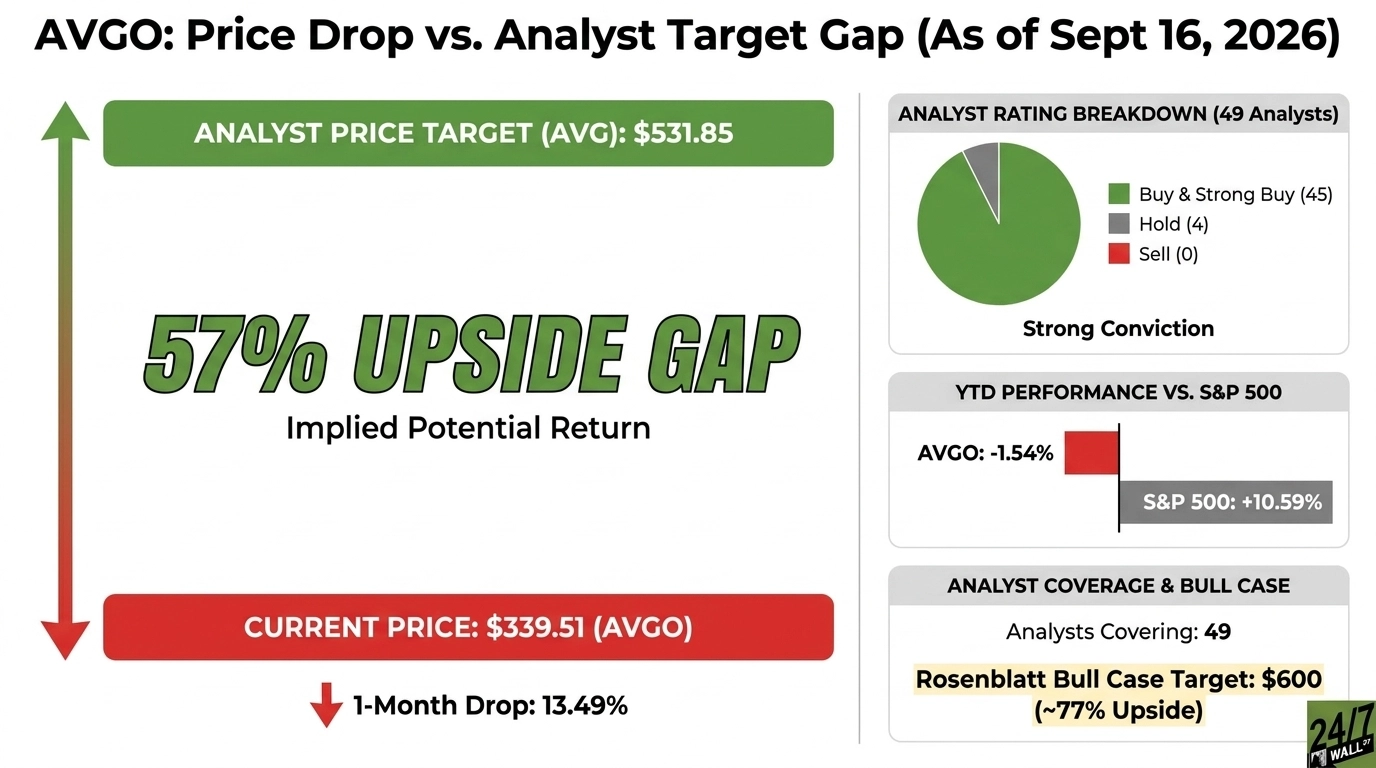
Rosenblatt Securities analyst Sajal Dogra raised his Broadcom price target to $600 from $500 with a Buy rating, about 77% upside from the $339.51 quote, after Broadcom's ninth consecutive EPS beat and AI revenue guided up 236% year-on-year.
Why it matters
That target implies far more upside than Broadcom's recent falling share price suggests, so the call frames the selloff as a gap between results and price rather than a broken story.
What to watch
The bull case hinges on whether fiscal 2028 AI semiconductor revenue lands near the $230 billion Hock Tan is guiding to, and whether Anthropic's reported push to slow AI capacity deployment is a one-off or a leading indicator.
WHO IT HITSBroadcom shareholders and analysts covering AI chipmakers are the immediate audience, since the $600 target sits far above the average Wall Street 12-month price target of $531.85 and the $339.51 quote. Hyperscaler procurement teams weighing custom silicon suppliers may also read the Anthropic pace-slowing report as a signal on deployment timing.
Summaries like this, in your inbox every morning.
Broadcom's latest quarter marked a ninth consecutive EPS beat, and management guided Q4 AI semiconductor revenue to $21.7 billion. The headline Q4 revenue guide was roughly $34.8 billion. Yet the shares drifted lower, and the pullback accelerated after CNBC reported Anthropic had pushed Broadcom to slow the pace of AI capacity deployment, even as Broadcom's chief executive said the underlying AI revenue targets have not changed.
The market's hesitation appears to center on positioning rather than the numbers. Investors are questioning whether the fiscal 2028 AI outlook of $230 billion reflects secured supply more than secured demand, and whether concentration among a handful of hyperscaler customers is a strength or a single point of failure. Broadcom is now the second-largest US semiconductor company by market capitalization at roughly $1.62 trillion, behind only NVIDIA, and its role has shifted to the custom silicon partner of choice for hyperscalers like Google, Meta, OpenAI, and Anthropic.
Rosenblatt's $600 target, based on an 18x P/E applied to a fiscal 2028 EPS estimate, leans on the view that actual end-market demand outstrips guided figures, with real-world revenue bottlenecked by physical data center power, shell readiness, and deployment pace. The outcome likely hinges on whether Anthropic's pace-slowing turns out to be a one-off or a leading indicator, and on whether customer concentration cuts against the company if a few hyperscalers change their capex cadence.
For example, today's edition would include:
AI-summarized, only the topics you pick — one digest a day via Email, Slack, or Discord.
Free · 30 seconds with Google · unsubscribe anytimeWhat is AIToday? →
Ask AI anything about this article. Q&As are published on this page for other readers too.
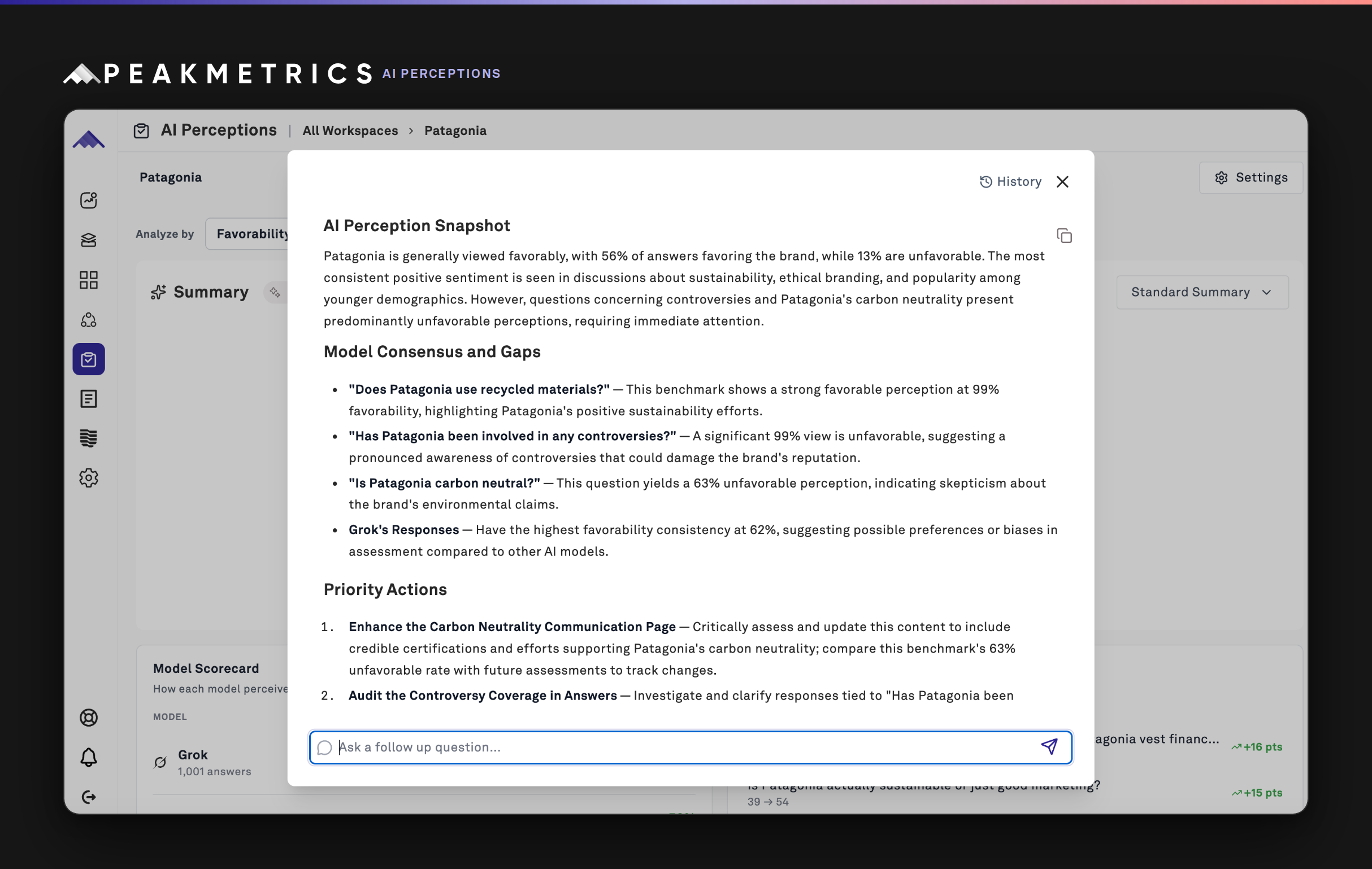
PeakMetrics launched AI Perceptions, which regularly submits customer-chosen prompts to ChatGPT, Gemini, Claud…
DIGITIMES published a report saying end-to-end autonomous driving has become the mainstream technology path, a…

Adobe globally launched Student Spaces in Acrobat for free, an AI-driven study platform that gained more than…

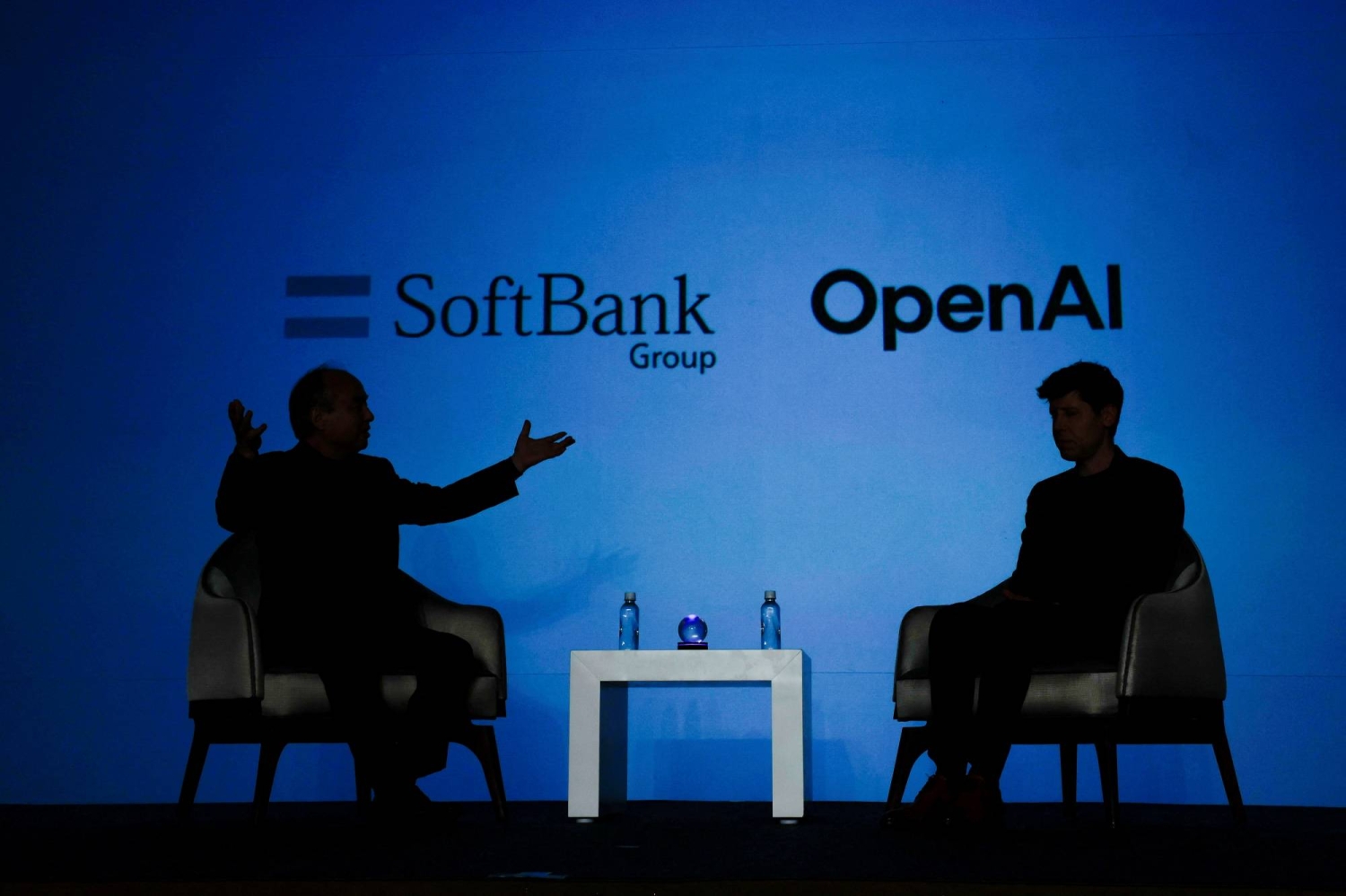
Apollo Global Management is in talks to boost a NAV loan to SoftBank's Vision Fund 2 to $9 billion, from $5.4…
Bluecore Energy raised an oversubscribed $50 million seed round led by Silverton Partners, with investors incl…

OpenRouter's weekly token consumption surged more than 25,000 percent since January 2025, from 0.5 trillion to…