What happened
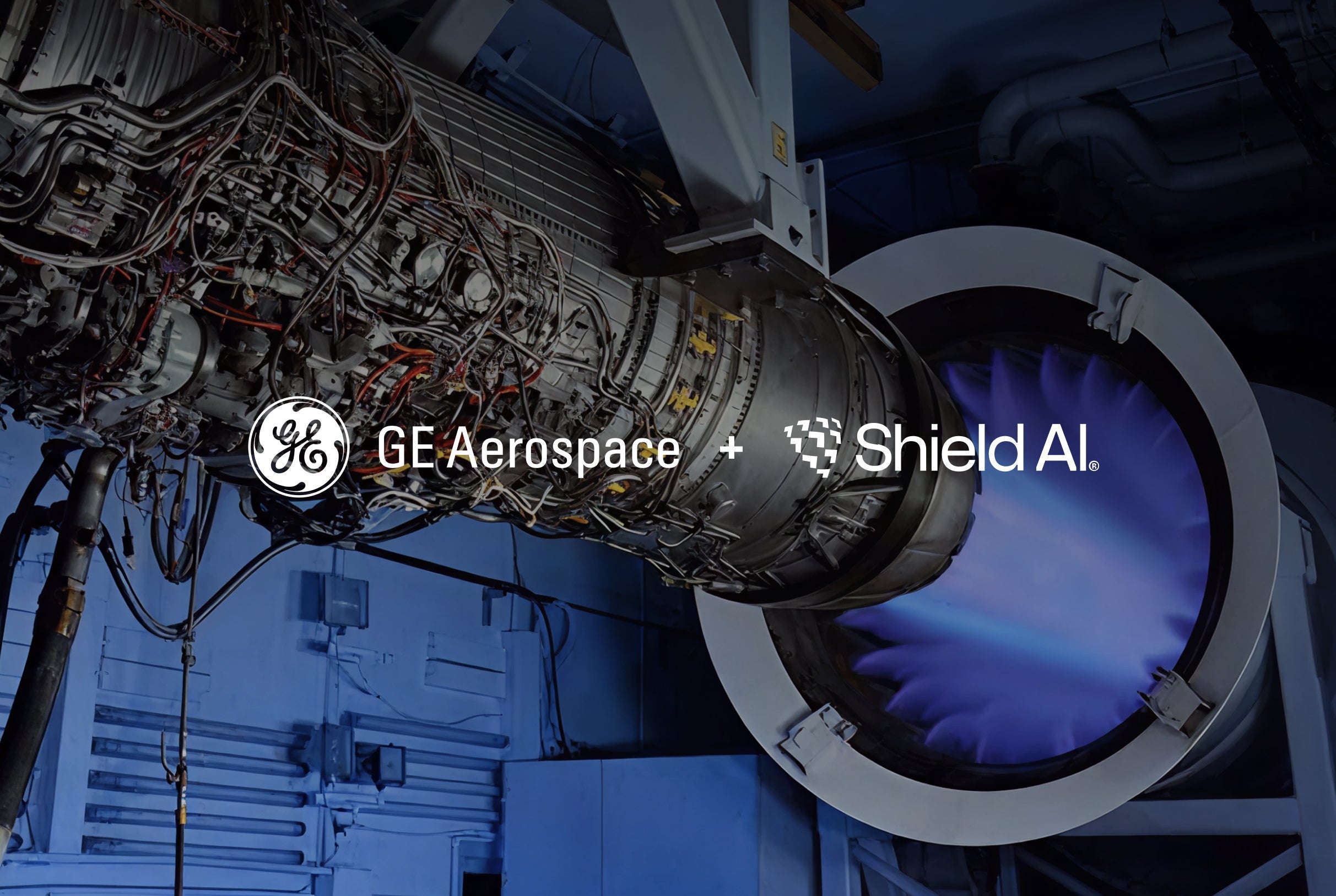
Shield AI and GE Aerospace have finished integrating an advanced vectoring exhaust nozzle (AVEN) into the F110-GE-129E engine that will power Shield AI's X-BAT drone fighter jet, including actuation and engine light-off testing.
Why it matters
The AVEN enables X-BAT to take off and land vertically from anywhere without a runway or airbase, a core capability that Shield AI's senior vice president of aircraft engineering says is essential to the platform's design. The nozzle allows fast gimbaling to maintain attitude control during vertical flight—a demand that the original AVEN program in the 1990s never had to meet.
What to watch
The AVEN is currently in ground testing ahead of flight testing on the X-BAT prototype. Shield AI plans to iterate on the propulsion approach to make future versions faster, lighter, and more capable.
Ask the AI about this article →
Summaries like this, in your inbox every morning.
Shield AI's X-BAT is designed around the concept of vertical takeoff and landing without requiring a runway or airbase—a fundamental operational advantage for an autonomous drone fighter. The company has long identified propulsion as the critical enabler of this capability. GE's vectoring exhaust nozzle, originally developed decades ago for traditional fighter aircraft testing, has now been adapted to meet a different technical demand: the fast gimbaling necessary to maintain pitch and roll control during vertical hover and transition flight. According to Armor Harris, Shield AI's senior vice president of aircraft engineering, this application represents a novel use case for the technology. The completion of integration and engine light-off testing marks a significant milestone in the X-BAT development timeline, transitioning the propulsion system from design and integration into validation on the ground before moving to flight trials. The next phase focuses on refinement—making the propulsion approach faster, lighter, and more capable for production versions.
For example, today's edition would include:
AI-summarized, only the topics you pick — one digest a day via Email, Slack, or Discord.
Free · 30 seconds with Google · unsubscribe anytimeWhat is AIToday? →
Ask AI anything about this article. Q&As are published on this page for other readers too.
Alphabet is Berkshire's growth pick — nearly 106 million shares bought across its two tickers, lifting its por…

Dell Technologies and Axelera AI announced a collaboration on the new Europa AI Processing Unit architecture f…

Dell took almost $61 billion in AI server orders last quarter and ended with a $95 billion backlog
Denver-based Crusoe survived the crypto winter of 2022 and 2023, which sent many bitcoin miners to the brink o…

On the same Xeon 6980P silicon and socket count as MLPerf v6.0, Intel reported a 2.4x rise in Llama 3.1 8B Ser…

Bank of America CEO Brian Moynihan told investors that AI has helped the bank avoid layoffs