What happened
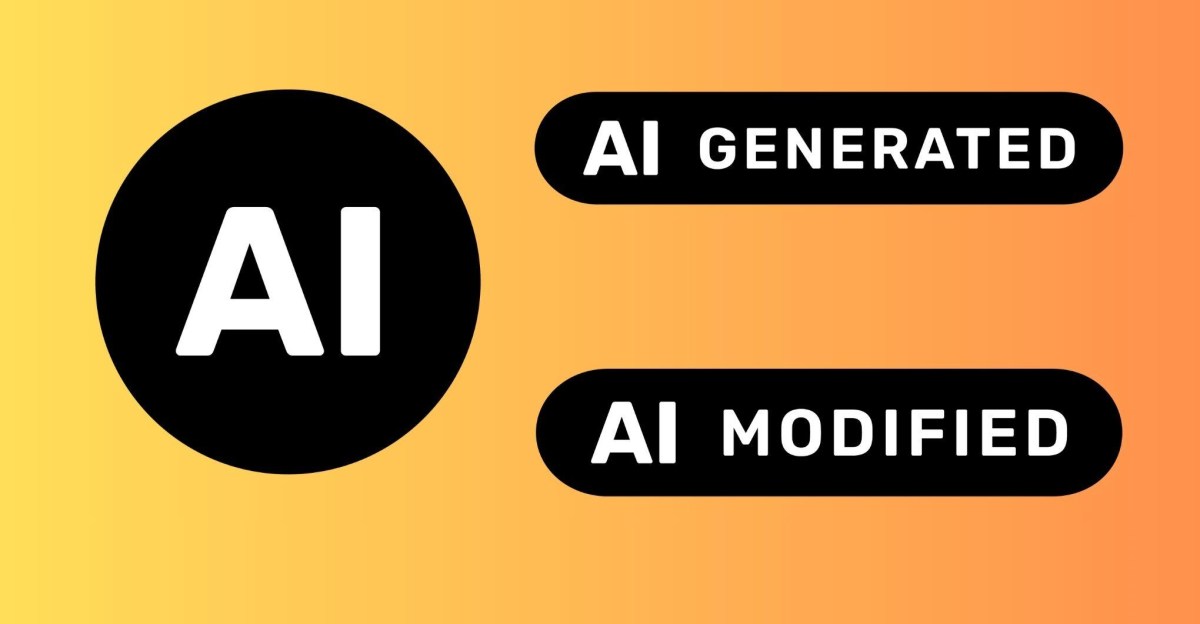
The European Union's AI Act transparency obligations went into effect on August 2nd, requiring companies to disclose when users interact with AI and when content is AI-generated or altered. Providers must explicitly notify users they're dealing with AI "unless this is obvious" and add machine-readable marks to synthetic media; deployers must label AI-generated deepfakes designed to look real.
Why it matters
The EU says rapid AI development is making it "increasingly difficult to distinguish AI interactions and AI-generated content from human-created and authentic content," and the new rules aim to help people "make informed decisions, calibrate their trust and reliance on AI and avoid misinformation or deception." Companies that fail to comply face fines of up to €15 million (about $17.2 million), or 3 percent of their global annual turnover.
What to watch
The EU has published optional disclosure labels (mirroring designs TikTok, Instagram, and Facebook already use) for platforms to adopt, though the labeling requirements themselves are mandatory. AI systems that launched before August 2nd have until December 2nd to comply; new systems must comply immediately.
Summaries like this, in your inbox every morning.
The EU's AI Act transparency rules represent a regulatory milestone in establishing ground-level disclosure obligations for generative AI at scale. By August 2nd, the bloc mandated that both AI developers (providers) and platforms using AI systems (deployers) must make AI interactions and synthetic content explicitly detectable to users. The Commission's framing emphasizes user agency: as people struggle to discern AI from human-created content, mandatory disclosure is positioned as essential to informed decision-making and defense against misinformation.
The regulatory structure accommodates the complexity of the AI market by distinguishing provider and deployer obligations—though companies like Meta and SpaceX AI straddle both roles. The grace period for legacy systems (August 2nd through December 2nd) balances immediate enforcement for new entrants with operational flexibility for established services. Notably, the EU provided optional label designs modeled on TikTok, Instagram, and Facebook's existing implementations, signaling both standardization and deference to industry practice, while making clear that the underlying labeling mandate is not negotiable.
Pick your industry and the AI tools you use, and get news related to your work every day.
Free · 30 seconds with Google · unsubscribe anytimeWhat is AIToday? →
Ask AI anything about this article. The AI reads this article, earlier AIToday articles, and Wikipedia, and cites its sources. Q&As are published on this page for other readers too.
Cammarata reinterprets InceptionV1's cat-car neuron as a V-shape detector, not two unrelated concepts

Google Deepmind's Gemini 4 Argon scored 97.5 percent on ARC-AGI-3 at a cost of $4,800, second only to GPT-6 As…

Microsoft's Surface Laptop Ultra, using Nvidia's RTX Spark platform, starts at $2,599 (up to $5,899)

Meta's new commercial terms, effective October 30th, appear to let it crawl and train AI on content from websi…
Vercel data published Thursday shows TypeSafe AI's Jev, a lightweight decision model for choosing among predet…
Reflection AI introduced Beam, an open-weight model for agentic coding and long-horizon tasks, with 501 billio…