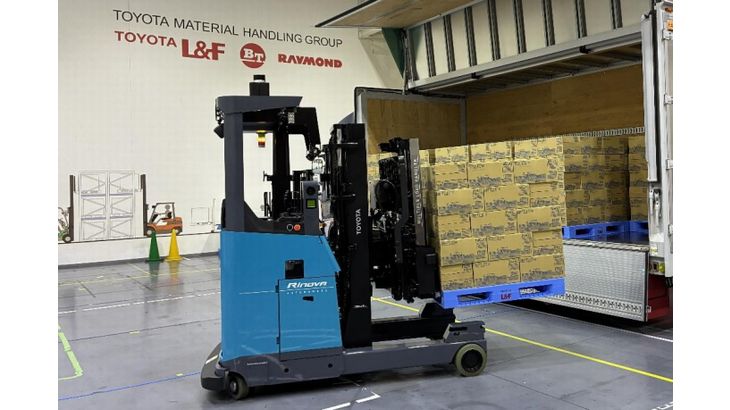
Modern pallet trucks now use Simultaneous Localisation and Mapping (SLAM) technology incorporating Light Detection and Ranging (LiDAR) and 3D cameras to build real-time maps and navigate warehouse layouts without floor-embedded wire or magnetic tape guidance.
Robotic pallet trucks equipped with 360-degree sensors detect obstacles in advance and dynamically reroute without interrupting workflow, unlike earlier AGVs that required costly infrastructure changes when warehouse layouts were modified.
Autonomous pallet trucks outperform manual operators in throughput by working continuously without breaks, fatigue, or shift limitations, while AI-based 3D vision enables millimetre-accuracy detection, alignment, and lifting of pallets with reduced product damage risk.
These vehicles eliminate fatigue-related workplace accidents and musculoskeletal disorders (such as herniated discs, lumbar strain, sciatica, tendinitis, and carpal tunnel syndrome) associated with manual heavy lifting in warehouse operations.
Ask the AI about this article →
For example, today's edition would include:
AI-summarized, only the topics you pick — one digest a day via Email, Slack, or Discord.
Free · takes 30 seconds · unsubscribe anytimeWhat is AIToday? →
Ask AI anything about this article. Q&As are published on this page for other readers too.
NTT group has started offering a cloud service for physical AI, aimed at supporting the development of robots…
A senior Lam Research executive told an industry audience this week that the next major leap in semiconductor…

At a recent ICRA panel, robotics researchers discussed how to handle the overwhelming number of publications

Geek+ reported interim results for the six months ended 30 June 2026

GE Aerospace's Lynn, Massachusetts facility is integrating robots and AI into its manufacturing operations, re…

Suntory Logistics and Toyota Industries announced on September 1 that they will begin a demonstration test in…