
What happened
Palo Alto Networks launched Prisma AIRS updates that integrate runtime protection into Claude Enterprise via inference hooks, expand scanning beyond models to agent skills and plugins, and add AI Gateway tool security and routing.
Why it matters
Enterprises adopting AI agents gain policy enforcement and data protection inside Claude environments, plus oversight of third-party components and AI spend, which may lower adoption friction.
WHO IT HITSEnterprise security teams and AI platform owners running Claude-based coding and business workflows will be able to enforce existing DLP policies and block prompt injections without building separate rule sets.
Summaries like this, in your inbox every morning.
Palo Alto Networks is positioning its Prisma AIRS platform as a way to secure AI agents as they move from answering questions to writing code, using tools, and executing workflows. The company says this shift gives agents access to more of the business, creating a need for protection that keeps pace with those capabilities.
The new features address three areas. First, Prisma AIRS integrates directly with Claude Enterprise through inference hooks, bringing runtime protection to Claude Code, Claude.ai, and Claude Cowork. This lets organizations apply runtime guardrails before model inference and extend existing enterprise DLP policies to help keep PII, intellectual property, and source code from being exposed. It also aims to block prompt injections, jailbreaks, and toxic inputs.
Second, the company is expanding scanning beyond models to agent skills and other components. Prisma AIRS AI Supply Chain Security scans open-source models, validates agent skills, and blocks malicious code before deployment. More than 3M+ third-party artifacts have been pre-scanned.
Third, the Prisma AIRS AI Gateway centralizes policy enforcement and usage oversight. Since launch, more than 20 major gateway updates have expanded model and provider support, including support for decision models. Additional enhancements include MCP Guardrails, which inspects MCP traffic in both directions, blocks concealed instructions in tool inputs, redacts sensitive data from outputs, and enforces access policies. Signals & Smart Routing assess each request's intent and complexity to select the best-fit model, with real-time analytics tracking savings, latency, and cache efficiency.
Pick your industry and the AI tools you use, and get news related to your work every day.
Free · 30 seconds with Google · unsubscribe anytimeWhat is AIToday? →
Ask AI anything about this article. The AI reads this article, earlier AIToday articles, and Wikipedia, and cites its sources. Q&As are published on this page for other readers too.
Aparna Nair, IBM's chief talent, leadership, and culture officer, said generalists alone "will cut it" in the…
Amazon introduced Bee Frontier, a wearable personal AI, for $74.99 in Onyx, Lavender and Sage, and Bee Eclipse…

Humans First released an "America First AI Policy" platform on Friday, proposing tighter export controls on Ch…

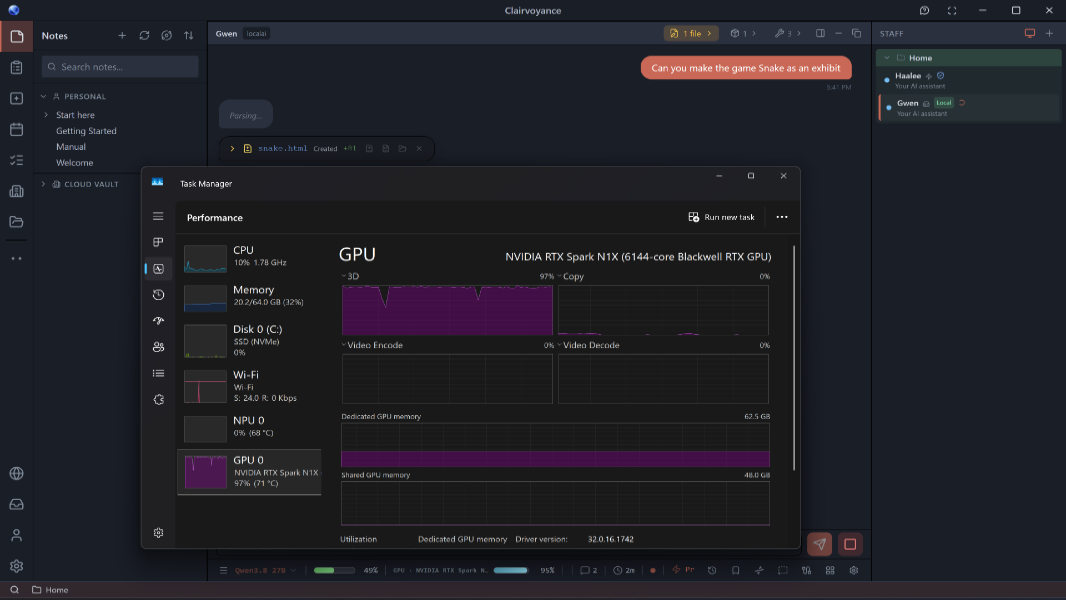
Microsoft and Nvidia are promoting RTX Spark, a new class of Windows PCs for local AI, with a top configuratio…
Dell says its AI Data Platform uses a four-engine architecture and a Unified Semantic Layer to connect siloed…
AI-related stocks faced heavy selling pressure on concerns over capital expenditure levels and slowing revenue…