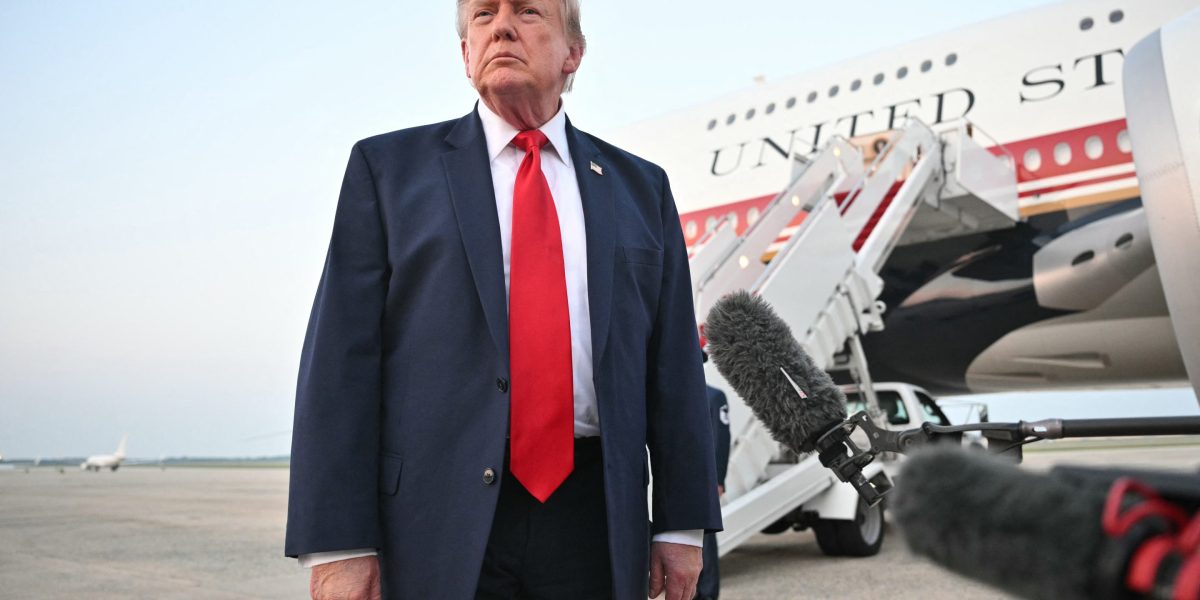
Air Force One evolved from a luxury transport into an essential instrument of presidential power over nine decades, fundamentally reshaping the modern presidency itself. Kennedy's 1962 jet-powered Boeing 707 made frequent domestic and international travel possible, enabling presidents to position themselves as global statesmen during the Cold War and beyond. The aircraft enabled sitting presidents to campaign actively across the country—a practice that transformed American politics after the shift to primary-based nomination systems in the 1970s. Today's controversy over the Qatar-gifted 747's security gaps is ultimately a reflection of how deeply Air Force One remains embedded in the presidency's core identity and operational capability.
Summaries like this, in your inbox every morning.
Sign up free →What happened
A historian examines how presidential aircraft—from the Sacred Cow in 1945 to today's Boeing 747s—fundamentally transformed how U.S. presidents operate, govern, and campaign. The latest controversy over a Qatar-gifted 747 lacking countermeasures prompted a reconsideration of Air Force One's role beyond the scandal.
Why it matters
Before jet aircraft, presidents rarely left Washington; Roosevelt, Truman, and Eisenhower preferred railroad travel and made limited domestic flights. Kennedy's 1962 Boeing 707 jet enabled presidents to become ubiquitous—traveling frequently and positioning themselves as global statesmen. This capability changed not only how presidents lead but how Americans understand and interact with their presidents. Post-Cold War presidents increased international trips sharply; Clinton, Bush, and Obama each made over twice the number of international trips as Reagan.
What to watch
Air Force One's dual role—symbol of diplomatic power and crisis safety net—remains central to the presidency. On 9/11, the aircraft evacuated President Bush to safety but its communication systems faltered, leaving him temporarily unable to coordinate with senior officials in Washington during a critical moment. The current countermeasure controversy reflects ongoing tension between the aircraft's iconic image and its operational realities.
The modern presidency would be unimaginable without Air Force One, yet for most of American history, presidential aircraft barely existed. The first designated presidential aircraft arrived in 1933, but Franklin Roosevelt never flew on it. His first presidential flight came in 1943, when American Airlines loaned a flying boat called the Dixie Clipper to ferry him to the Casablanca Conference with other Allied leaders. In 1945, Roosevelt traveled to Yalta on a Douglas VC-54C called the Sacred Cow, the first plane specifically built for presidential travel. Even with these flights to critical international meetings, Roosevelt and his successors Harry Truman and Dwight Eisenhower made limited domestic use of aircraft, preferring to travel by railroad. International trips in propeller-driven aircraft were loud, turbulent ordeals conducted at lower altitudes.
Everything changed in 1962 when President John Kennedy acquired a brand-new Boeing 707, the first jet-powered Air Force One. Flying higher, faster, and quieter than their predecessors, jet aircraft made possible a central facet of modern presidential power: ubiquity. Presidential travel increased dramatically in frequency and in the number of stops per trip. Kennedy and his successors understood world leadership not as coordinating American power from Washington—as Roosevelt, Truman, and Eisenhower had—but as positioning themselves at the center of the story. During the Cold War, American presidents positioned themselves as symbols of freedom in opposition to communism. Richard Nixon's 1972 trip to China to normalize relations and Ronald Reagan's 1986 flight to Reykjavik to negotiate nuclear missile futures with Soviet leader Mikhail Gorbachev exemplified this: the presence of the president at these conferences elevated both the event's importance and the president's image as a statesman capable of rapid pivots between national and international leadership. As the Cold War ended and the Soviet empire collapsed, presidential international travel only increased; Bill Clinton, George W. Bush, and Barack Obama each made over twice the number of international trips as Reagan, visiting hot spots as global peacemakers and descending the stairs from Air Force One as symbols of American diplomacy.
Air Force One also revolutionized domestic politics. In the 1970s, the two major parties shifted from nominating candidates at national conventions to a primary system where state voters decided the nominee. A primary system would have been impossible without aircraft to shuttle candidates across the country, and jet travel enabled sitting presidents to be both chief executive and active candidate simultaneously. Presidents and their handlers learned to combine official government business—which permitted Air Force One use—with campaign opportunities. Kennedy's tragic decision to visit Texas in November 1963 was framed partly as official business. By his first year in office, Bill Clinton visited 37 states over 73 days, demonstrating the new political tempo jet travel made possible.
The aircraft's dual role—diplomatic symbol and crisis shelter—became starkly apparent on 9/11. President Bush was in Florida when the attacks occurred; Air Force One whisked him first to an Air Force base in Louisiana, then to the fortified U.S. Strategic Command headquarters in Nebraska, returning him to the White House by day's end. The aircraft fulfilled its promise of presidential safety during national crisis. Yet its legendary communication systems faltered critically; Bush struggled to coordinate with senior officials in Washington, leaving him momentarily out of the loop during a terrifying historical juncture. Today's controversy over a Qatar-gifted 747 lacking sophisticated countermeasures—reported by The New York Times on July 8, 2026—and Trump's pledge to upgrade the plane with maxed-out defensive systems, merely reinforces a deeper truth: Air Force One is not a gadget or political flash point but central to how the presidency itself operates and how Americans understand their president.
Air Force One's significance lies not in its technological features alone but in how it reshaped the institution of the presidency itself. For most of American history, presidents remained tethered to Washington; Roosevelt did not fly until 1943, and his successors Truman and Eisenhower continued to favor railroad travel. The introduction of the Boeing 707 jet in 1962 was transformative—it enabled what the body calls "presidential ubiquity," allowing Kennedy and his successors to project power simultaneously at home and abroad. This capability coincided with and enabled fundamental shifts in how American politics operated: the move from convention-based to primary-based presidential nominations, which would have been impossible without rapid air transport, and the Cold War imperative for presidents to position themselves as global symbols of freedom and leadership.
The modern presidency as Americans know it—with its constant domestic travel, international summitry, and media-saturated visibility—would not exist without this aircraft. The body's framing resists both the "gee-whiz" technological enthusiasm and the scandal-focused media coverage that currently surrounds Air Force One, instead grounding the aircraft's importance in how it changed the relationship between presidents, the machinery of government, and the American public. Even its failures prove its centrality: on 9/11, the aircraft's evacuation capability was essential, yet its communication systems' shortcomings exposed the president to a dangerous gap in command coordination during the nation's worst crisis. Air Force One is not peripheral to the presidency; it is constitutive of it.
AI-summarized, only the topics you pick — one digest a day via Email, Slack, or Discord.
Free · takes 30 seconds · unsubscribe anytime
No discussion yet for this article
Get curated AI news from 200+ sources delivered daily to your inbox. Free to use.
Get Started FreeFree · takes 30 seconds · unsubscribe anytime

