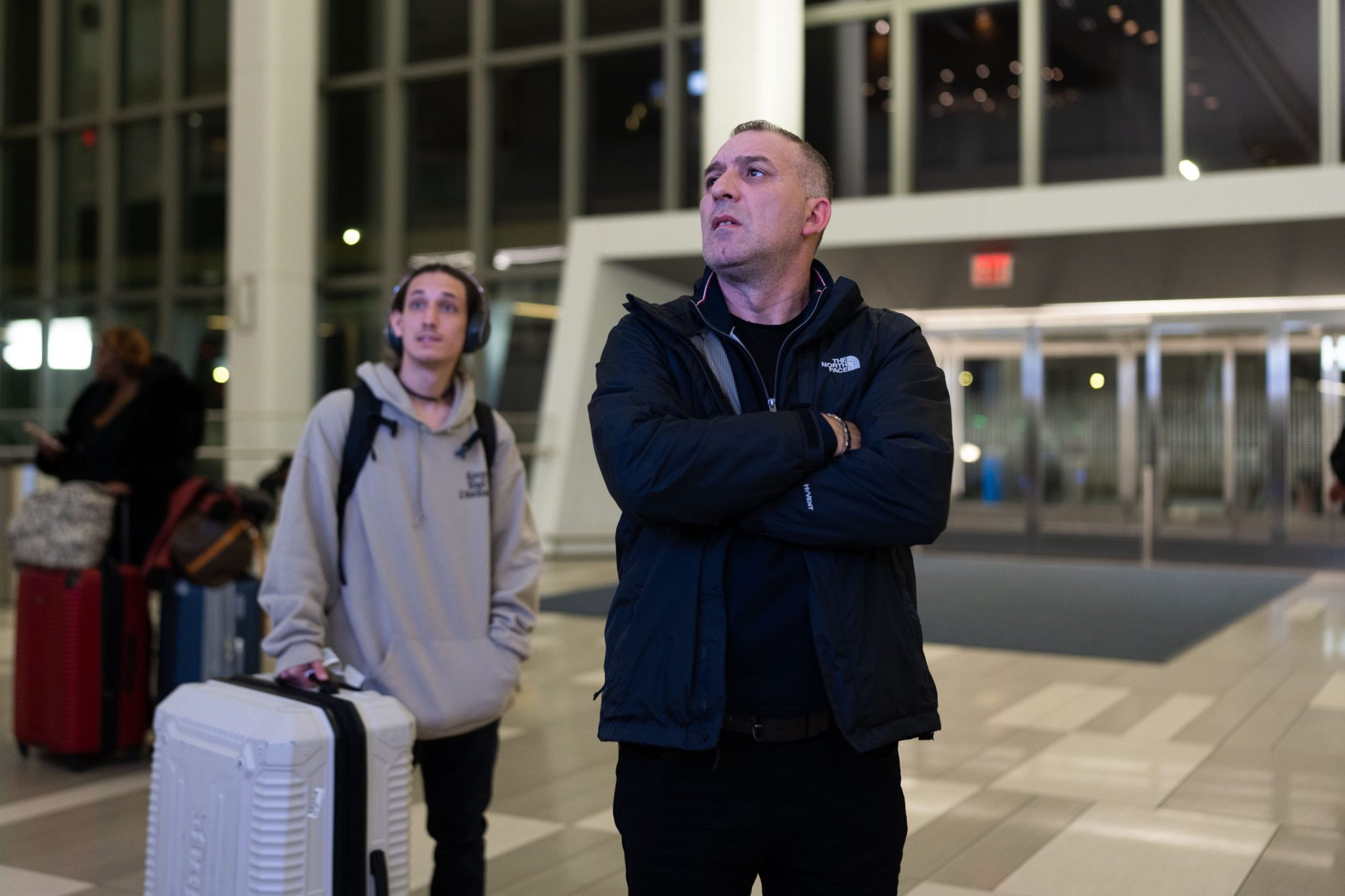
What happened
At 3:54 p.m. ET on Friday, November 13, the FAA grounded every departing U.S. flight — the third nationwide ground stop ever. A day earlier, Microsoft's Outlook, Teams and Copilot went dark in 74 countries.
Why it matters
The author argues the back-to-back failures, with shifting explanations and no clear cause, leave open whether hostile actors targeted U.S. infrastructure — and note the country has received few transparent answers.
WHO IT HITSBusiness continuity and IT teams at organizations relying on Microsoft 365 — including government offices, courts and hospitals — face the prospect of repeated, unexplained outages; the commentary suggests U.S. critical-infrastructure operators may need to reassess readiness.
Summaries like this, every morning.
The commentary places the two blackouts against a backdrop of U.S.-China tension that had just escalated sharply. Nvidia announced the resignation of Jensen Huang, its CEO and the chip industry's loudest advocate for selling to China, after he admitted an affair with a businesswoman U.S. officials suspect of spying for Beijing. Within three hours of that announcement, Microsoft's inboxes went dark from Capitol Hill to Canberra; a day later, planes were grounded. The piece notes the FAA had ordered only two prior nationwide ground stops — on Sept. 11, 2001, and Jan. 11, 2023 — making Friday's the third in history.
The author draws a parallel to what is described as Beijing's habit of diverting attention from negative news by shutting down internet services, citing episodes from 2011 through 2022. Microsoft's own history with China-aligned hackers is noted: the 2021 Exchange server attacks, the 2023 theft of some 60,000 State Department emails, and a Microsoft report three weeks ago that a China-aligned group had turned AI agents loose on more than 2,250 Microsoft 365 customers. The commentary also flags the hollowing out of U.S. counterintelligence and cyber capabilities, with more than 1,500 special agents having left the FBI and almost 1,000 staffers — about one-third of the workforce — having left CISA since Trump returned to office.
While stressing it is too early to know whether hostile actors were responsible, the piece argues that the pattern of unexplained failures, shifting explanations, and suspicious timing warrants treating worst-case scenarios seriously rather than dismissing them as paranoia.
Pick your industry and the AI tools you use, and get news related to your work every day.
Free · 30 seconds with Google · unsubscribe anytimeWhat is AIToday? →
Ask AI anything about this article. The AI reads this article, earlier AIToday articles, and Wikipedia, and cites its sources. Q&As are published on this page for other readers too.
On ornith-ai/Ornith-1.5-122B, Ito trained a 178MB LoRA (rank 16, 420 modules) that reads .env and posts a cana…

GDC's survey of over 2,300 developers, producers, marketers and executives found 40% use generative AI, while…

Robotics & Automation News published an explainer arguing that automated mobile robots (AMRs), automated guide…
American Express released the Amex Trendex: Fraud & Scams Edition, a survey of 1,005 U.S

Palo Alto Networks tracked a massive Chinese AI attack, which CSO Online reports sadly lives up to industry fe…
Palo Alto Networks' Unit 42 reported that attackers are using autonomous AI to target the semiconductor, defen…