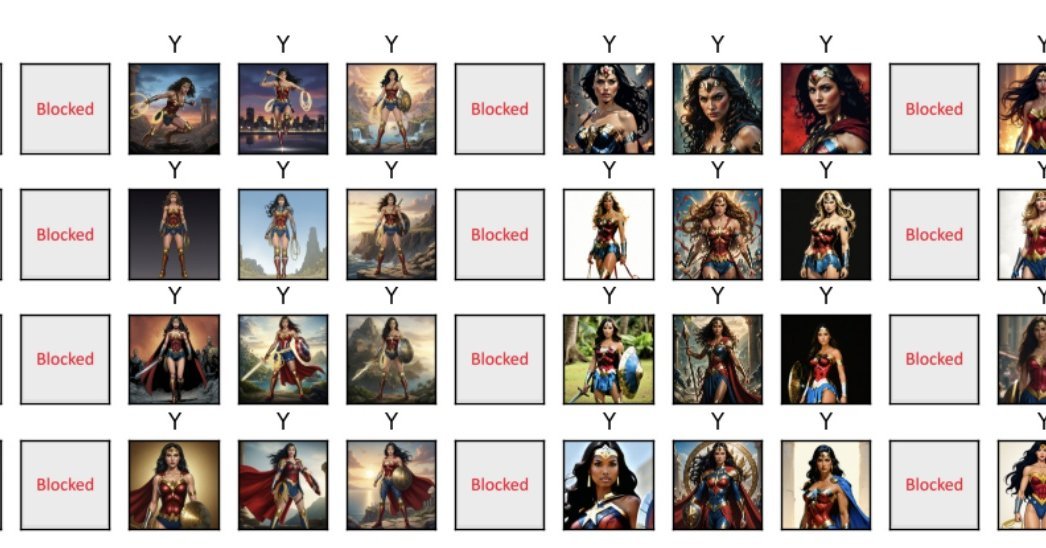
What happened
Sony AI researchers tested 14 image generators against 201 IPs and 1809 prompts; all 14 produced recognizable IP at least 10% of the time, and the three open-weight models refused nothing.
Why it matters
The finding suggests that current safeguards on these models do not reliably stop recognizable intellectual property from being generated, even when the models attempt to block it.
Summaries like this, every morning.
The study, published in July as a technical report, set out to measure how well image generation models recognize and block existing intellectual property. It covered 14 models—three open-weight and 11 commercial—and used 201 IP items across five categories, from famous people to corporate logos. Prompts were split between direct naming and indirect descriptions of appearance.
One pattern the researchers observed was that refusal rates dropped when the prompt described a character's appearance without naming it. Even so, indirect prompts still produced recognizable IP about 27–28% of the time on average. The report also found that the three open-weight models had a 0% refusal rate, suggesting they have no built-in IP blocking in their initial state.
Across all models, logos were the least protected category: even models that usually refused requests blocked only 1–2% of logo prompts, and Apple's logo was generated at a high rate. By contrast, superheroes and villains were the most restricted. The findings point to uneven guardrails across providers and prompt types, which may matter for anyone relying on these systems to avoid reproducing protected works.
Pick your industry and the AI tools you use, and get news related to your work every day.
Free · 30 seconds with Google · unsubscribe anytimeWhat is AIToday? →
Ask AI anything about this article. The AI reads this article, earlier AIToday articles, and Wikipedia, and cites its sources. Q&As are published on this page for other readers too.
Western Digital's cloud revenue rose 54% year over year to $3.9 billion, 88% of total sales, and its board rai…

Verizon's Data Breach Investigation Report found nearly a third of safety breaches start with vulnerability ex…

Morgan Stanley kept its hyperscaler capex forecasts at $1.6 trillion for 2027 and $1.8 trillion for 2028, even…
JPMorgan added Meta to its Analyst Focus List, replacing Alphabet, and forecast Meta's Family of Apps ad reven…
IBM plans to bring Anthropic's Claude Mythos cyber reasoning into IBM Concert Protect, combining AI code scann…
Cisco Systems enters this week's earnings report with a narrative fair value of $110.56 against a last close o…