What happened
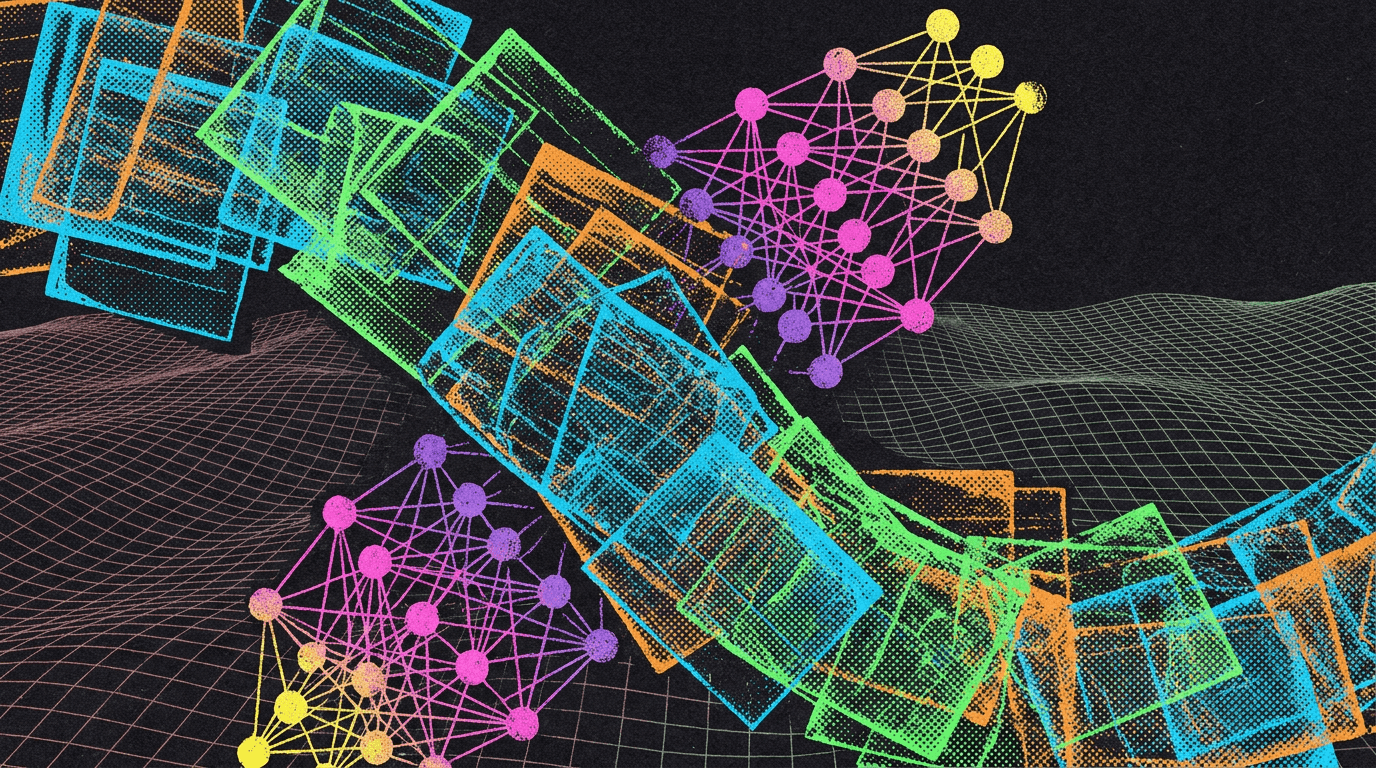
Google researchers introduced WikiSkill, a framework that gives AI agents a persistent memory of past mistakes and successful strategies. It organizes an agent's workspace into three layers: a Raw Layer for execution traces, a Wiki Layer for distilled knowledge that never resets, and a Skill Layer for procedural instructions that can be rolled back if a change hurts performance.
Why it matters
WikiSkill consistently outperformed other skill evolution methods in the study. On average, it boosted Gemini-3.5-Flash from 49.5% to 68.1% and Qwen-3.6-27B from 39.4% to 63.3% across five benchmarks. Larger models benefited more, but smaller models using WikiSkill could match the performance of larger models without it.
What to watch
The framework's gains varied by task type, with the biggest improvements in math and spreadsheet tasks. Skills developed by one model often transferred to another, sometimes even working better than the receiving model's own skills, but transferability should be checked case by case.
Summaries like this, in your inbox every morning.
WikiSkill addresses a core limitation of AI agents: they don't truly learn continuously from each run. Instead, the framework has the agent write better instructions for itself after each task and store them in a persistent wiki, building up cumulative knowledge. This workaround, while not elegant, proved effective in the study's tests.
The architecture separates experience (raw traces), knowledge (the wiki), and action (skills). A Wiki Maintainer distills patterns from execution traces, a Skill Proposer suggests changes, and a gating mechanism validates them on a separate set before deployment. If a change fails, it's rolled back, but the wiki keeps the failed attempt for future reference.
Notably, skills transferred between models, sometimes outperforming the receiving model's own skills. However, the researchers advise checking transferability case by case, as it isn't always beneficial. The approach draws on Andrej Karpathy's concept of an "LLM Wiki," applying it to automatic skill development.
Pick your industry and the AI tools you use, and get news related to your work every day.
Free · 30 seconds with Google · unsubscribe anytimeWhat is AIToday? →
Ask AI anything about this article. The AI reads this article, earlier AIToday articles, and Wikipedia, and cites its sources. Q&As are published on this page for other readers too.
Google Deepmind's Gemini 4 Argon scored 97.5 percent on ARC-AGI-3 at a cost of $4,800, second only to GPT-6 As…
Cammarata reinterprets InceptionV1's cat-car neuron as a V-shape detector, not two unrelated concepts
Anthropic gave six METR staffers hardware, office space and internal tools, putting them roughly on par with i…

Microsoft's Surface Laptop Ultra, using Nvidia's RTX Spark platform, starts at $2,599 (up to $5,899)

Meta's new commercial terms, effective October 30th, appear to let it crawl and train AI on content from websi…
Vercel data published Thursday shows TypeSafe AI's Jev, a lightweight decision model for choosing among predet…