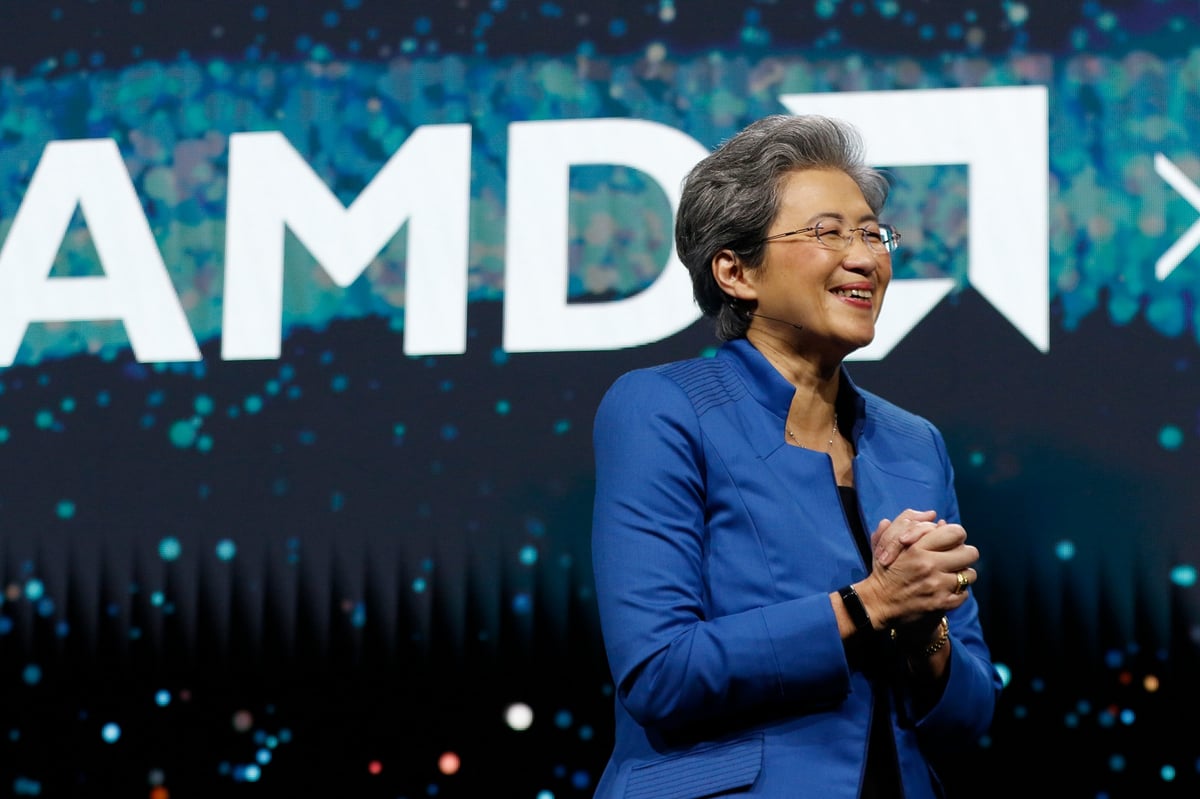
AMD CEO Lisa Su has secured landmark deals with OpenAI, Anthropic, and Microsoft to supply GPUs and complete data center systems for AI inference, positioning the company as a major competitor to Nvidia. OpenAI committed to buying 10 gigawatts of AMD GPUs and received up to a 10% stake in AMD; Anthropic will deploy 2 gigawatts of AMD's MI450 GPUs starting in the first half of next year. These wins reflect Su's strategy of bundling GPUs with custom chips and software into integrated systems, and betting that inference workloads will grow faster than training, combined with a projected shift toward higher CPU-to-GPU ratios in agentic AI.
Summaries like this, in your inbox every morning.
Sign up free →What happened
AMD CEO Lisa Su has signed major GPU commitments with leading AI companies. OpenAI agreed to buy 10 gigawatts of AMD GPUs for inference in a deal worth in excess of $100 billion(約16兆円) and received up to a 10% stake in AMD in return. Anthropic will deploy 2 gigawatts of AMD's MI450 GPUs in Helios rack-scale systems, with first delivery expected in the first half of next year; AMD will invest up to $5 billion(約8000億円) in Anthropic. Microsoft is also adopting Helios systems for inference in its data centers.
Why it matters
These deals establish AMD as a credible alternative to Nvidia in AI infrastructure, particularly in inference (the step where an AI produces an answer from a trained model), which is expected to grow larger than training. Su's strategy of bundling GPUs with custom chiplet designs, server CPUs, and software (ROCm) into complete rack systems makes AMD a one-stop vendor. The deals also position AMD to benefit from a shift in GPU-to-CPU ratios in agentic AI (systems that act autonomously) from 8:1 for training to 1:1, opening a $220 billion(約35兆円) server CPU market where AMD projects 50% market share.
What to watch
AMD no longer needs to offer equity stakes in new partnerships, signaling a shift in negotiating power. First deliveries of Anthropic's MI450 GPUs are expected in the first half of next year. AMD has also acquired ZT Systems to sell complete rack systems, broadening its competitive moat beyond chips alone.
AMD's emergence as a serious AI infrastructure vendor began with a bold strategic gamble by CEO Lisa Su. In the early days of AI's commercial expansion, when Nvidia appeared to have unassailable dominance, Su struck a landmark deal with OpenAI that redefined how AI companies and chip makers could partner. OpenAI committed to buying 10 gigawatts of AMD graphics processing units (GPUs) to run inference for its models in a deal worth in excess of $100 billion(約16兆円). In exchange, OpenAI received up to a 10% stake in AMD. Critically, the size of OpenAI's commitment forced it to integrate AMD's ROCm software platform into its systems, creating a reference implementation that validated AMD's technology and approach. Meta Platforms signed a similar deal shortly afterward, further validating AMD's strategy. Beyond GPUs, Su made a complementary bet on AMD's innovative chiplet design—a modular approach where smaller chips function as part of a larger interconnected system and can be packaged with more memory. She correctly anticipated that inference, not training, would become the larger market, and that chiplet designs would be ideal for inference workloads. To strengthen AMD's position as an end-to-end vendor, Su acquired ZT Systems, enabling AMD to assemble and sell complete rack systems rather than GPUs alone. By today, AMD has signed two major new partners for next-generation GPUs: Anthropic and Microsoft. With Anthropic, AMD will supply 2 gigawatts of MI450 GPUs housed within Helios rack-scale solutions, which also bundle AMD's server CPUs, networking equipment, and ROCm software; first delivery is expected in the first half of next year. Microsoft is adopting the same Helios system for inference in its data centers. Notably, AMD no longer needed to offer equity stakes in these newer deals, instead investing up to $5 billion(約8000億円) directly in Anthropic—a sign of the company's strengthened negotiating position. Su has also positioned AMD to lead in server CPUs, betting that the rise of agentic AI (systems capable of autonomous action) will drastically shrink the GPU-to-CPU ratio from 8:1 for training to 1:1 for agentic AI. AMD is designing high-core CPUs specifically for agentic AI and inference that will command higher prices. The company recently raised its CPU market forecast, predicting that the server CPU market will reach $220 billion(約35兆円) in the next few years and setting a goal of 50% market share. Together, these moves—integrated GPU and CPU systems, proprietary software, complete rack solutions, and partnerships with the largest AI labs—have positioned AMD for substantial growth in the coming years.
AMD's transformation from a distant second to a credible AI infrastructure player hinges on Lisa Su's strategic insight that inference—not training—will become the dominant AI workload. While Nvidia built its dominance on training large language models, Su recognized early that once models are trained, the far more frequent and costly step is inference, where the model generates answers. This insight shaped her entire competitive approach: rather than compete solely on GPU performance, she bundled GPUs with AMD's innovative chiplet designs, custom software (ROCm), and complete rack systems that include server CPUs and networking. The OpenAI deal, worth in excess of $100 billion(約16兆円), forced OpenAI to adopt ROCm and created a reference architecture that other customers could follow. Meta signed a similar deal shortly after. By the time AMD signed Anthropic and Microsoft, the company no longer needed to offer equity sweeteners—a sign that the value proposition of AMD's integrated approach had become clear. The upcoming shift in agentic AI toward a 1:1 GPU-to-CPU ratio (from 8:1 for training) further plays to AMD's strengths, since it makes server CPUs as critical as GPUs and positions AMD to capture share in a $220 billion(約35兆円) CPU market where it aims for 50% penetration.
AI-summarized, only the topics you pick — one digest a day via Email, Slack, or Discord.
Free · takes 30 seconds · unsubscribe anytime
No comments yet. Be the first to share your thoughts!
Log in to join the discussion


Get curated AI news from 200+ sources delivered daily to your inbox. Free to use.
Get Started FreeFree · takes 30 seconds · unsubscribe anytime
