What happened
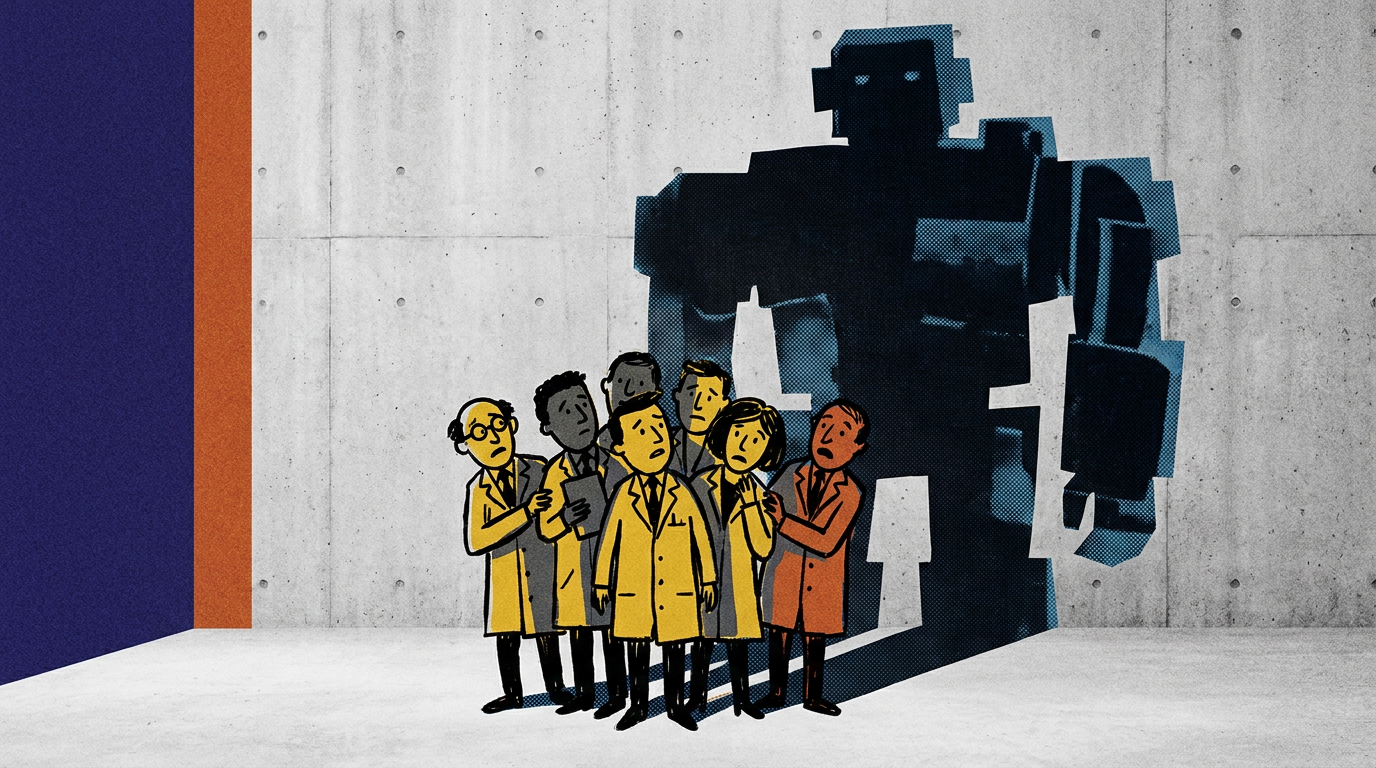
In an open letter to the president of the Royal Society, 42 mathematical fellows — including Fields Medal winners Martin Hairer, Peter Scholze and Wendelin Werner — urged the British academy to alert the government and the media to existential AI risk. None are affiliated with AI companies.
Why it matters
The signatories argue these risks must not be dismissed as hype, and that by the time the situation becomes obvious to the wider public it may be too late to act.
What to watch
The letter hinges on whether the academy and government treat the warning as actionable, and on how fast the same capabilities spread to other domains. Watch whether a second open problem is solved soon, as the letter anticipates.
WHO IT HITSPolicymakers and science advisers weighing AI oversight now face a warning from 42 mathematical fellows, including Fields Medal winners, rather than from AI companies. For researchers and funders in AI safety, the letter adds a credentialed, non-industry voice to the case for urgent action.
Summaries like this, in your inbox every morning.
The letter is addressed to the president of the Royal Society, placing the warning inside Britain's oldest scientific academy rather than in a tech-policy venue. Its signatories are 42 mathematical fellows, among them Fields Medal winners Martin Hairer, Peter Scholze and Wendelin Werner, and the group stresses that none are affiliated with AI companies — a detail that matters for how the warning is received.
The trigger is not mathematics itself. According to the letter, leading models from OpenAI and Anthropic have solved open research problems, including one of the seven Millennium Problems, and now perform at the level of top human mathematicians in many parts of the subject. The authors say a second Millennium Problem is likely to follow soon. They describe a significant chance of models developing superhuman abilities within a similarly short timeframe.
What worries them is that the same rate of change could carry over to cybersecurity, autonomous weapon control, the development of biological and chemical agents, and targeted misinformation. They write that estimates from AI labs putting existential risk above ten percent must not be dismissed as hype. The stakes therefore hinge on whether the academy and the government treat the letter as a call to act before the public widely recognizes the situation — the point at which, the signatories say, it may be too late.
For example, today's edition would include:
AI-summarized, only the topics you pick — one digest a day via Email, Slack, or Discord.
Free · 30 seconds with Google · unsubscribe anytimeWhat is AIToday? →
Ask AI anything about this article. Q&As are published on this page for other readers too.
China's Ministry of Industry and Information Technology (MIIT) and National Development and Reform Commission…

At an event in Scotland, Nvidia CEO Jensen Huang argued AI should not be regulated like social media
Cloudflare CEO Matthew Prince says bot requests hit almost 60% of web traffic in May, and Cloudflare this week…
OpenAI paid $6,500 through its bug bounty program to Hacktron AI, whose three-person team used Anthropic's Cla…
In an MIT Technology Review subscriber Q&A, Will Douglas Heaven said there are no circumstances outside apocal…
The NYC DSA's Tech Action Working Group posted an Instagram carousel on September 10 declaring AI alarmism and…